Tour & Taxis
3 Picard Street 1000 Brussels
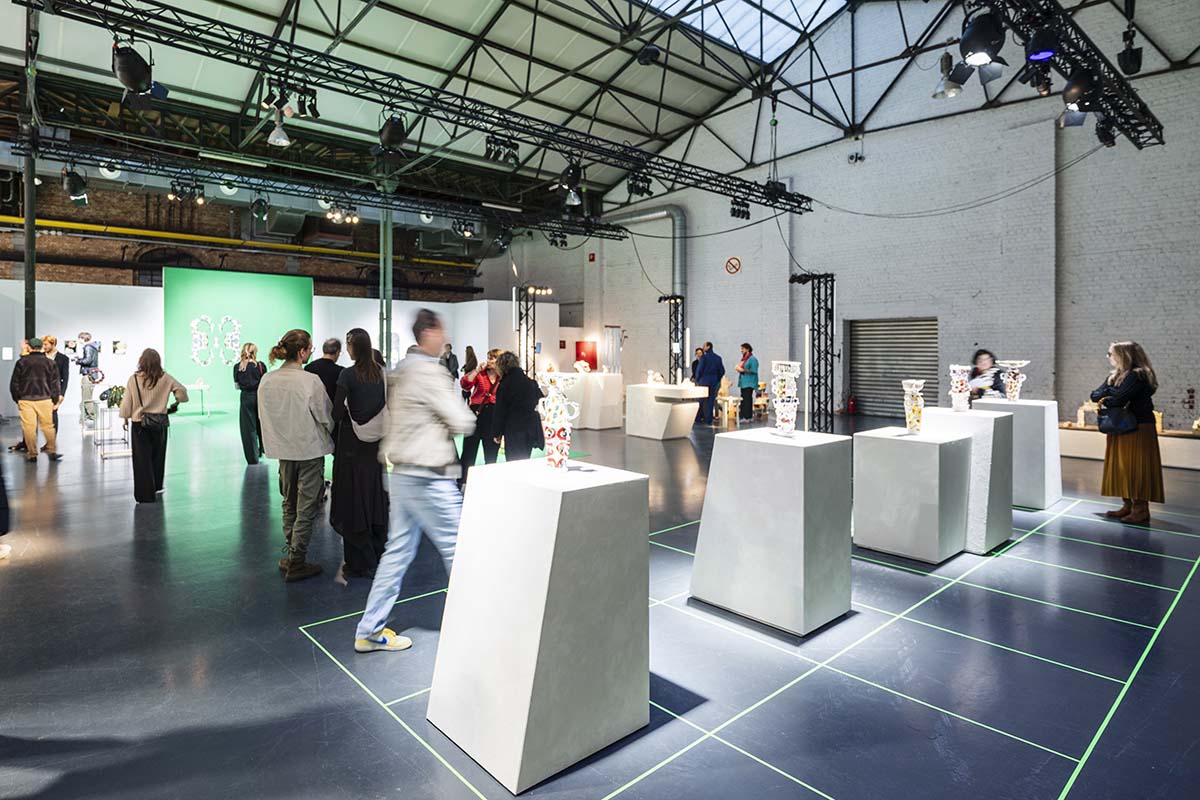
This year, MoCA/NY visited Ceramic Brussels for the first time. Among its most compelling distinctions, particularly when measured against other established fairs, was the presentation of the Art Prize Laureates, a section set apart from the customary grid of gallery booths we examined in our previous coverage, Standout Galleries: Ceramic Brussels 2026.

Installed in a spacious area just beyond the fair’s central corridors, the laureates’ exhibition brought together ten artists selected by jury through an open call for European art students and emerging practitioners not yet represented by a gallery, each with fewer than ten years of practice in ceramics.

Organized by Jean-Marc Dimanche, the presentation unfolded as a cohesive group exhibition rather than a competitive display. The fair’s commitment to artists at formative stages of their careers gestures toward something larger: a holistic investment in the field, one that nurtures and grants visibility to the emerging generations of ceramicists who will shape its future.

Opposite the laureates’ section, offering a deliberate counterweight, stood the work of the guest of honor, Elmar Trenkwalder. Born in 1959 in Weißenbach am Lech and now based in Innsbruck, Trenkwalder has spent more than four decades testing the sculptural and architectural limits of clay, his practice grounded in spirituality and a deep fluency in art history.

His installation unfolded across two rooms, each work granted the space to stand, to breathe, to resonate on its own terms and in conversation with the others. Ornate, intricate, and devotional, the sculptures draw from Baroque and Rococo architecture as well as Asian traditional structures, fusing these references into colossal ceramic structures that resist easy categorization. Their scale commands attention, but it is the obsessive detail that sustains it. Ornament becomes architecture; architecture becomes a spiritual proposition. His presence also extended beyond the dedicated installation, with additional works presented by Galerie Bernard Jordan in the main section of the fair.

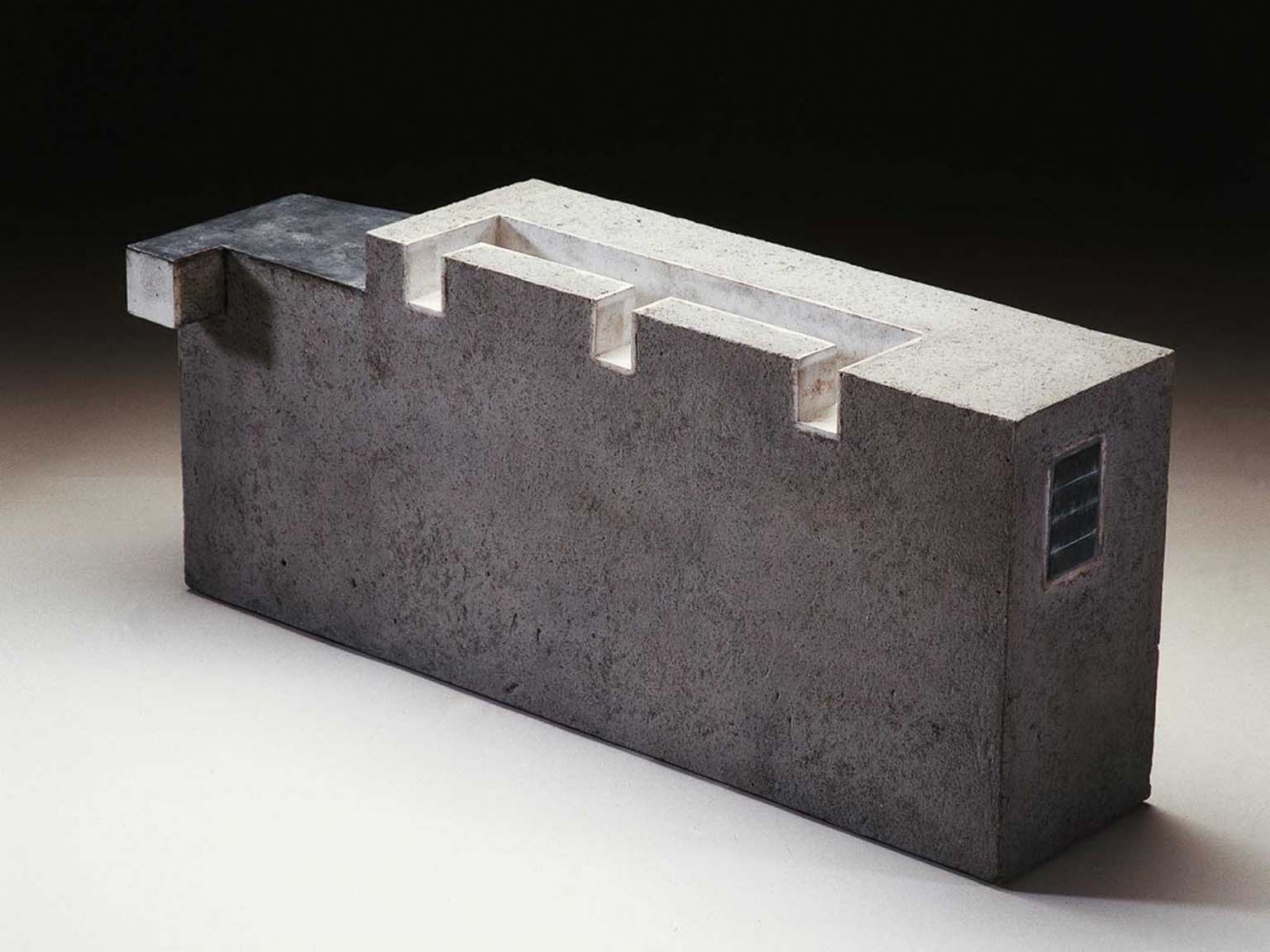
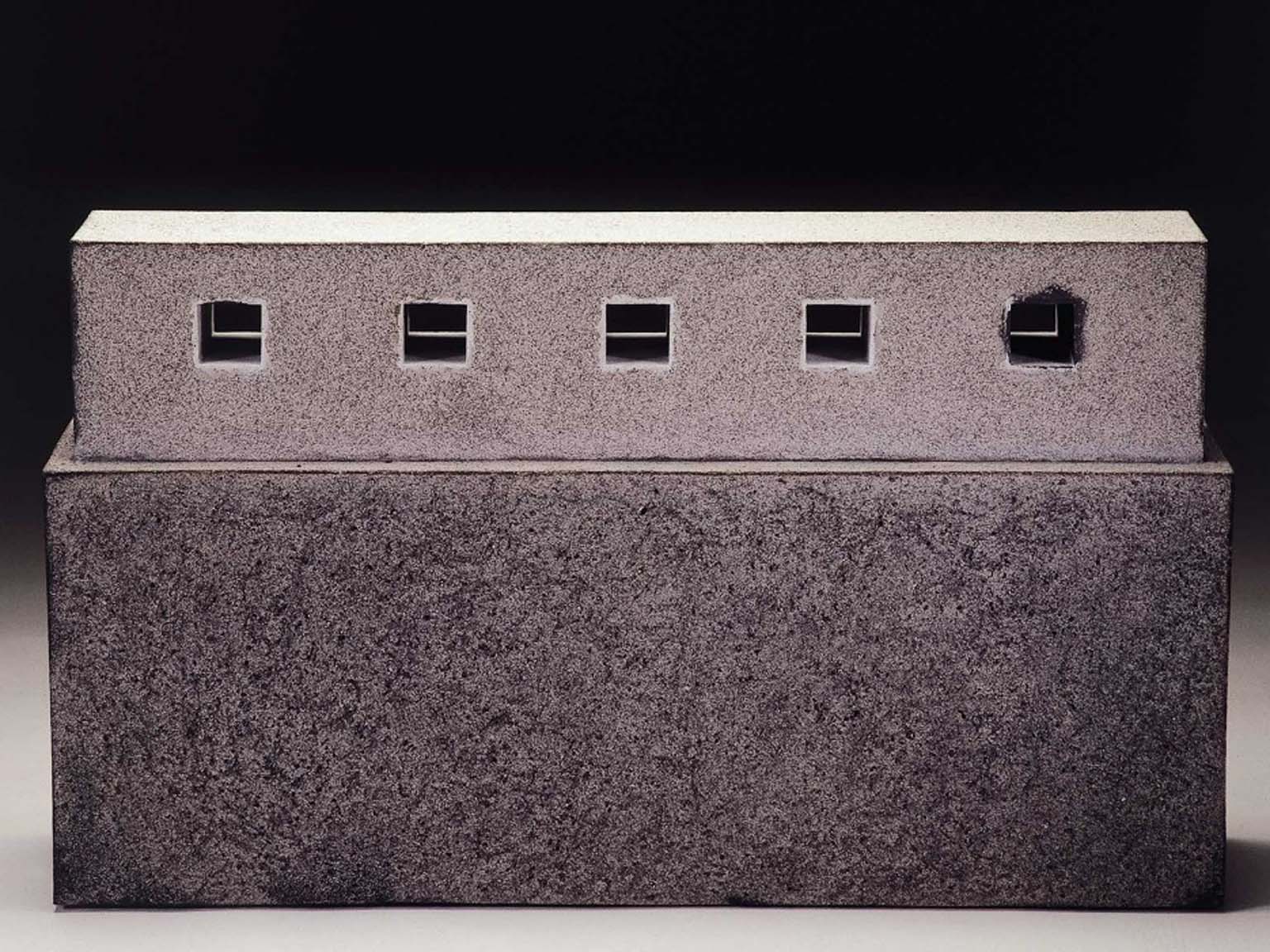
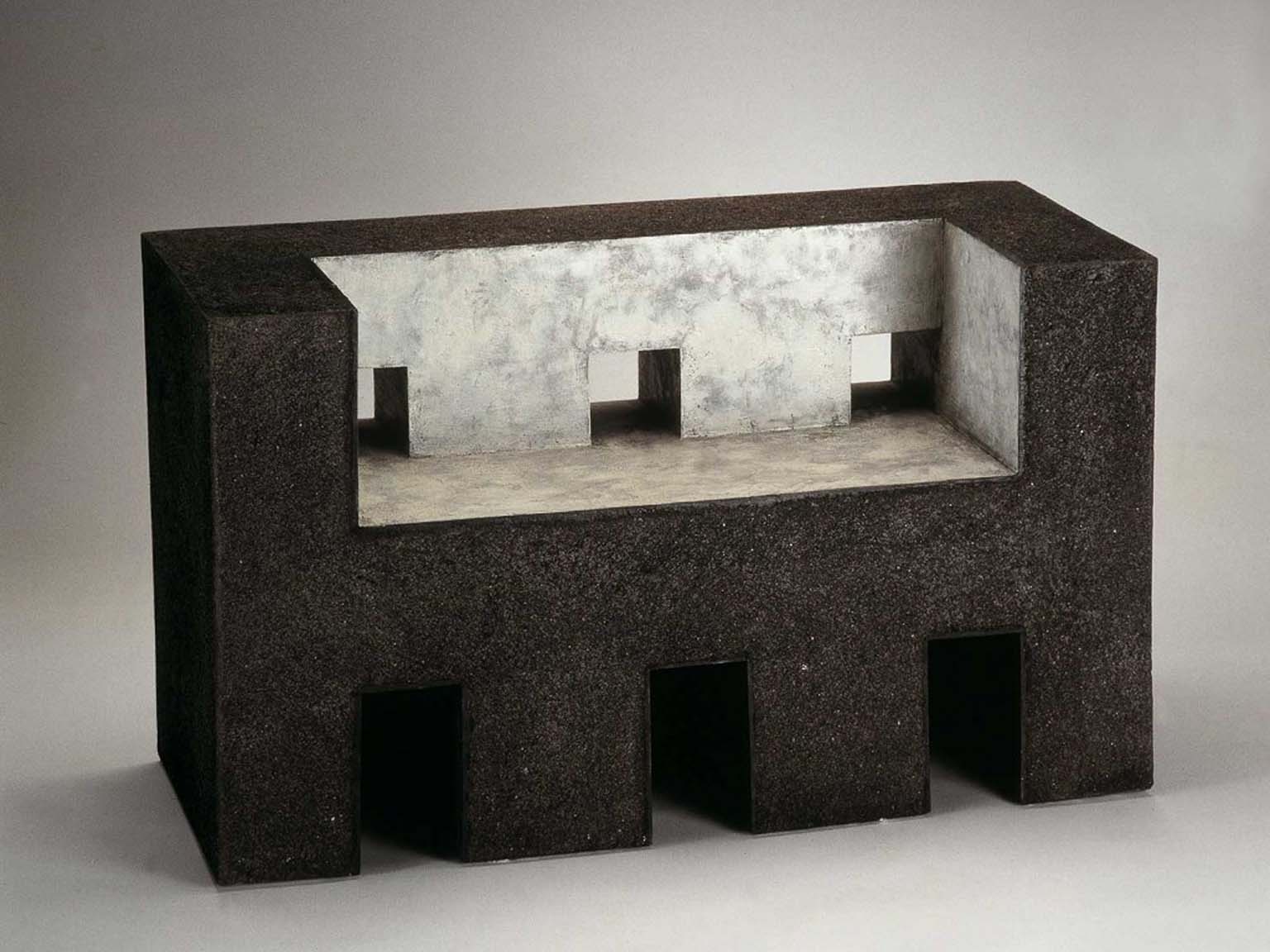
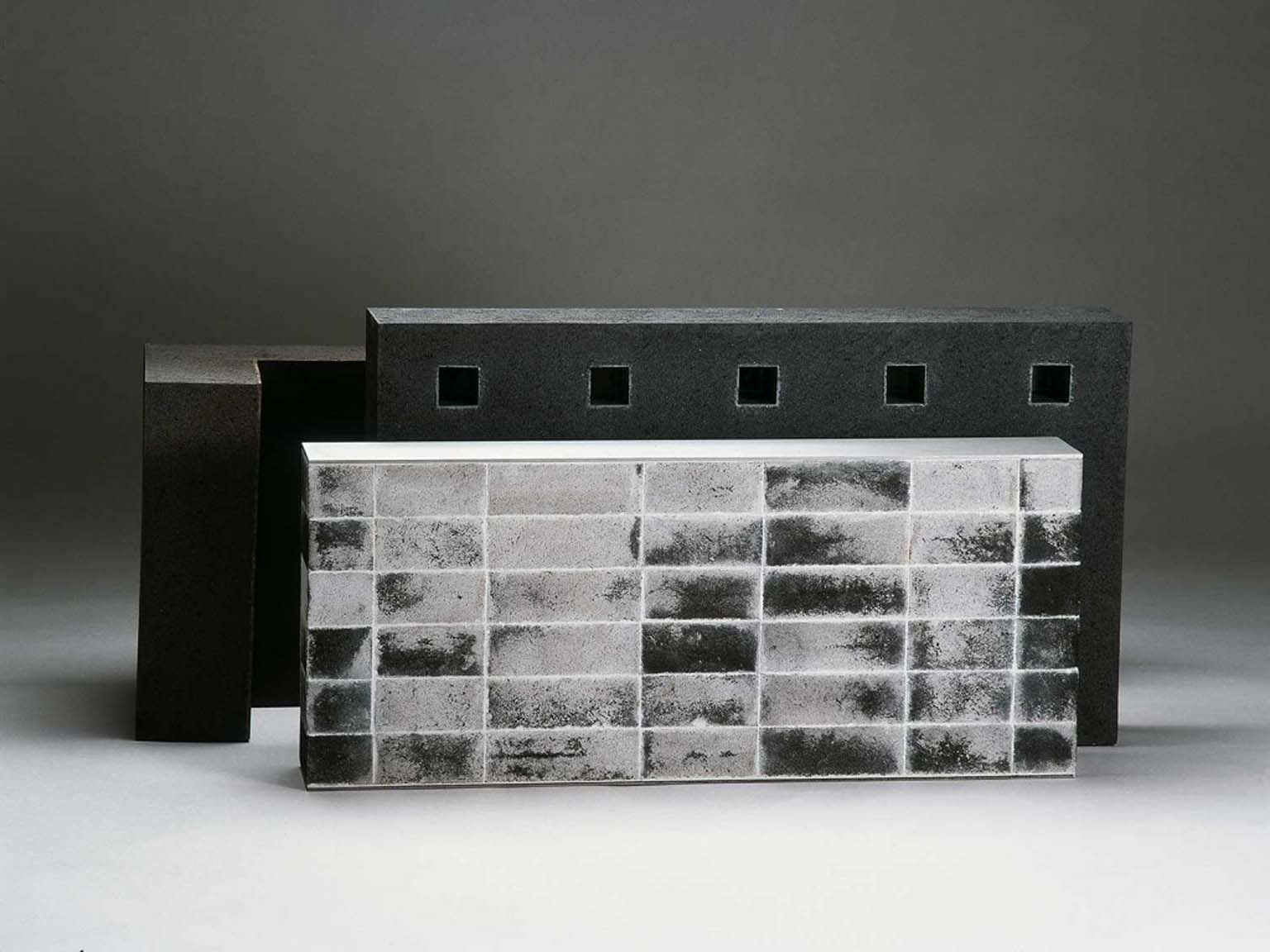
In addition to honoring the laureates and its guest of honor, this year’s fair, through its Focus España section, included a tribute to the prolific Spanish ceramicist Enric Mestre, who passed away on January 1st of this year. Judy Schwartz, founder and President of MoCA/NY, long acquainted with the artist and his work, reflects on his legacy. In this article, we present not only his installation at Ceramic Brussels but also a selection of earlier works, reminders that his practice continues to resonate in his absence, his ceramics carrying forward an enduring legacy that secures his place as a vital voice in the field of clay and beyond.

Between emergent voices and masters of clay, youthful experimentation and decades long mastery was showcased at the fair. What follows is our presentation of the guest of honor, four laureates selected by our team for their distinct vision, and a commemoration of Enric Mestre.
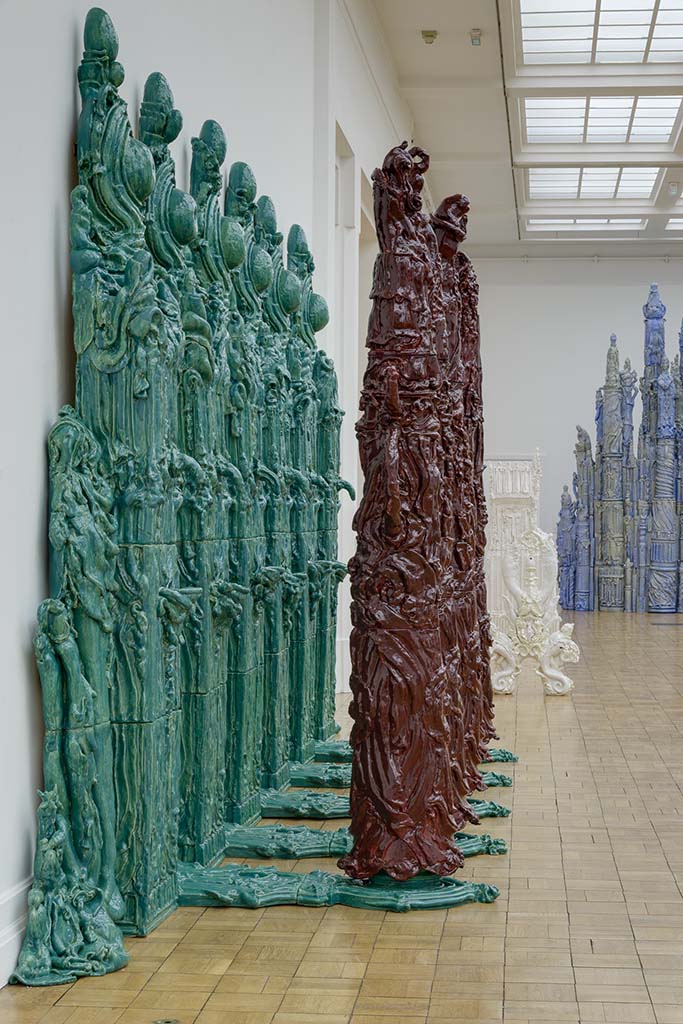
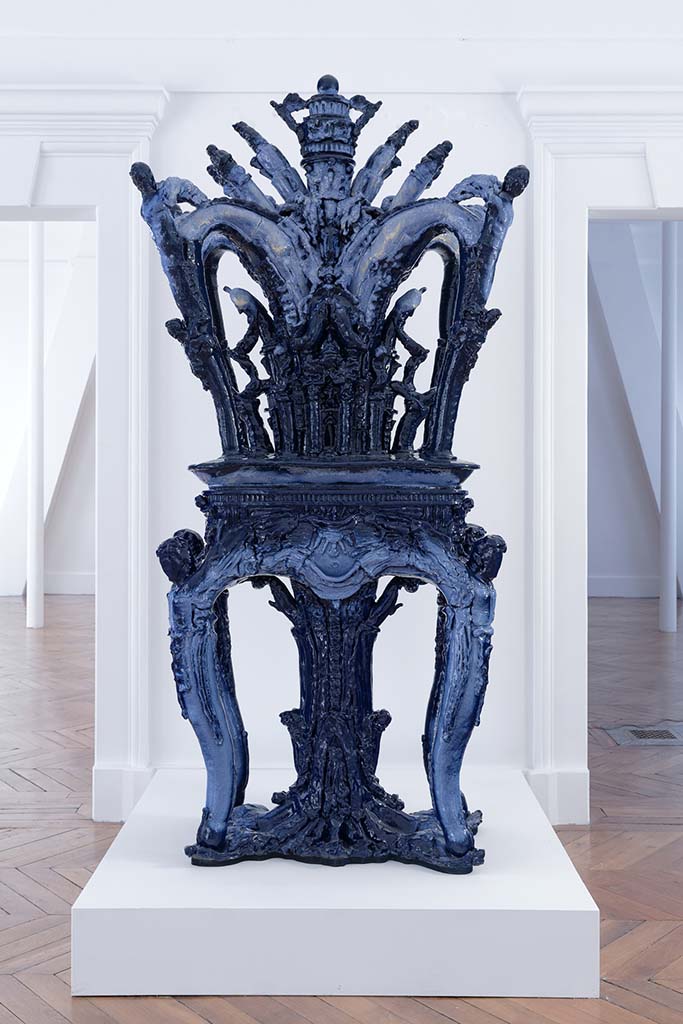
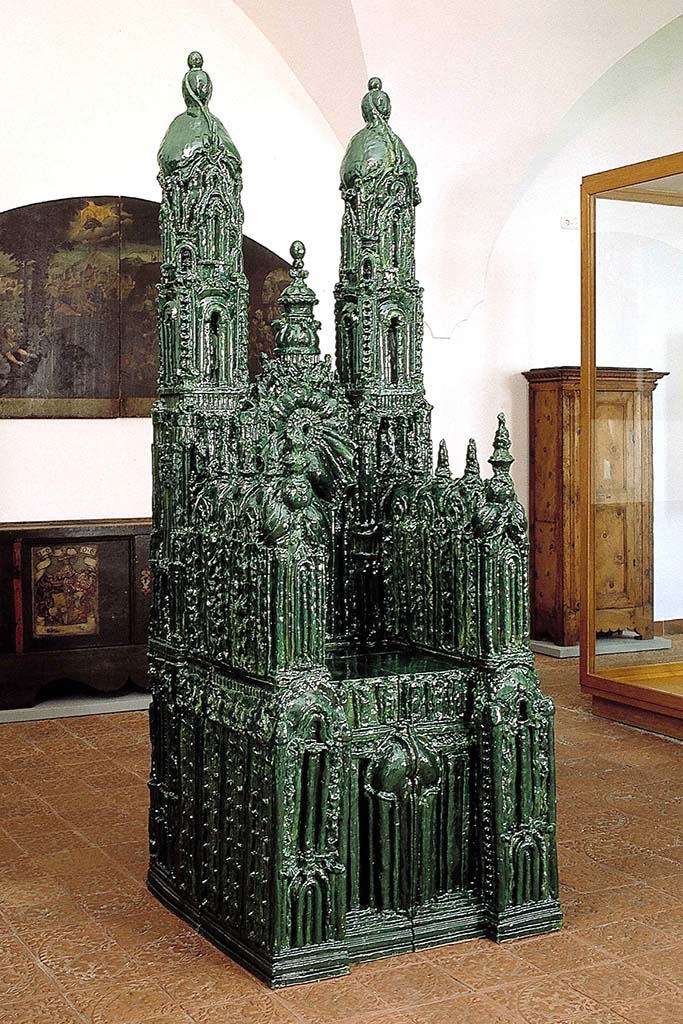
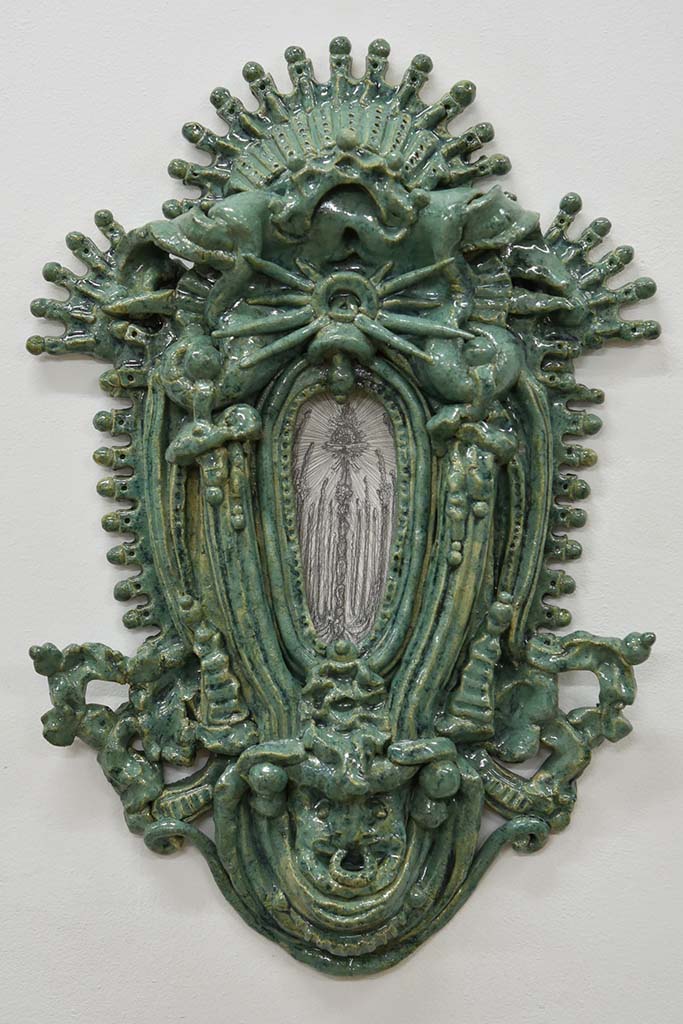
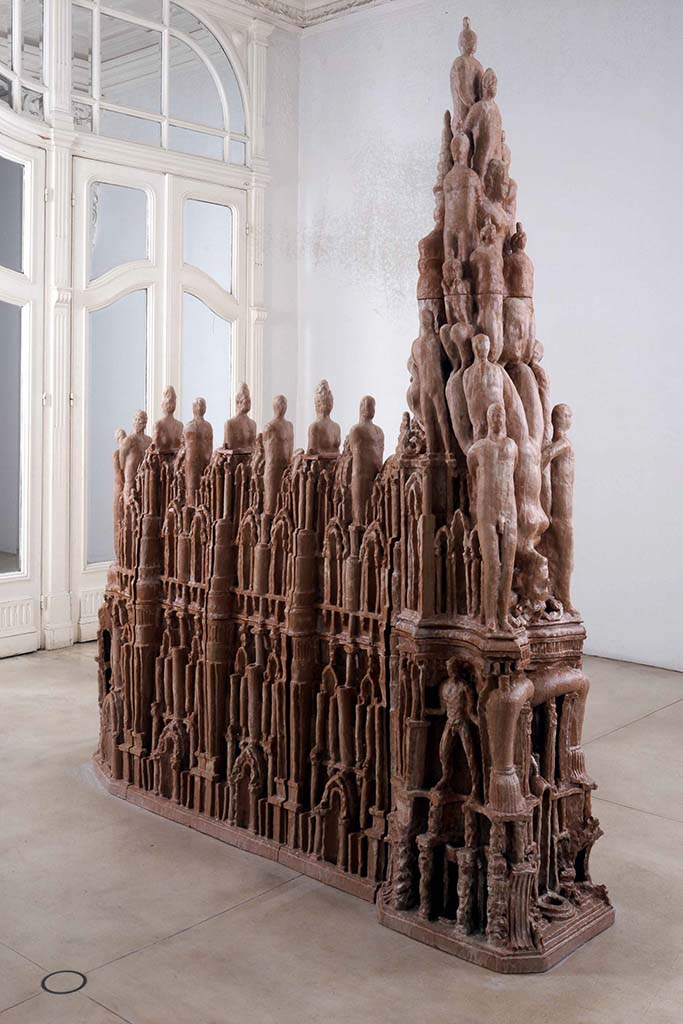
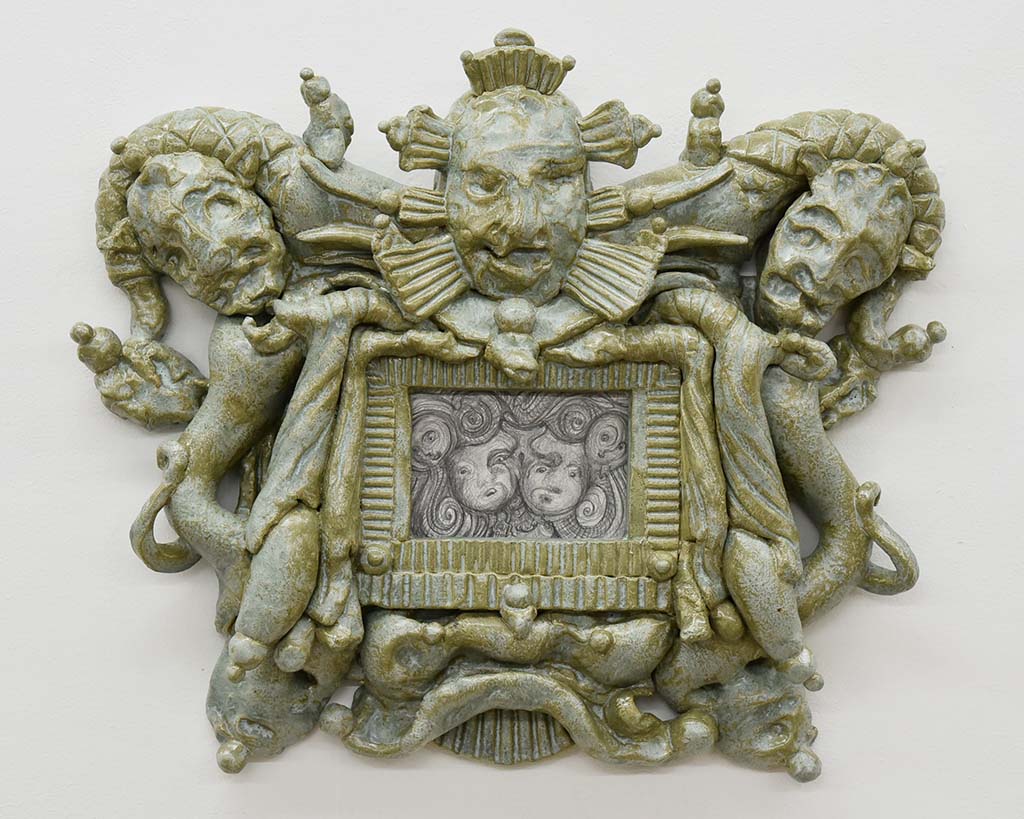
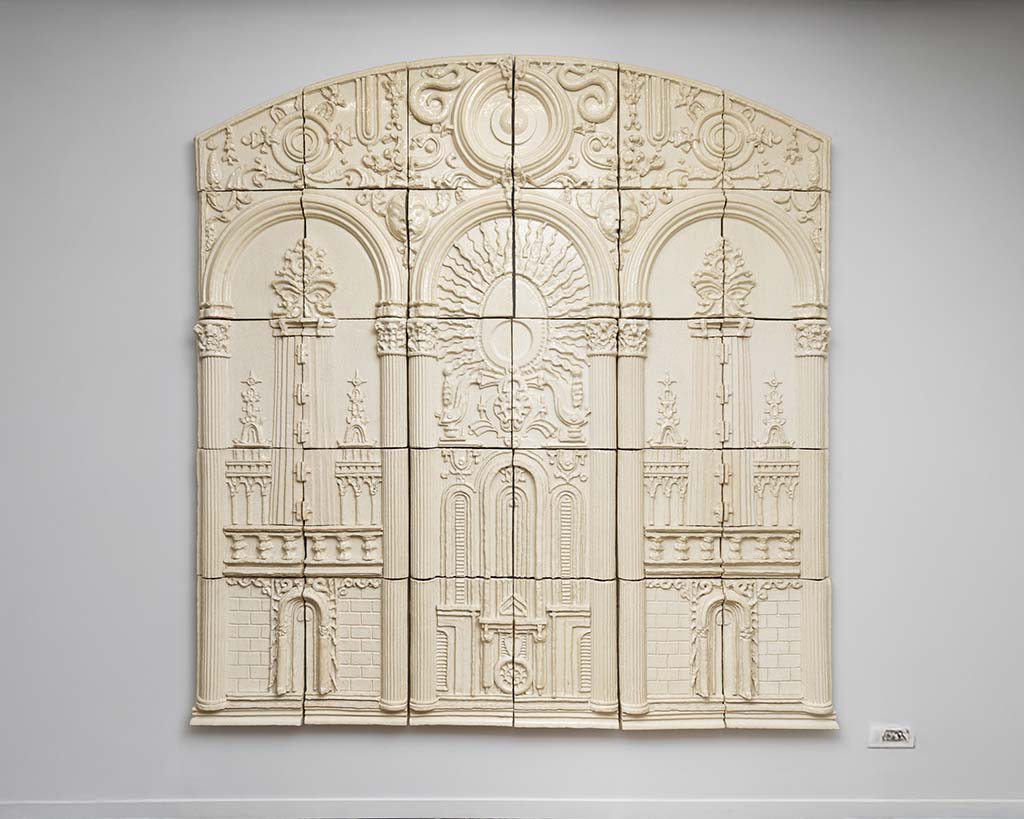
"Elmar Trenkwalder’s work exists somewhere between multiple worlds, ranging from obsessive outsider art to contemporary sculpture. Its monumental scale, directness, and subversive sexual narrative contribute to a disturbing quality that continues to surprise. The presentation was museum-like and superbly curated."
- Johan Creten, artist and first Guest of Honor at Ceramic Brussels
Art Prize Laureate
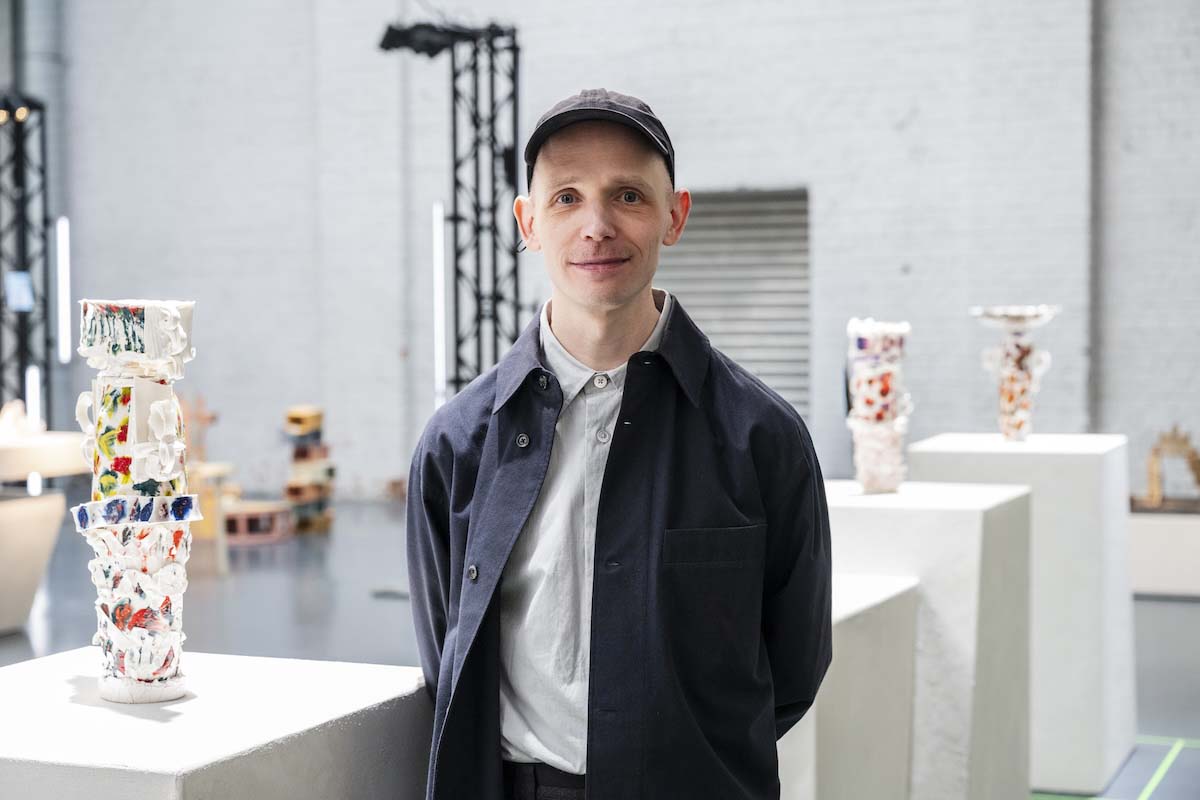
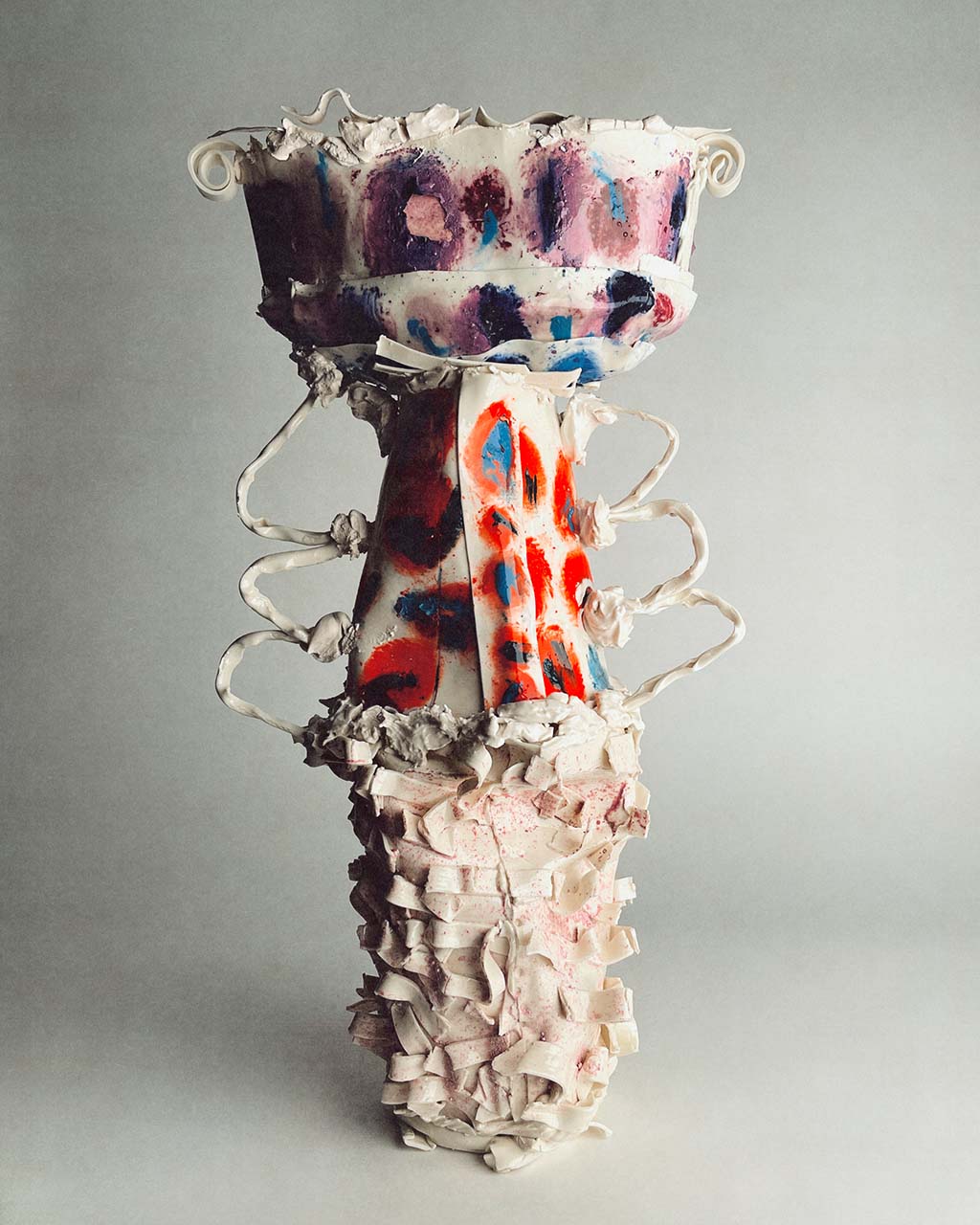
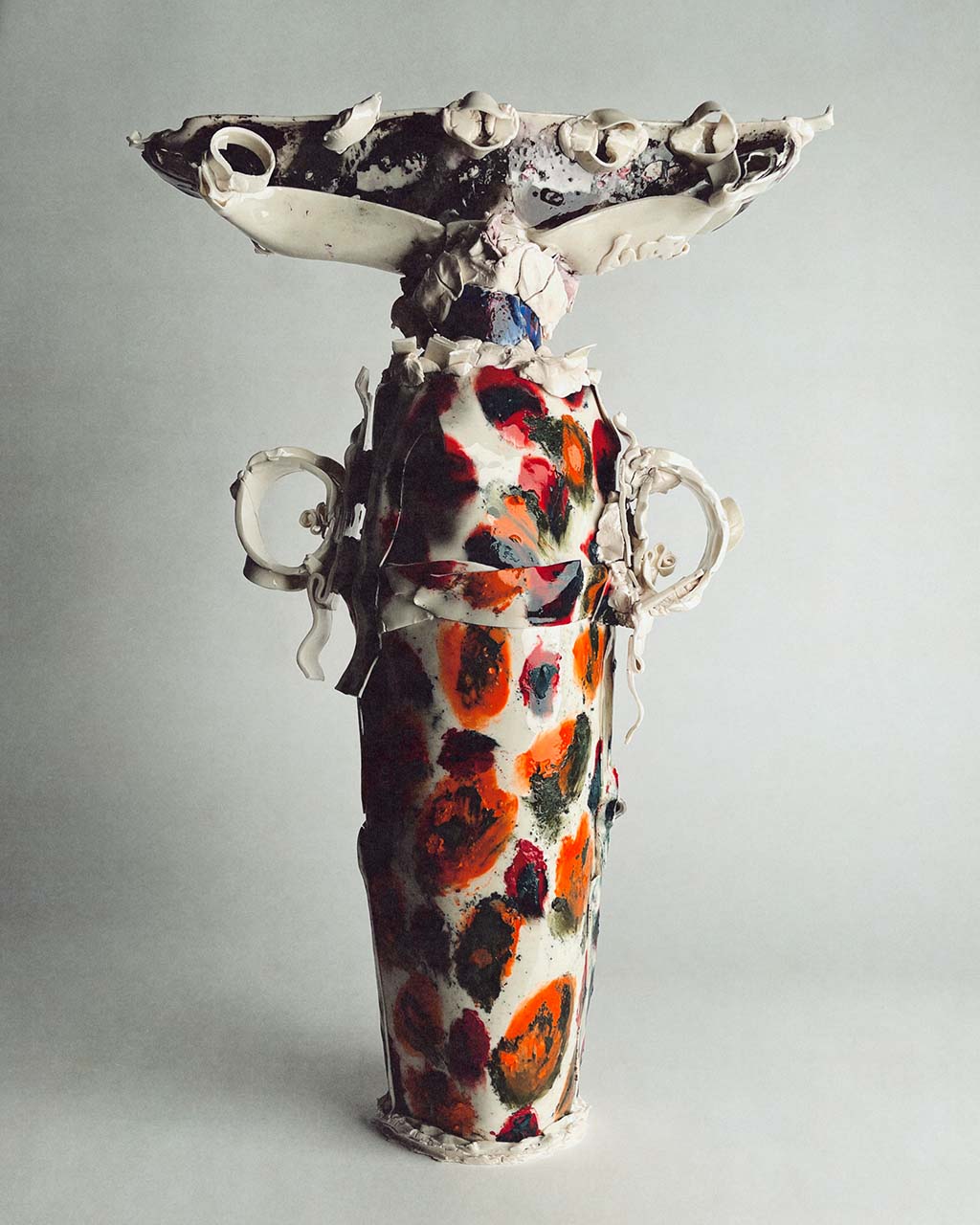
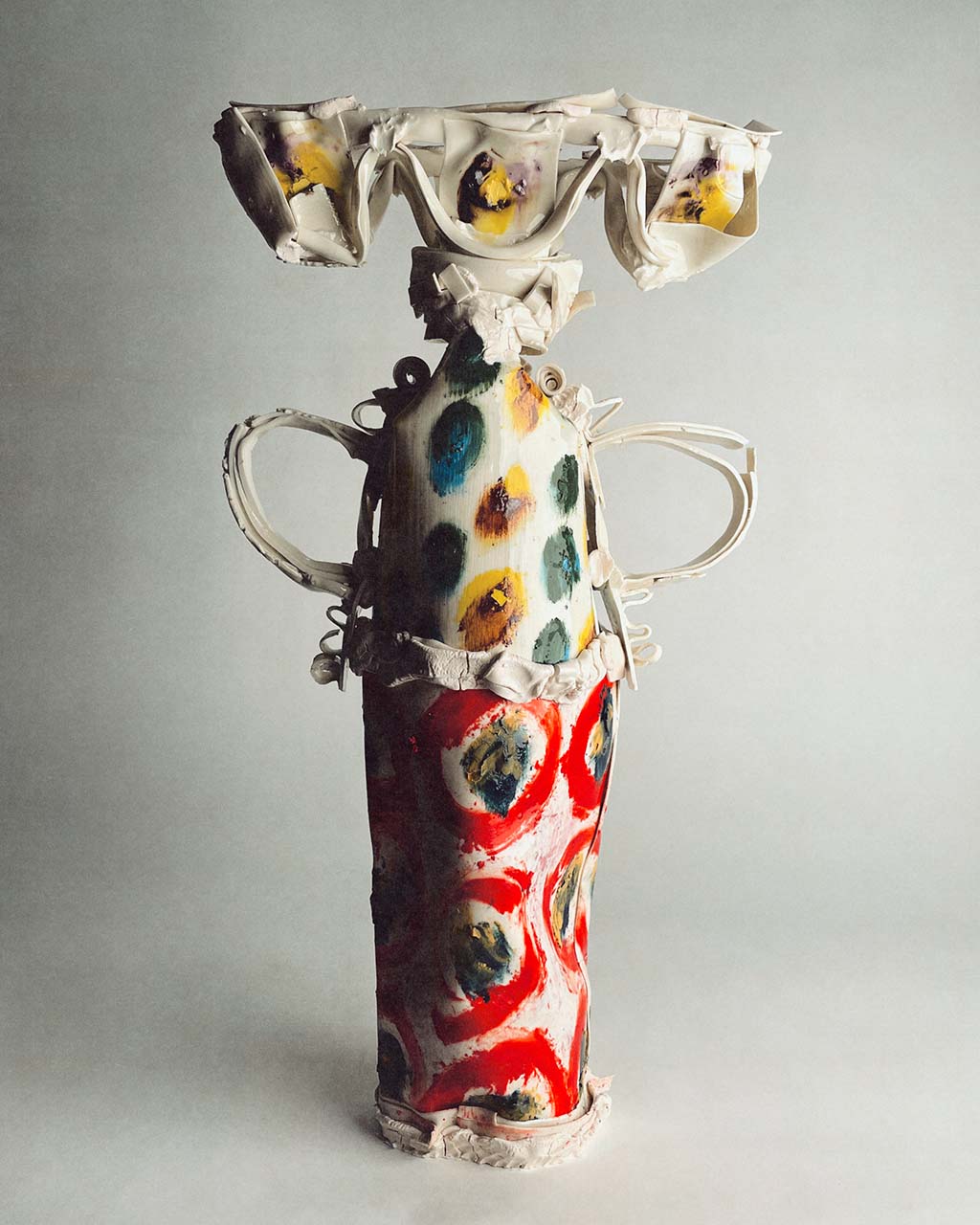
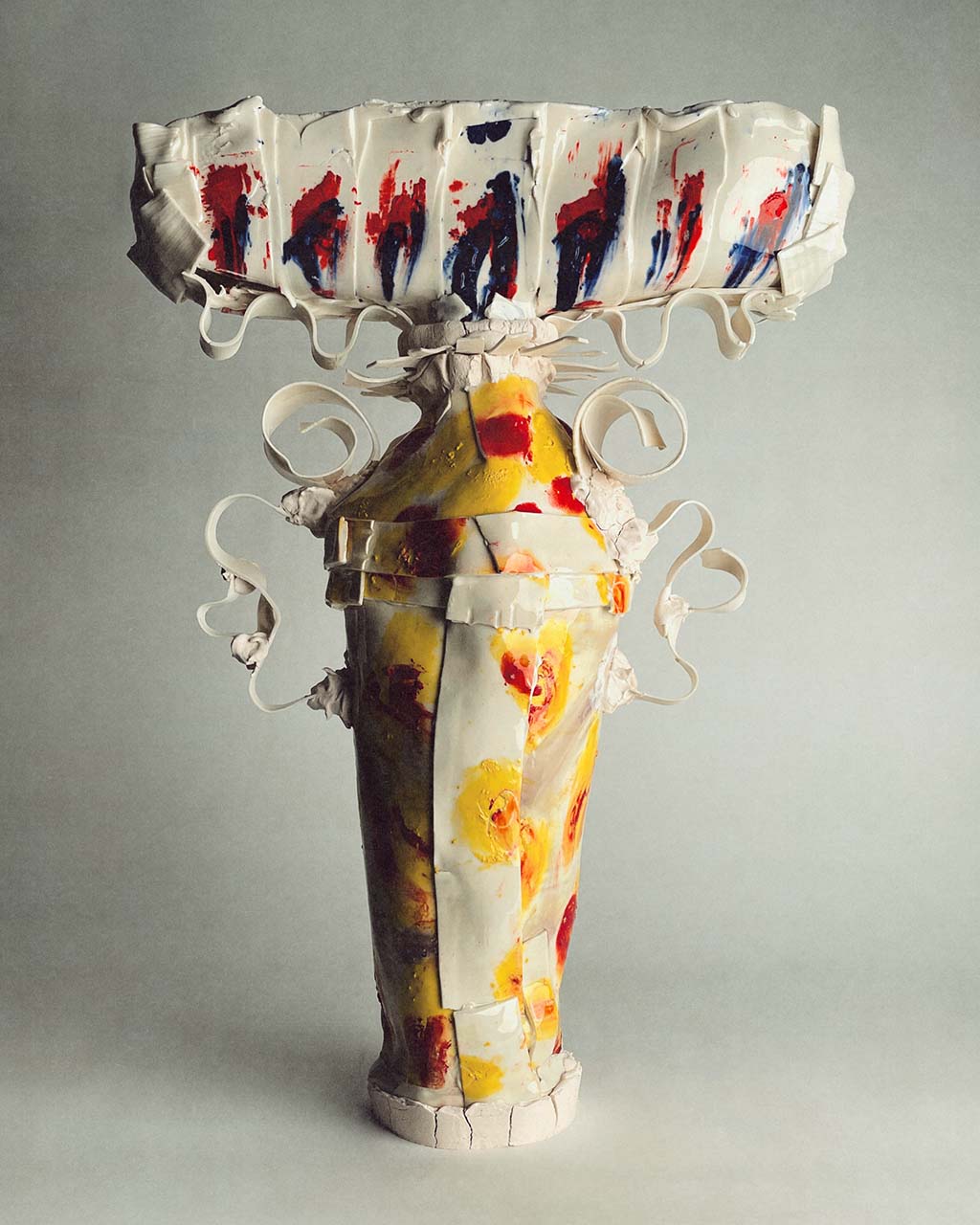
Reserved in temperament, Danny Cremers allows his porcelain vessels to speak for themselves. Sprightly and painterly, strokes and splotches of glaze satiate the eye, echoing the gestures of Impressionist and Expressionist brushwork, while intricate clay embellishments (attached, bonded, reassembled) create a lively collage in three dimensions. Curlicues and ribbons of clay, thin slabs bandaged together, surfaces pinched, sliced, and pressed, with matte and glazed planes—both rough and glossy—coexisting in elegant tension.
Delicate yet bold, unrestrained yet controlled, the vessels may at first read as purely sculptural; flowers placed within them during the fair, however, affirmed their function. To call them beautiful is insufficient.
Detail abounds. Ornament arrives with intention yet retains an air of improvisation. The eye hesitates, unsure where to settle, attending to one feature before another asserts itself with equal confidence. Vessels have existed for some twenty millennia, and still Cremers brings a fresh sensibility to the form. His works feel at once ancient and classical, but still unmistakably contemporary.
Cremers was awarded both the Les Ateliers dans la Forêt residency and the Latvian Centre for Contemporary Ceramics prize at the fair, an outcome that felt less surprising than inevitable, given the exuberance of his work and the recognition it garnered from visitors.
Art Prize Laureate
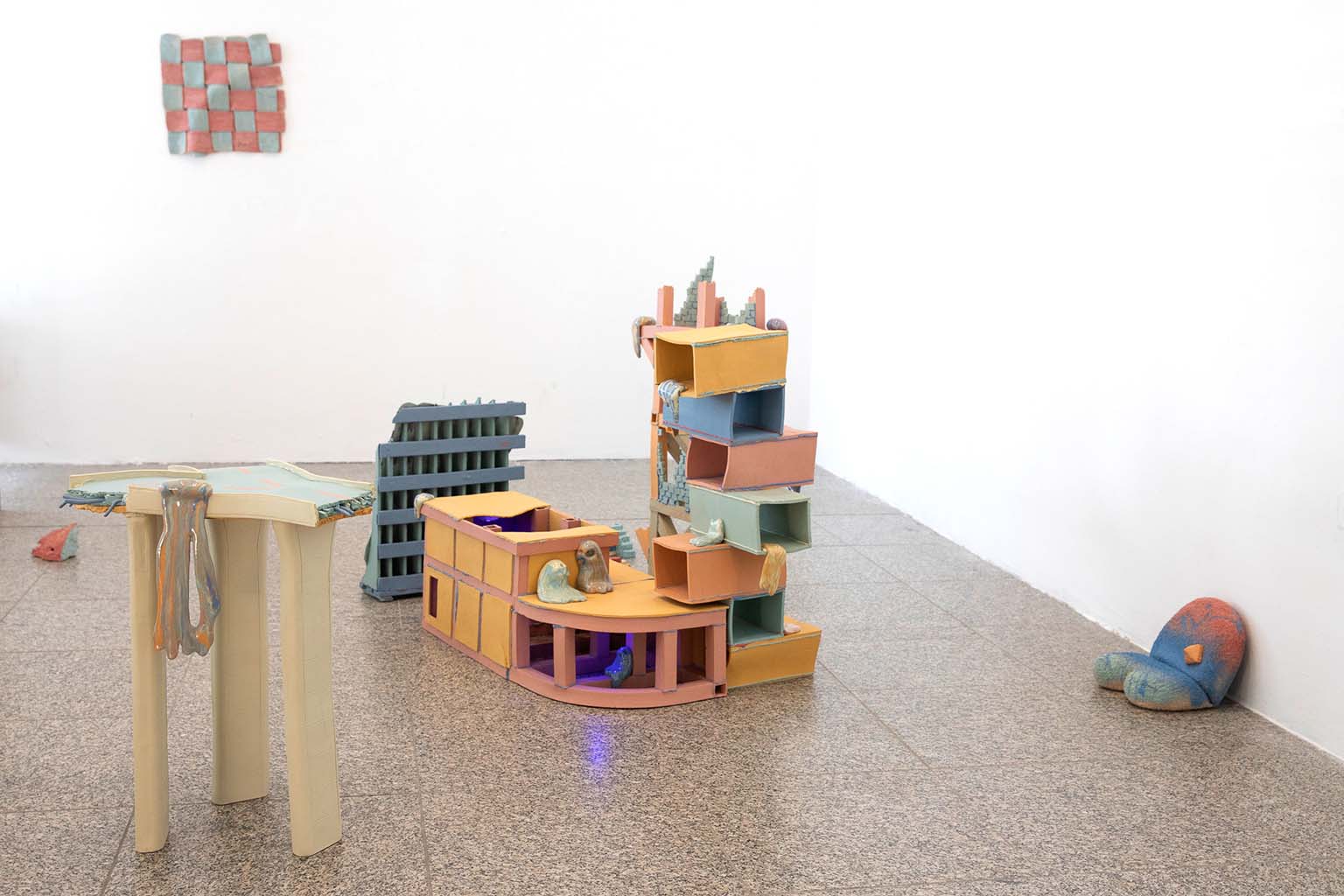
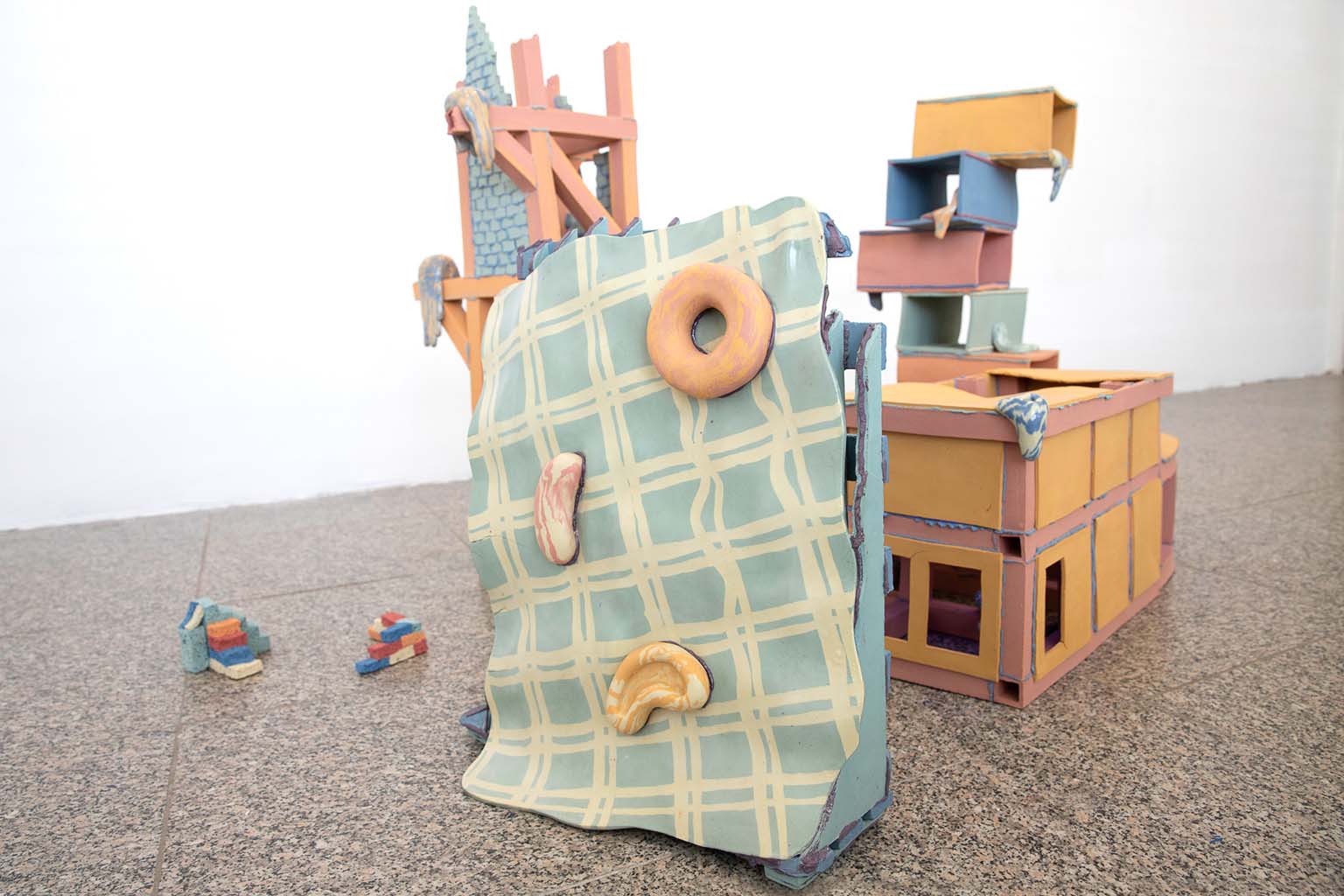
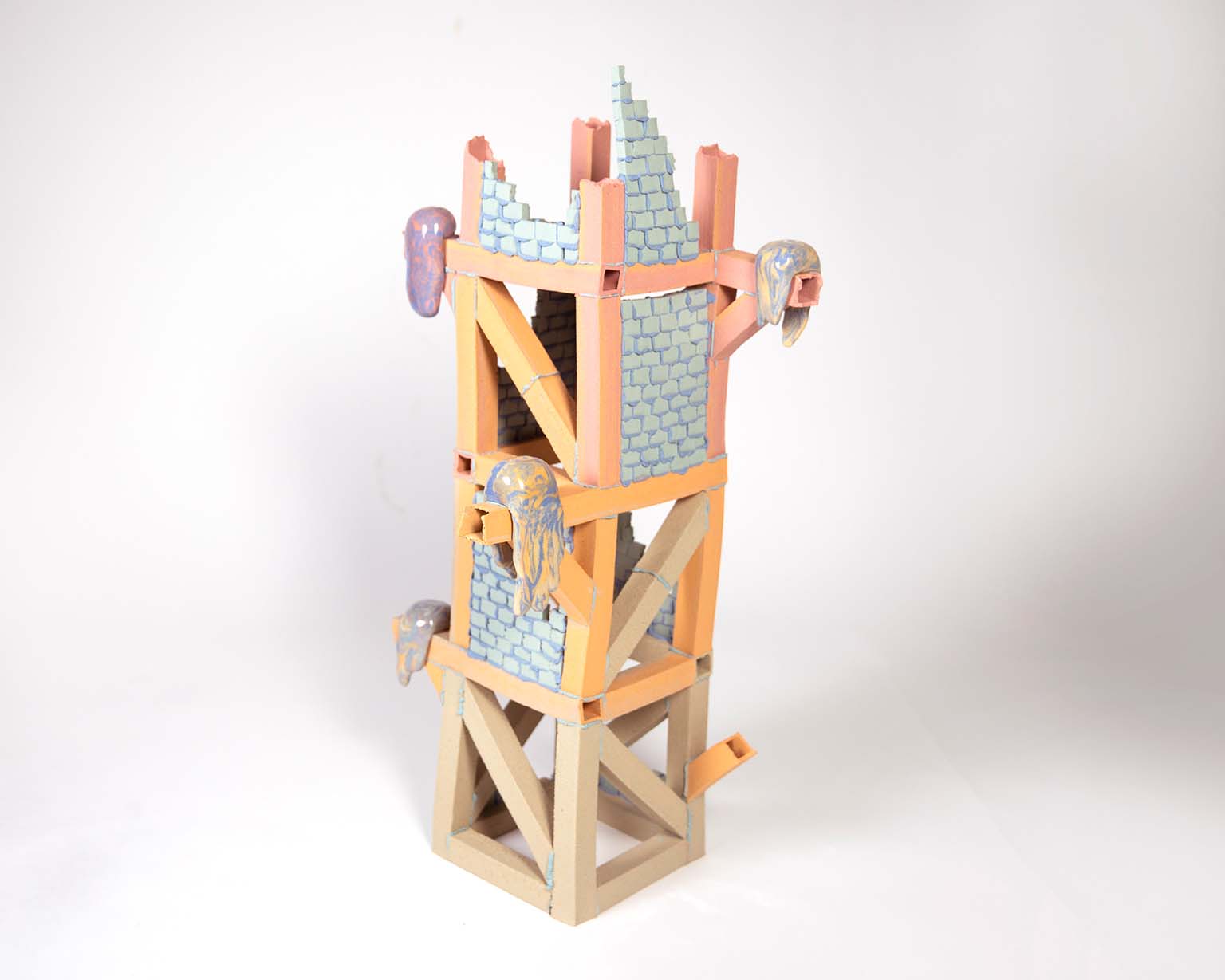
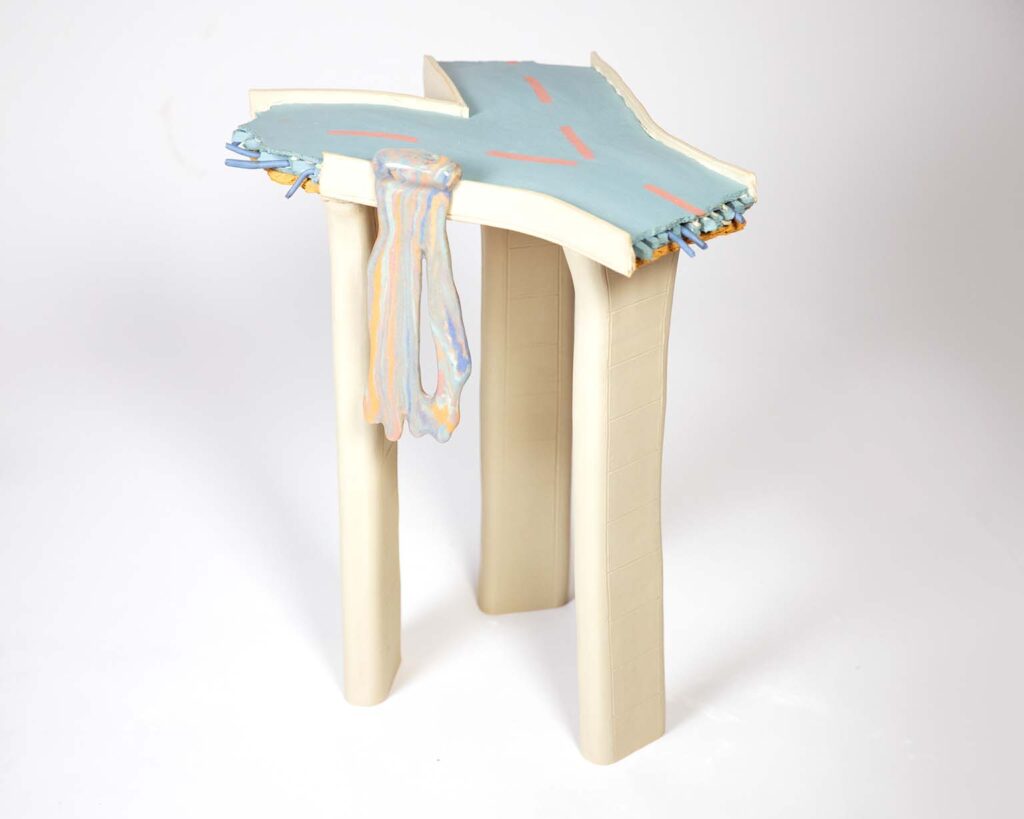
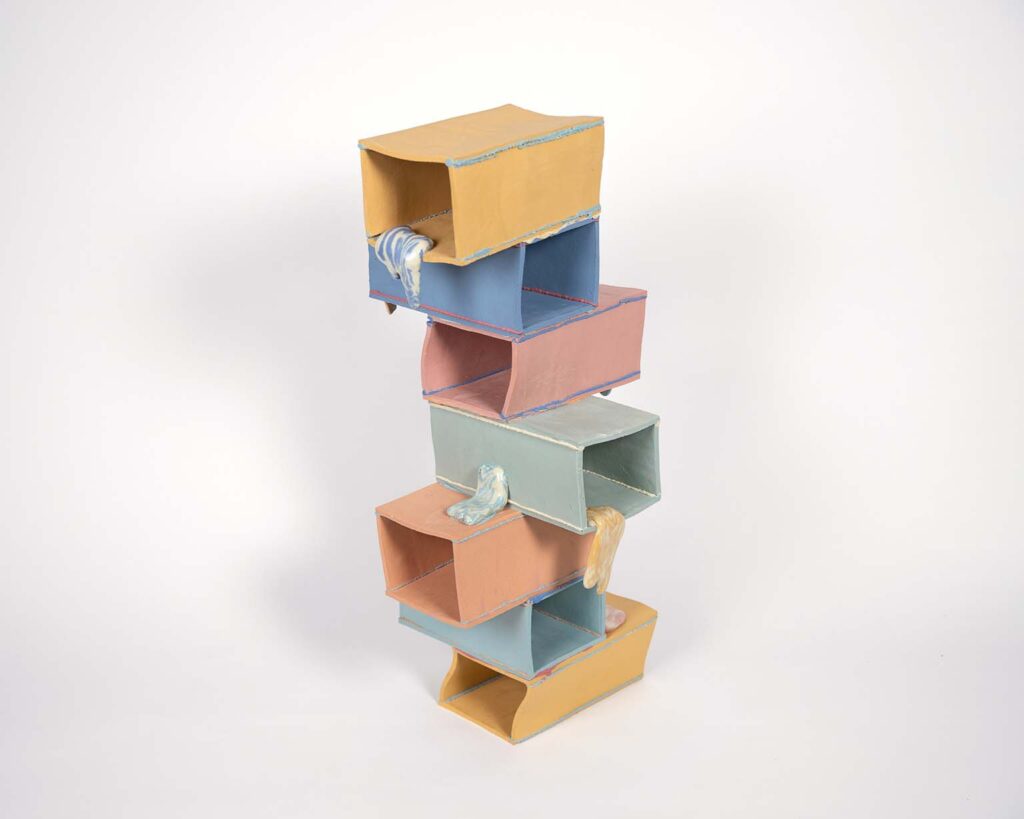
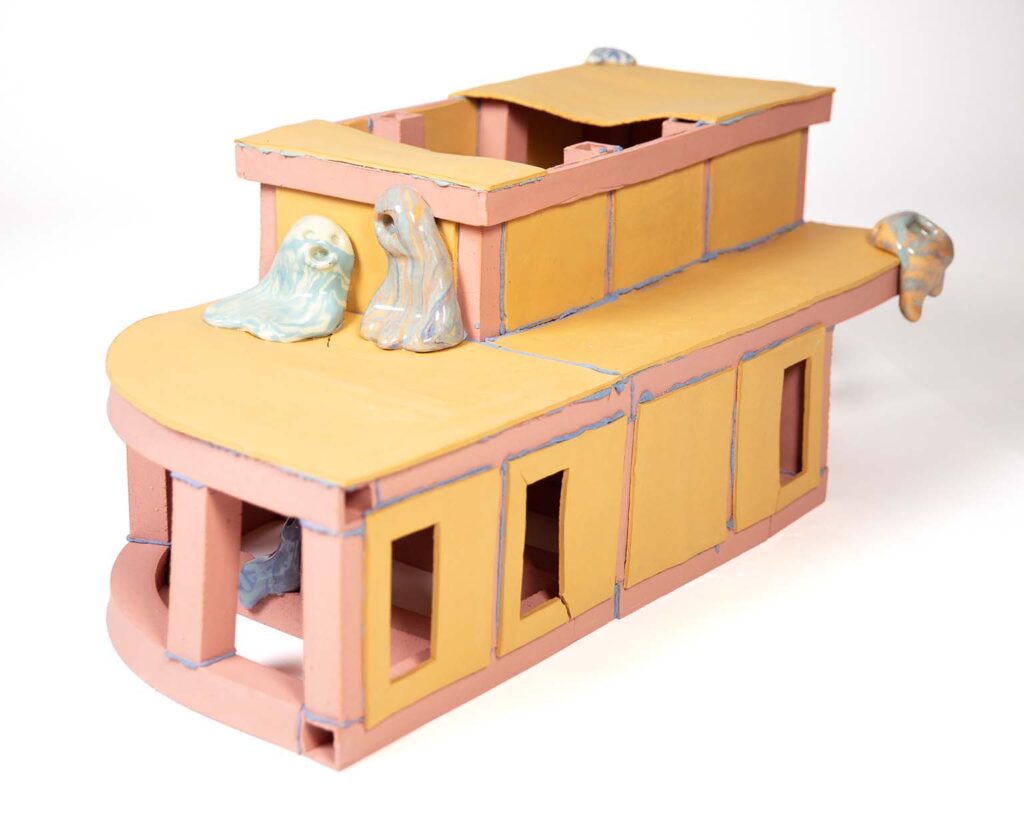
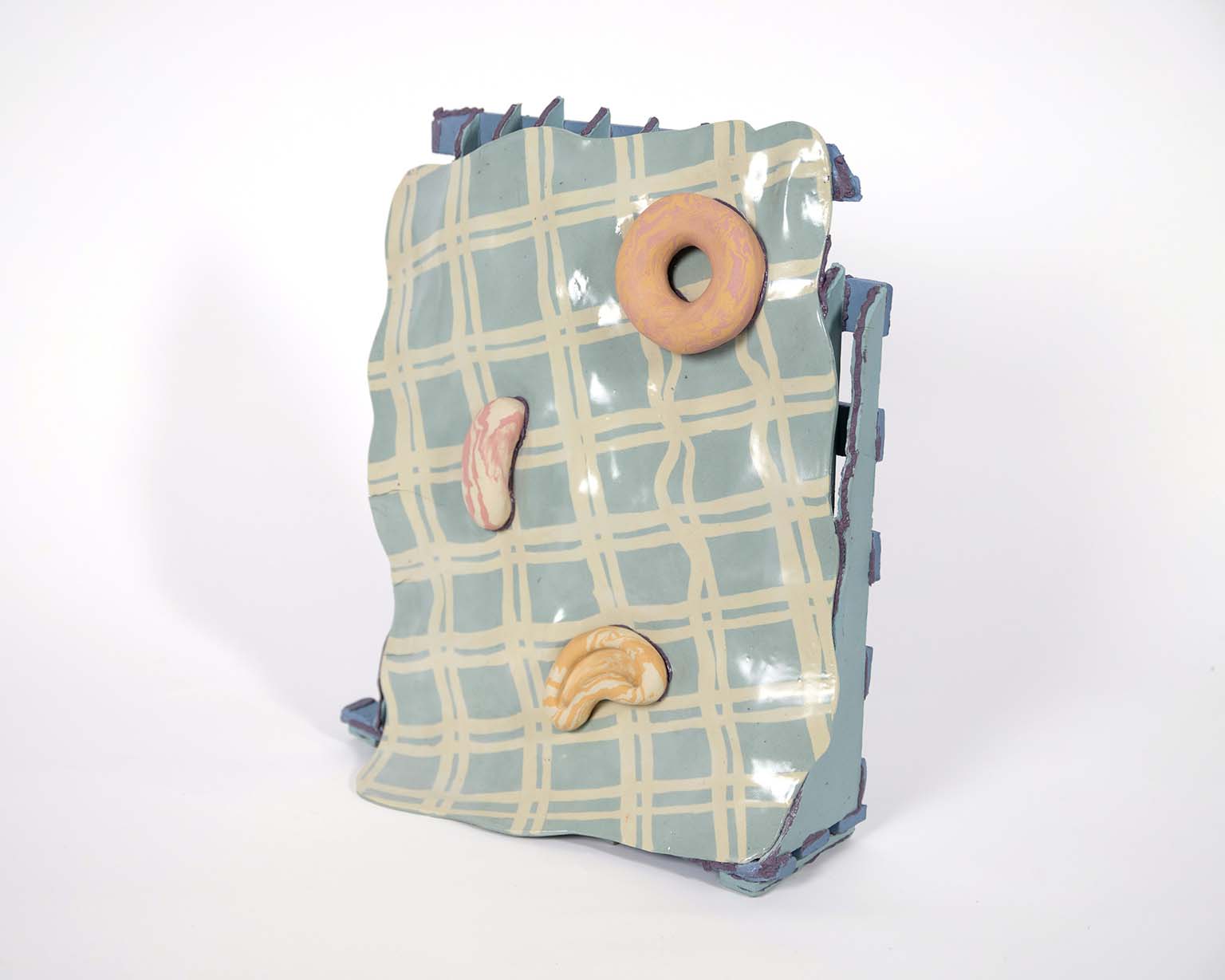
Drawing on the ruins of modernity, forsaken buildings once inhabited and later reclaimed as teenage gathering grounds, Santiago Insignares-Martínez, from Colombia, reimagines these spaces in a clay installation where small, viscous, ghostlike forms perch upon, cling to, and seemingly melt from decrepit miniature buildings. Taking the phrase “to hang” across its many registers, he moves between the literal and the colloquial, the physical and the social, translating its dimensions into an eccentric architectural landscape rendered in clay.
Rooted in his own adolescence, when such ramshackle structures became playgrounds for loitering and parties, the work is nostalgic, yet informed by an awareness of the social and economic conditions that produced these voids. He asks viewers to draw near, to peer through windows and openings, to see what is happening inside the structure—a voyeuristic and curiously inviting encounter. Slime-like forms droop and stretch from ledges and facades, at once cheeky and faintly ominous. Movement is implied everywhere: in the biomorphic beings arrested mid-fall; in the patterns that pull the eye; in bonding slip that drips between planes of clay as if still drying; in structures suspended mid-collapse; and in a bridge broken mid-span.
His palette is buoyant, the work fun and whimsical. Rather than relying on glaze, he mixes pigments and stains directly into the clay, allowing spontaneity to shape the process, the playful residue of that impulse vibrating in the finished work. One leaves charmed by Insignares-Martínez’s expansive command of the material, intrigued by the fanciful world he has constructed, and eager to see what elastic terrain he will conjure next.
Art Prize Laureate
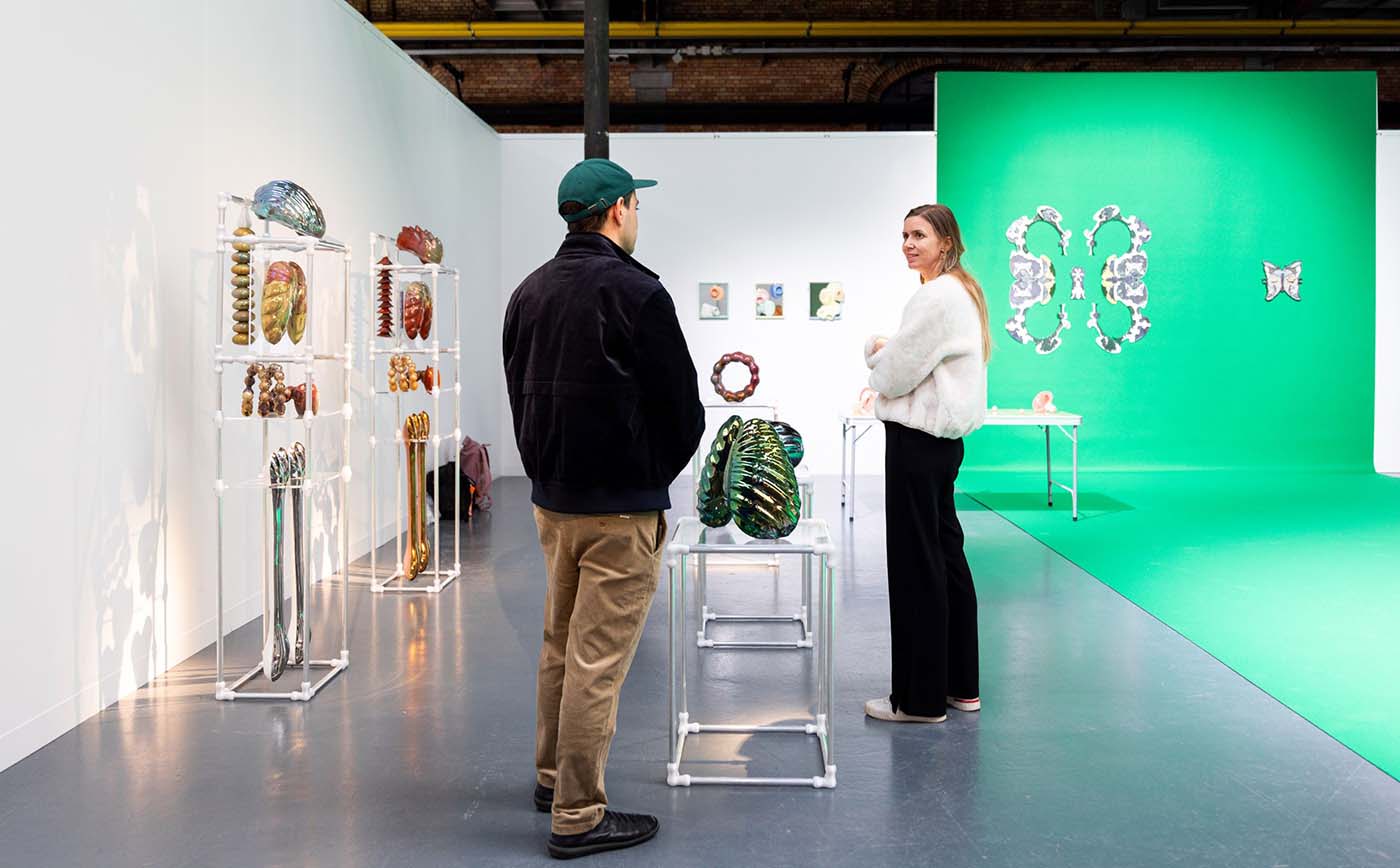
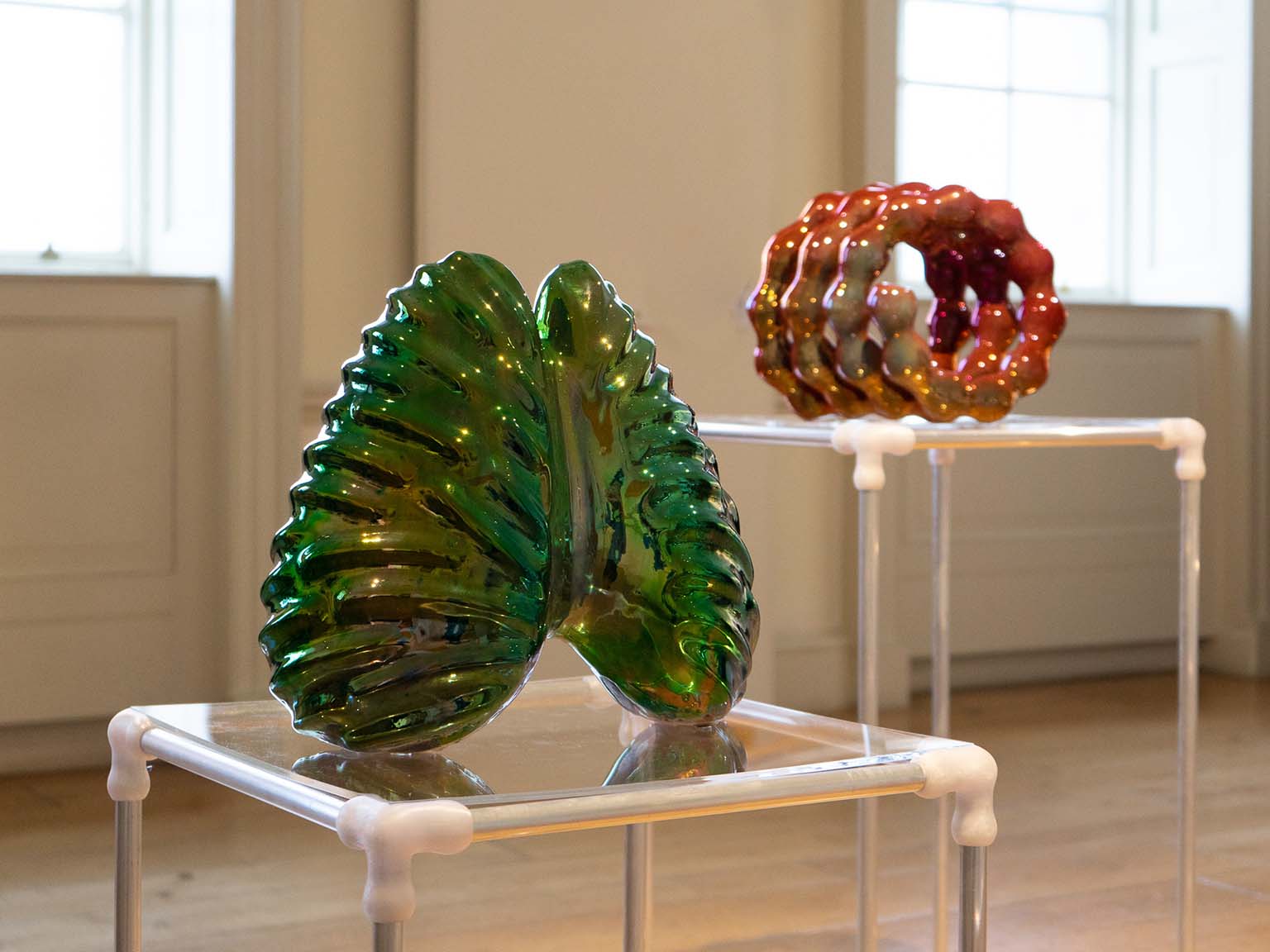
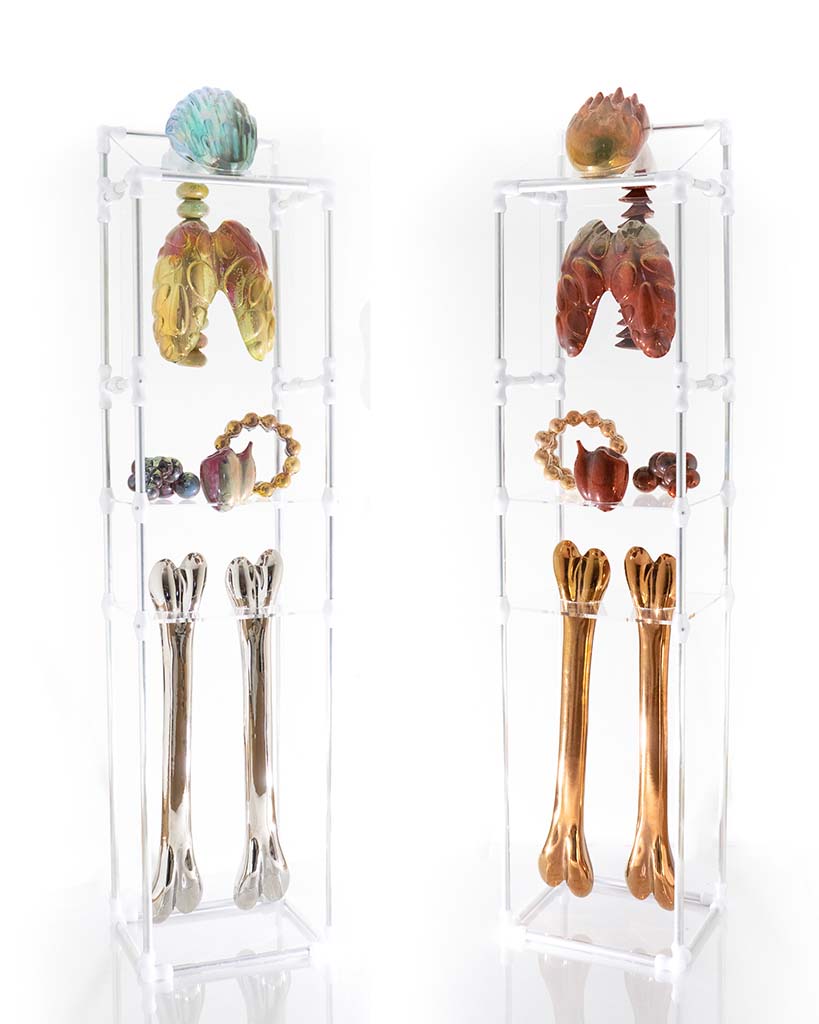
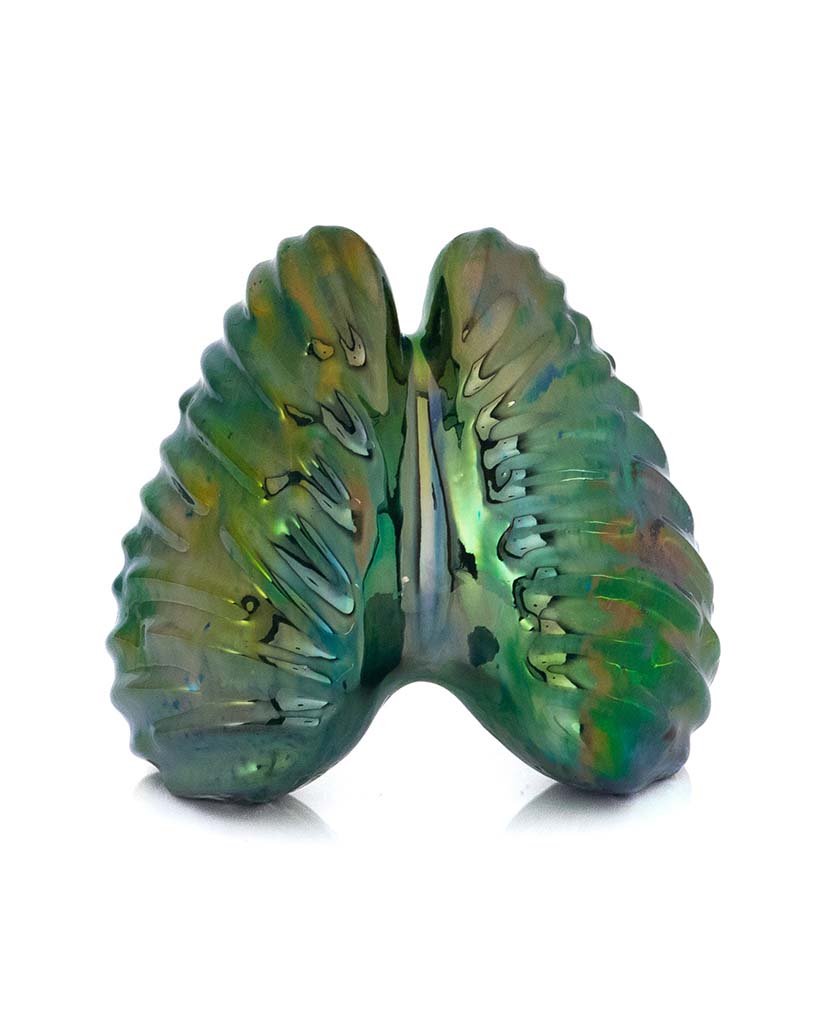
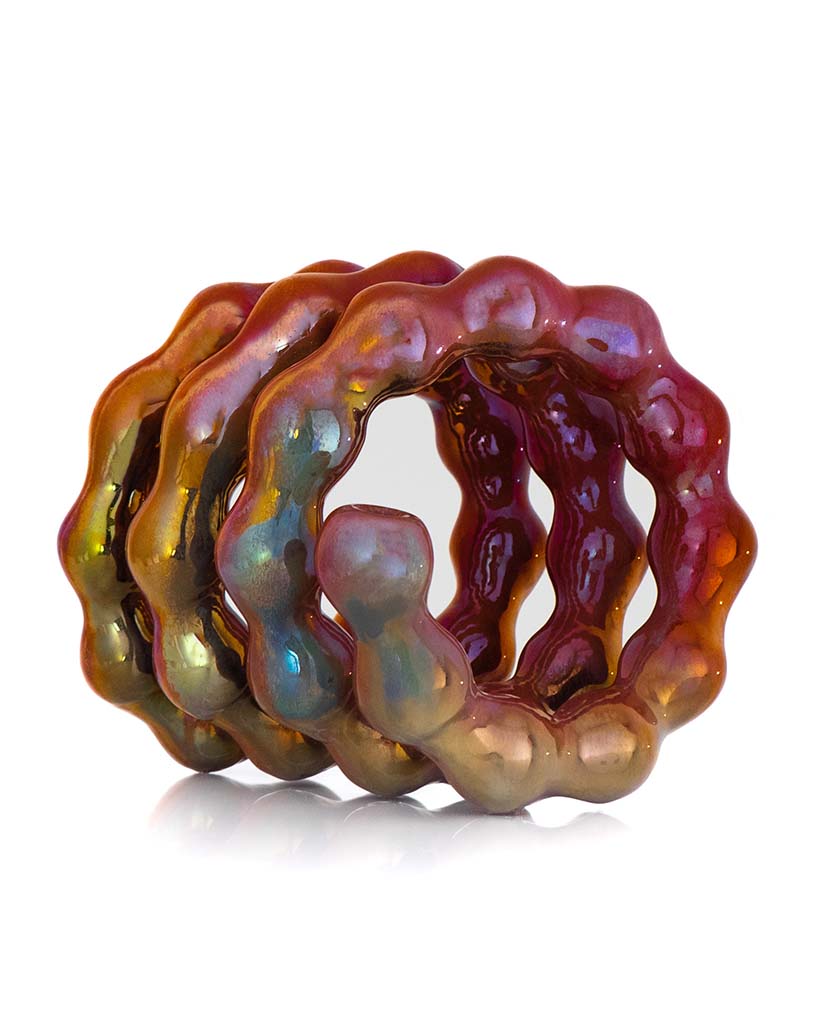
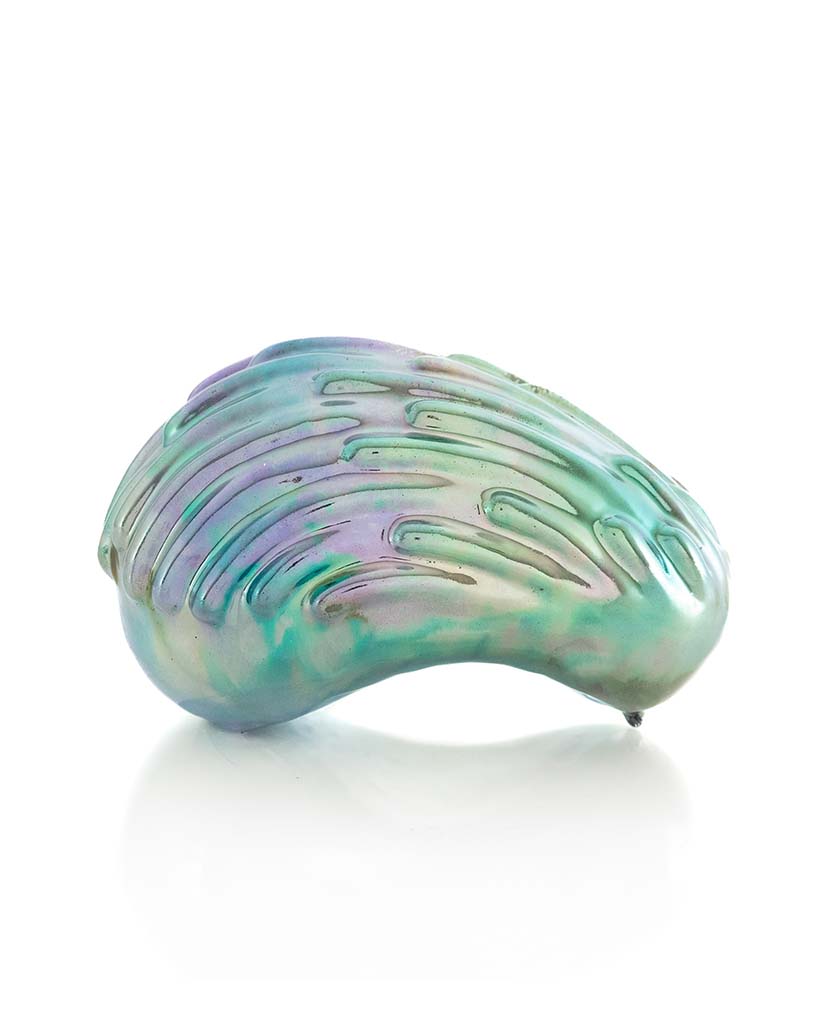
One of the most complex challenges, and often frustrating aspects of completing a work, is the complicated consideration of surface choices. Questions arise about how color, texture, matte, or reflectiveness enrich the content and support the idea of the object’s aesthetic. Special glazes have captured the imagination of artists as well as collectors for centuries, and some dazzling effects, such as crystalline glazes—where crystals are actually grown in the kiln and frozen onto the glaze—oil spot, where drops resembling oil on water appear, or hare’s fur, which gives the effect of an animal’s skin, demand attention. Achieving these magical surfaces often requires years of masterful research and cultivation.
Luster glazes have their own special appeal, and while they might seem carnival-like, their iridescent, shimmering, and metallic finishes have a captivating, vibrant, and dynamic quality. It was therefore a delight to engage with Uriel Caspi, who has boldly utilized this centuries-old surface to bring a special awareness to his anatomical forms that hover between preciousness and bodily awareness.
Labeling his fragmented body series Corpus Archetypus in Luster not only alludes to ancient archaeology, but the eerily fragmented body parts themselves reference the idealized form of an organism, in this case lungs, heart, brain, colon, and bone limbs, either laid casually on shelves or cleverly mounted in clear plastic scaffolds mimicking a standing figure, as if the viewer had X-ray vision.
Caspi has demonstrated an uncanny ability to meld a variety of traditions, drawing on both ceramic history—the lure of Arabian lusters—with a modern sensibility nodding toward increased awareness of organ donation, societal focus on health and wellness, and cultural narratives that shape perceptions of body image and health. There is no question, however, that the visual impact is as alluring as it is significantly poignant.
- Judith S Schwartz, PhD, President, MoCA/NY
Art Prize Laureate
Marie Pic is the winner of the YXCCCA (cn) residency for 2026 and the recipient of the Jury Prize 2026.
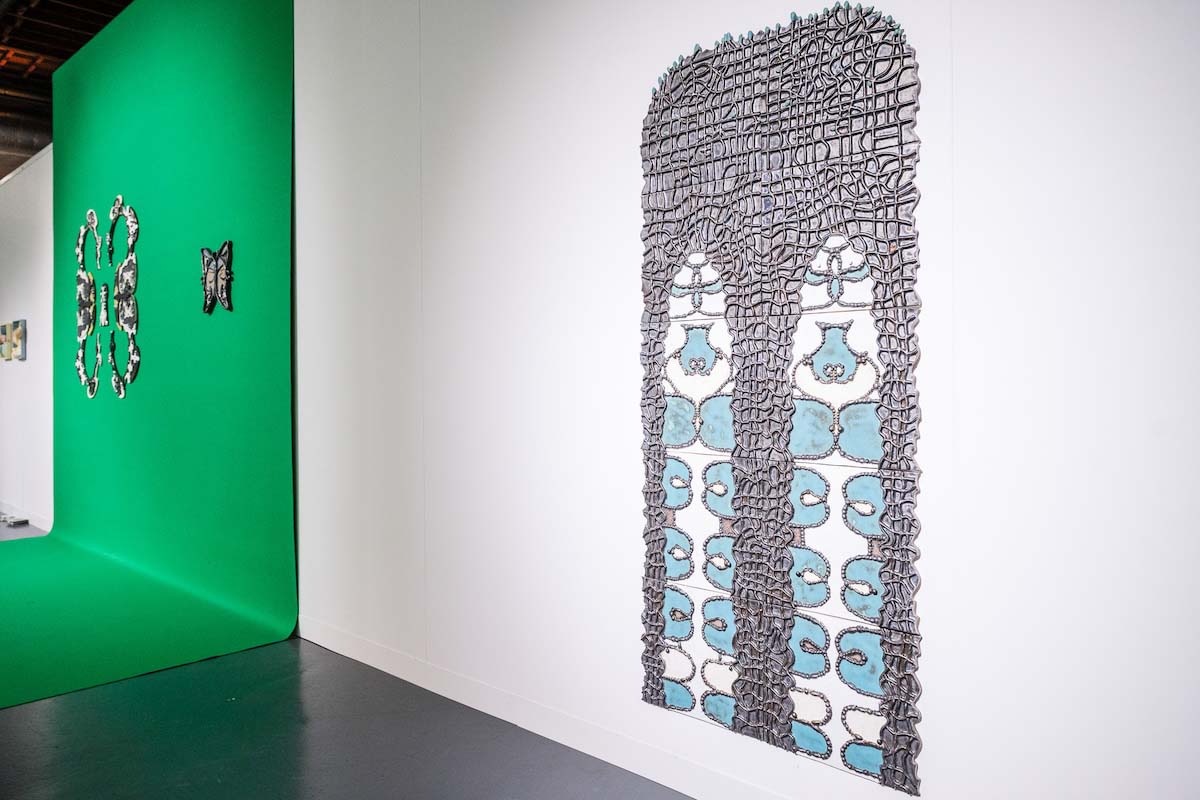
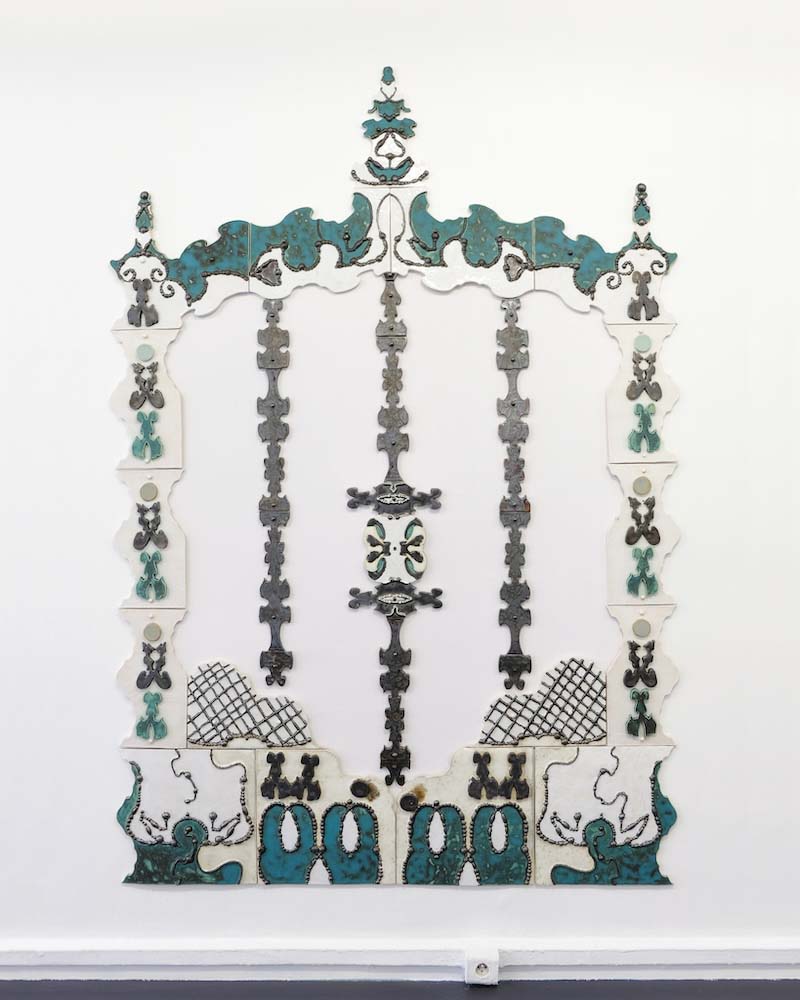
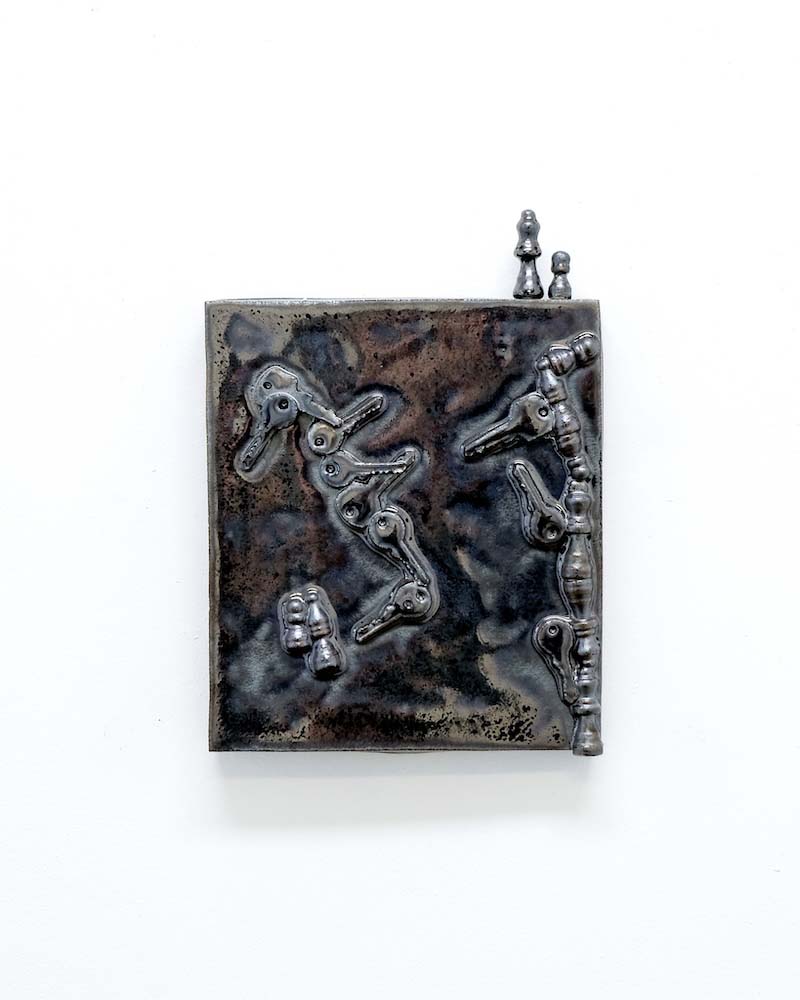
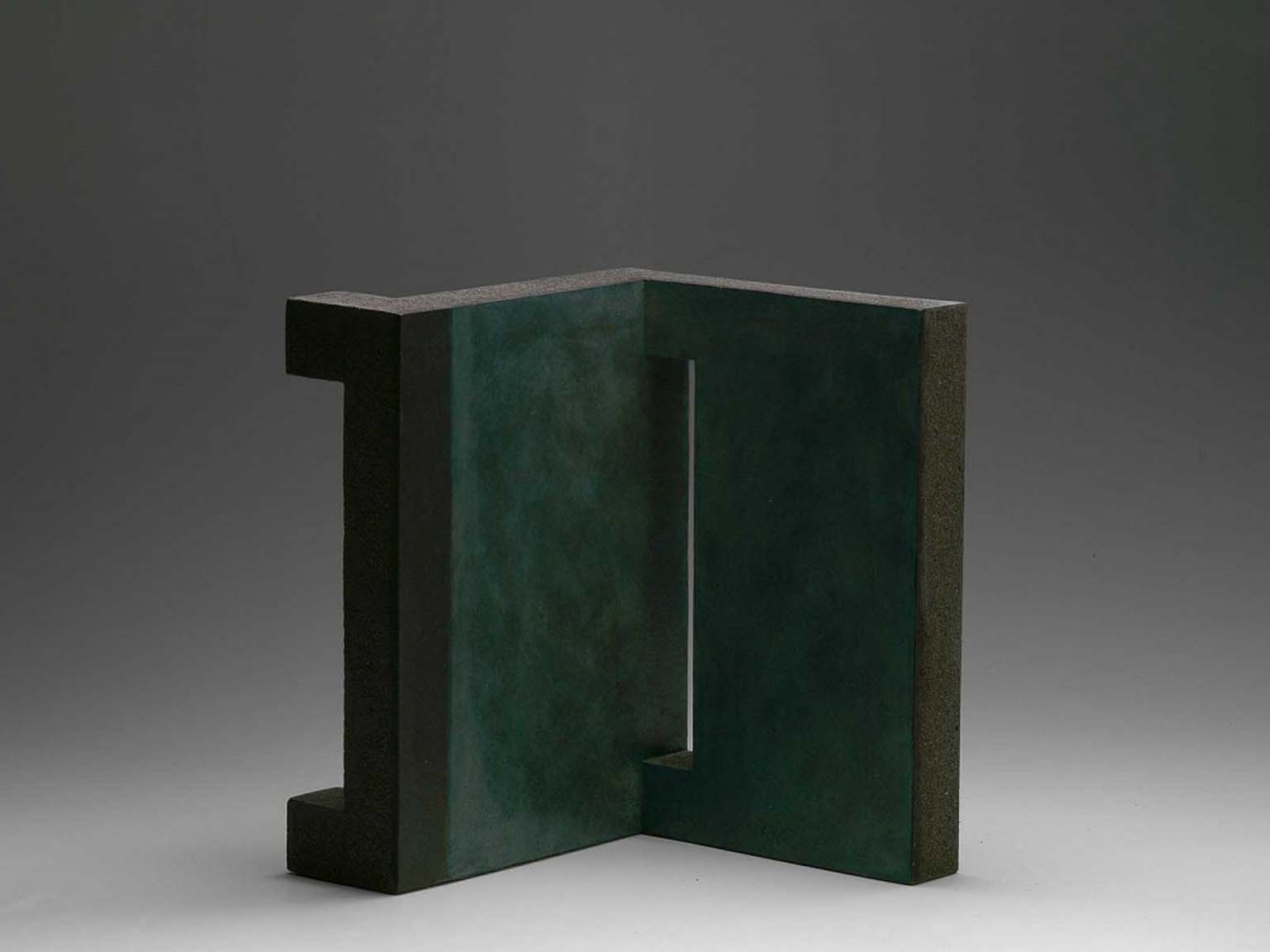
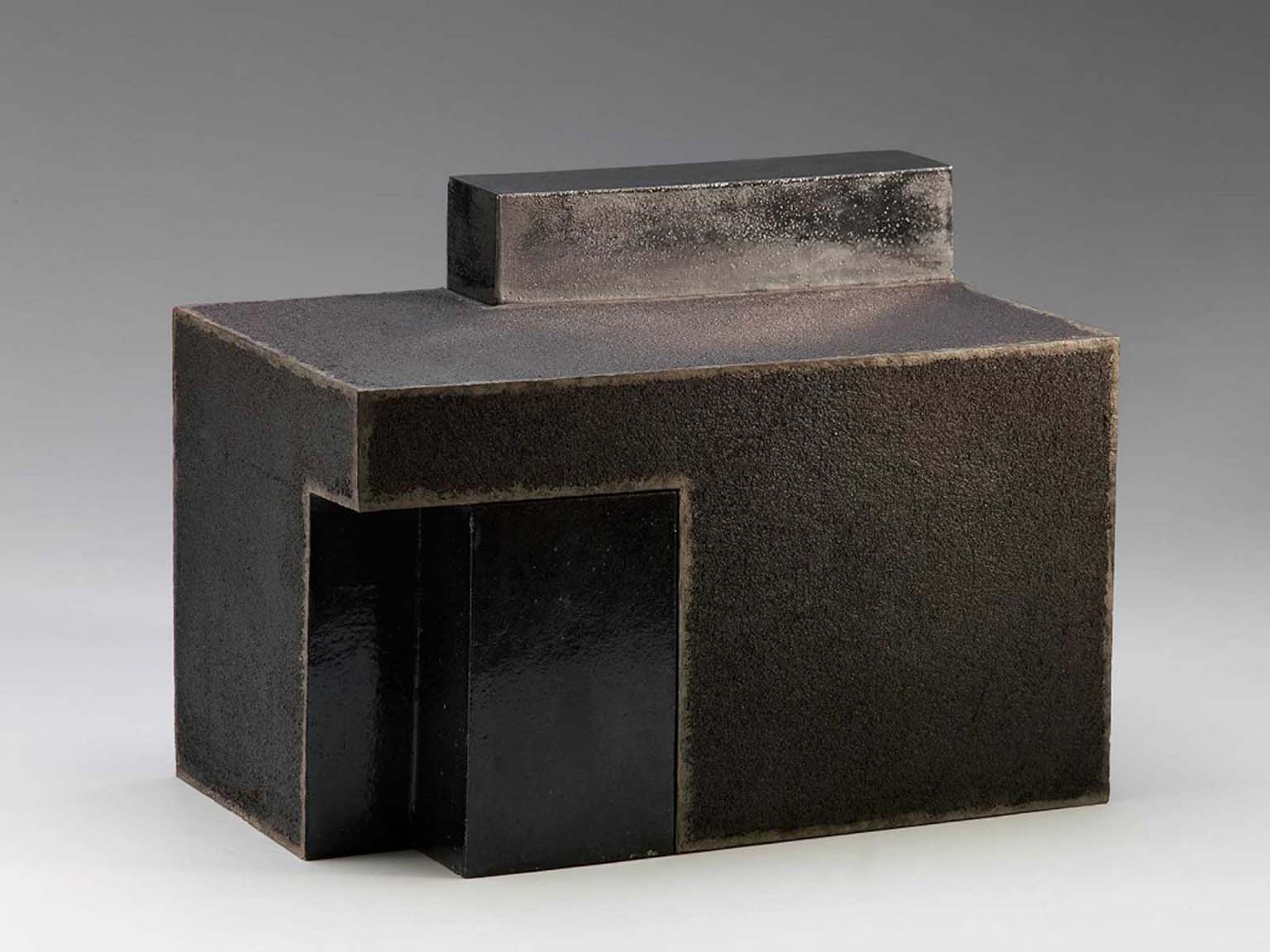
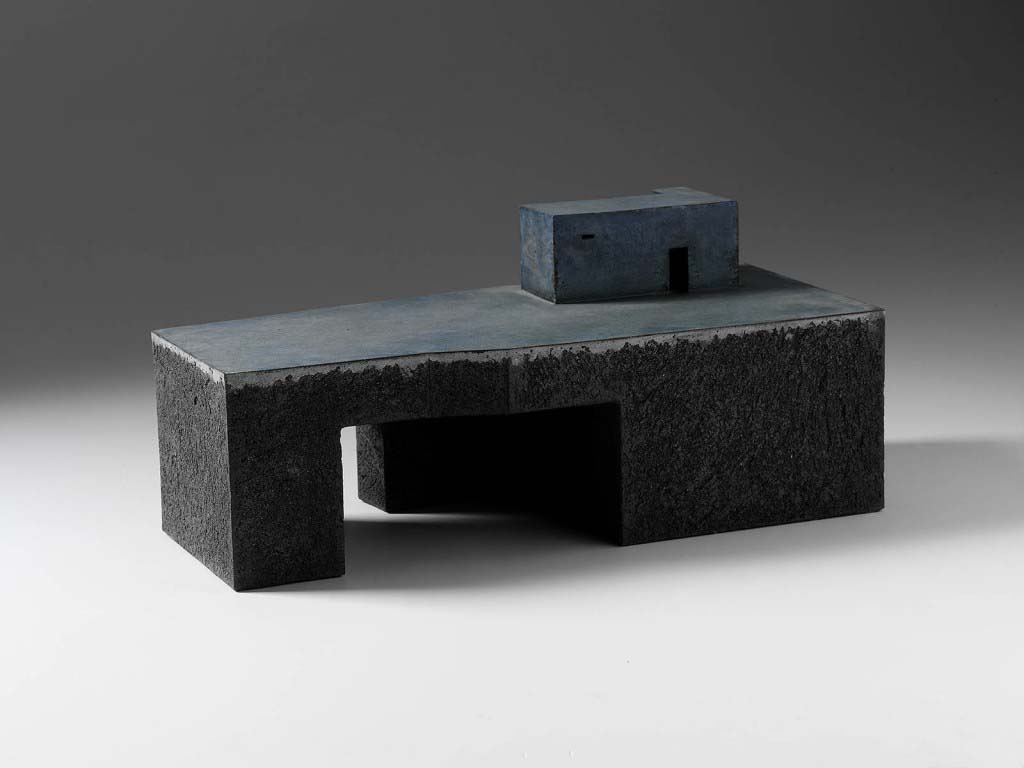
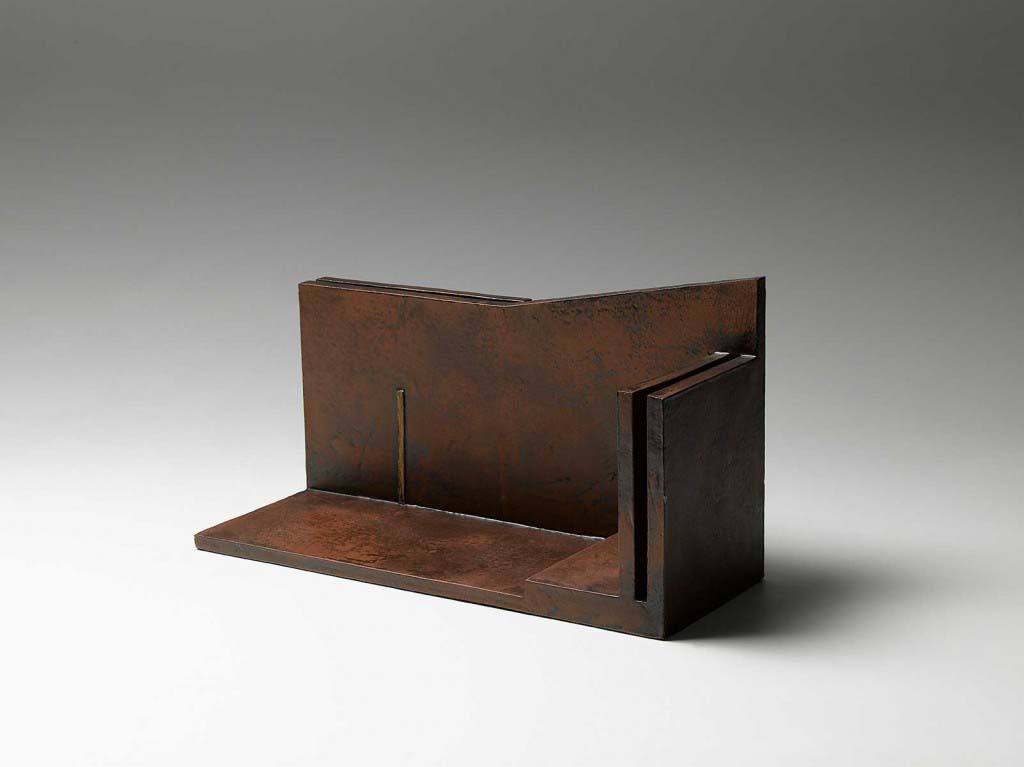
March 16, 1936 – January 1, 2026
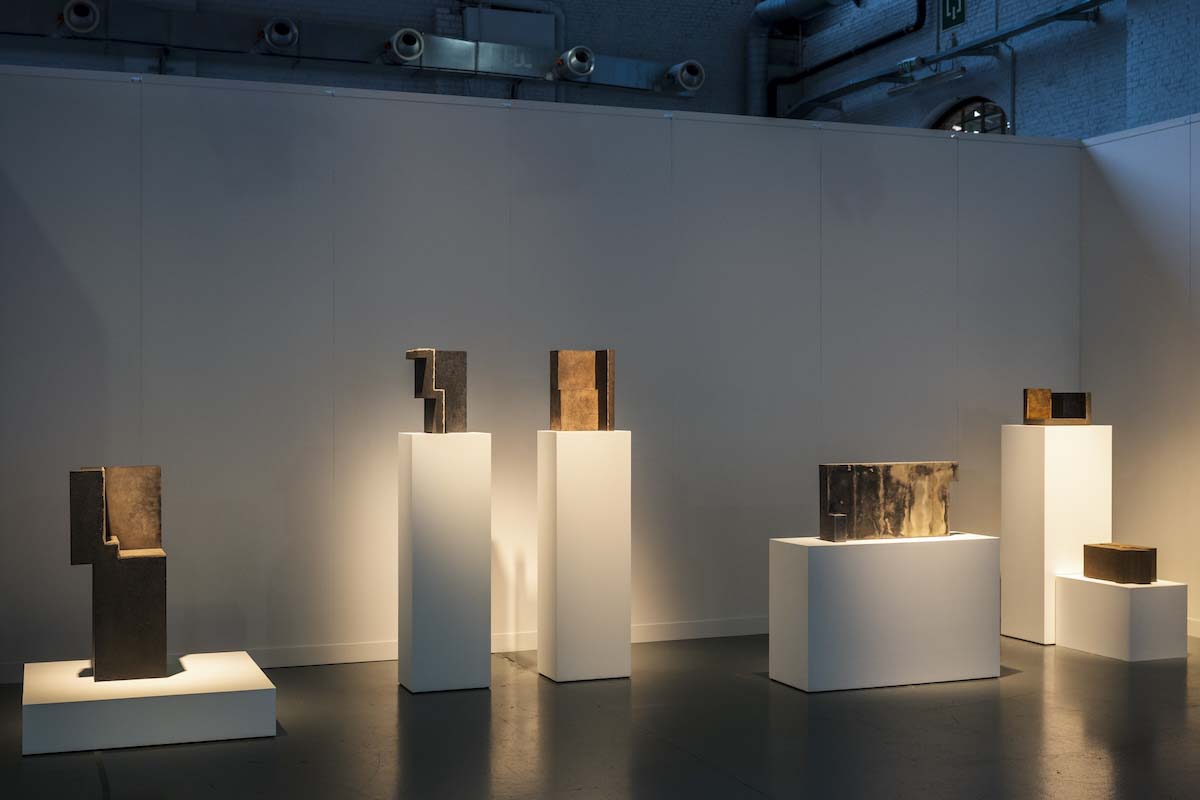
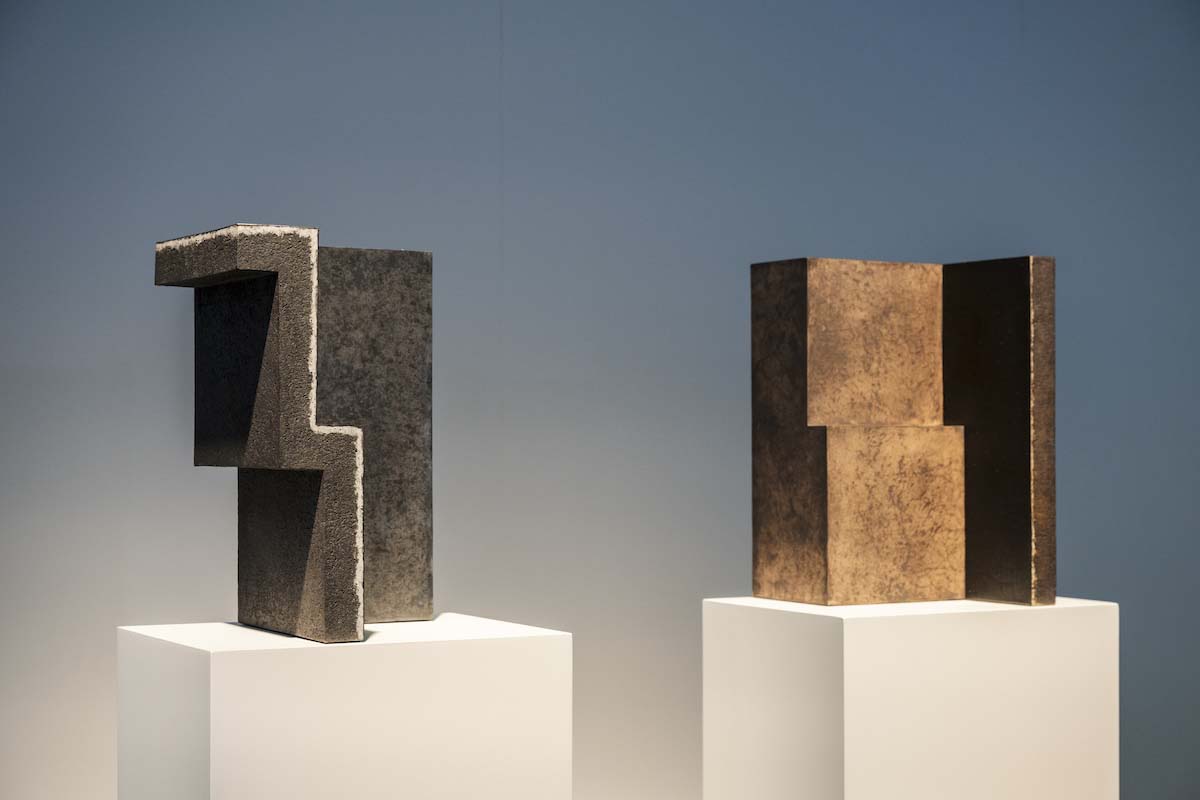
It was particularly heartwarming to see a tribute to Enric Mestre at Ceramic Brussels. I had known him for more than 30 years when I first met him in his studio in Alboraia, Valencia, Spain. He was a charming, distinguished, and sensitive soul who emanated a depth of knowledge and the demeanor of a wise sage.
His aesthetic was clean, pure, and austere, which manifested in pristine and carefully detailed surfaces with precision finishing. His sculptures felt like architectural gems—models or dwellings that inspired the feeling that you wanted to live in them or be near them for their strength and solid geometry. While he was prolific in painting and drawing, it was his devotion to creating sculpture in clay that distinguished his career and elevated his focus on ceramic art beyond craft.
You might call him a minimalist, and indeed, he knew how to extrapolate the most essential components for the greatest impact. His artistic voice was bold, unique, and powerful. He kept a limited color palette so that one could, and often did, focus on the purity of his forms. I admired how he consistently used such details as slices of open space or cutouts of air that brought life and lift to the forms. These were often reinforced with precise incised lines that ran as motifs encapsulating the forms. Enric was truly a visionary, and his style was inspirational.
- Judith S Schwartz, PhD, President, MoCA/NY