

12345 College Blvd,
Overland Park, KS 66210
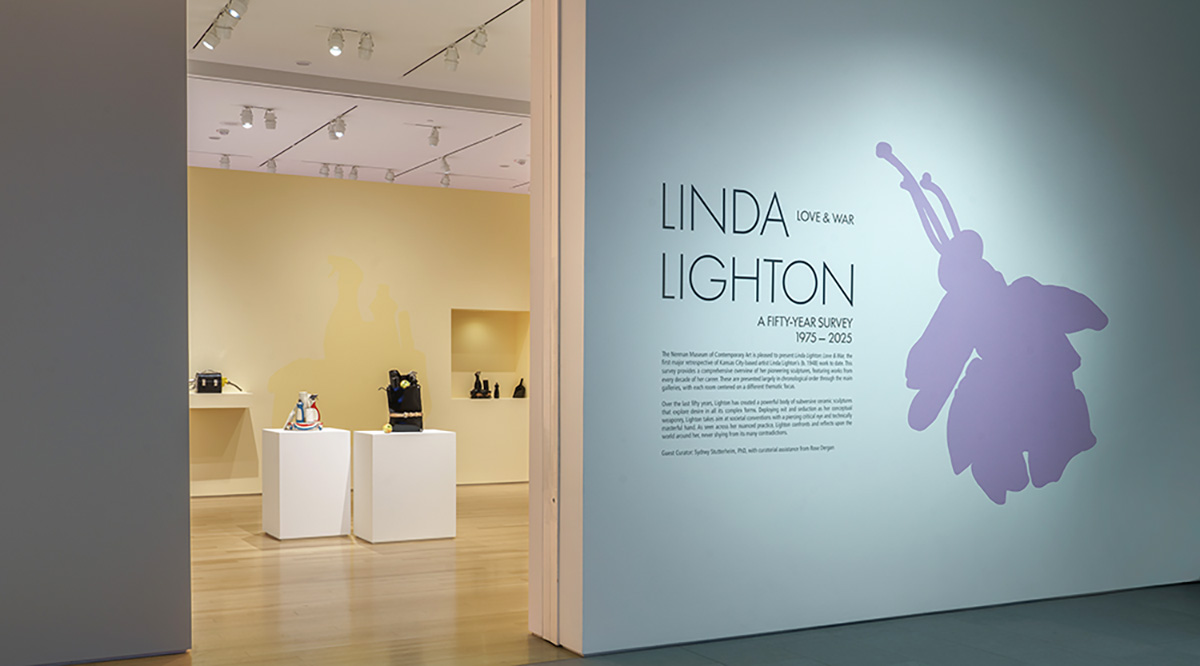
At the Nerman Museum of Contemporary Art, Love & War: A Fifty-Year Survey 1975–2025 charts Linda Lighton’s evolution from a keen observer of the everyday into a fearless critic of power, gender, and violence. Her work convincingly demonstrates defiance and a precise understanding of the cultural forces that shaped her and, by extension, shape us. From the outset, the exhibition establishes its through-line: the transformation of domestic and feminine symbols into sites of resistance.
On view through May 3, 2026, the survey, spanning five decades, unfolds with deliberate clarity that reads less as a retrospective than as a sustained act of witnessing and critique: the Vietnam War era colliding with the Civil Rights movement, Watergate, the feminist movements, the oil crisis, and, always at the back of our minds, nuclear Armageddon. Lighton is exacting in how she confronts systems that normalize violence to lull society into distraction, numbing us with waves of mayhem until it all becomes invisible, so as to make room for the next outrage. Her work reveals a dark, macabre humor, offering a chuckle when considering the subjects she explores, rather than bleak despair.
“Above all else, it was [Lighton’s] use of humor and wit to deal with profoundly serious topics that really crystallized my understanding of her practice,” Sydney Stutterheim, the guest curator, elaborates. “She works with such ease and joy that it is sometimes tempting to forget how serious an artist she is. She doesn’t shy away from topics that others might not want to touch, which I love. Still, she does this carefully, with such a sharp mind but playful hand.”
Gun culture, extractive industry, reproductive politics, and domesticity emerge as interlocking mechanisms rather than isolated incidences (Magnum Mandala, Hands Up Don't Shoot #2, Love and War: The Ammunition II, What the Bridal Consultant Never Tells You). These are foundational to Lighton’s oeuvre; she presents guns as sanctified objects, the last instance before a moment changes course. Domesticity functions as a comforting illusion of safety and control, but hardens into another form of servitude. The survey reveals systems of power and homemaking unraveling as moral clarity fades, exposing the illusion of mid-century optimism and how its fractures still shape the present.
Lighton came of age amid the spectacle and consumer gloss of the 1960s, a postwar period defined by seductive surfaces and excess, even as seismic social and political upheavals unfolded across America and Southeast Asia. Having grown up in privileged circumstances in Kansas City, Lighton’s biography seems almost typical of an era that actively sought out “familial confines.” And while she never doubted she would become an artist, a woman of that era had to navigate carefully. She was raised amongst art; Wayne Thiebaud and Diego Rivera hung in the kitchen. And while her upbringing might seem enviable, her indomitable spirit cast her as a black sheep in the family. Her intelligence and desire drove her towards an art career; first attending the École des Beaux-Arts de Fontainebleau in France, the Factory of Visual Arts in Washington in the early seventies, and later Western Washington State College and the University of Idaho, before finally attending the Kansas City Art Institute in 1987.
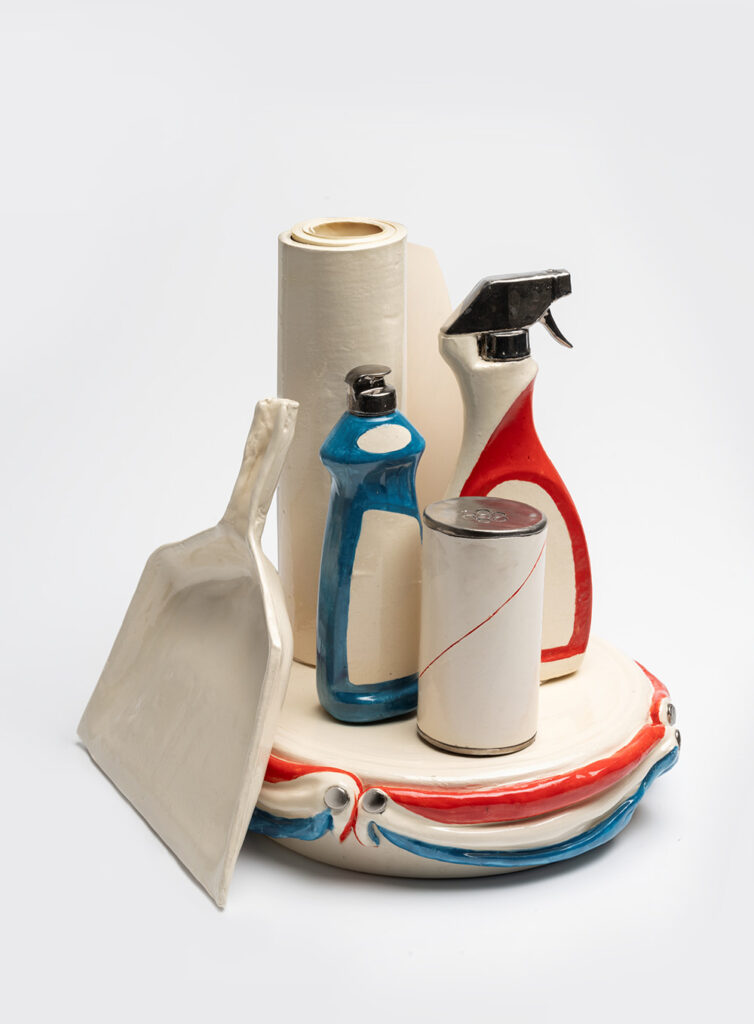
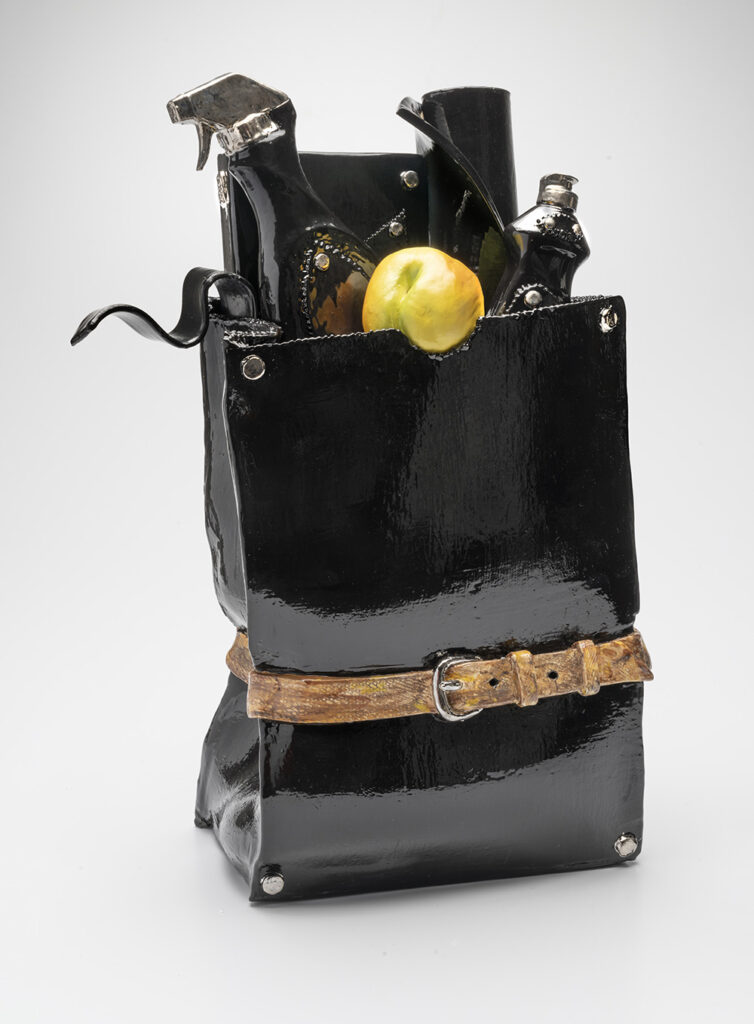
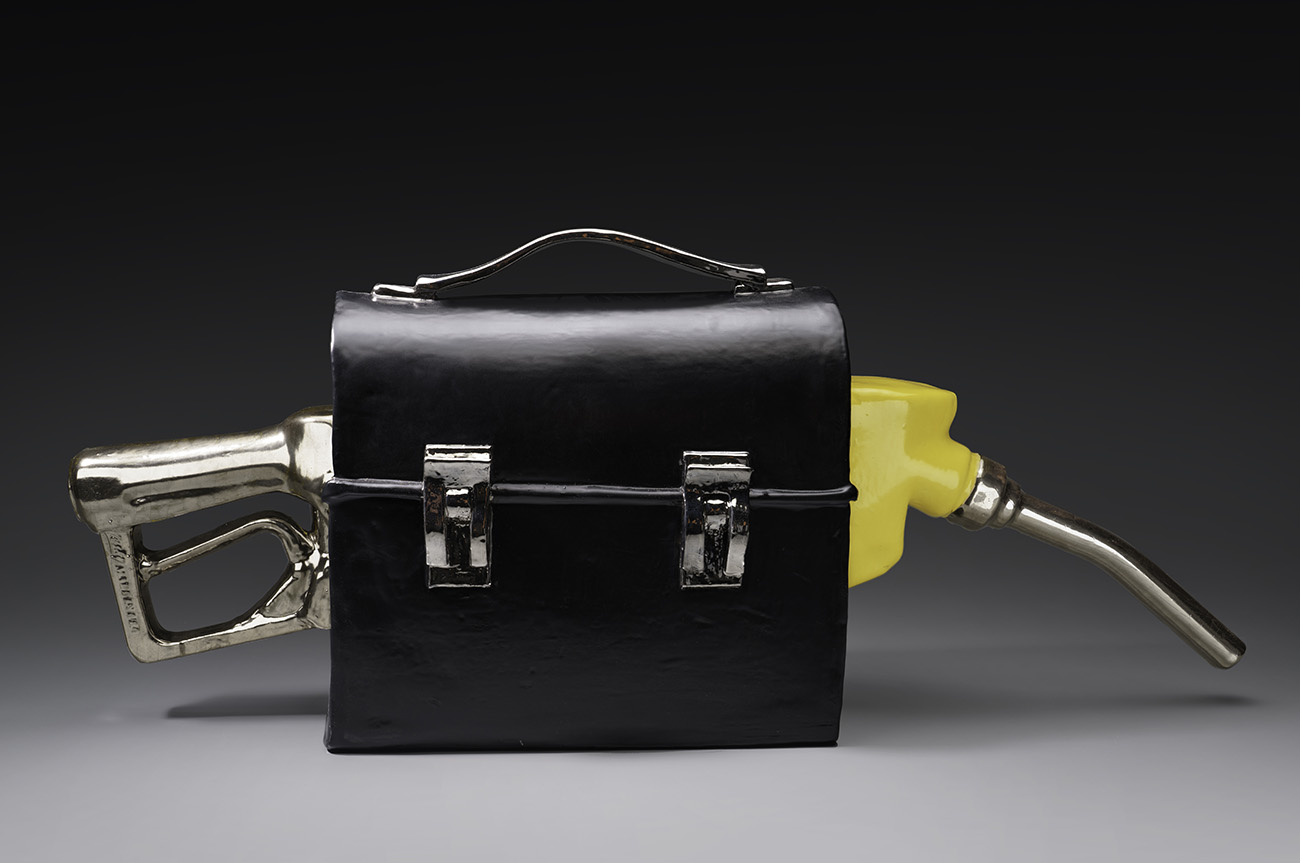
Her sculptural language opens with familiar, everyday objects: cleaning supplies (The First Lady), wrenches (Pearl Handle, Dueling Monkey Wrenches), a lunchbox pierced by a gas hose (Working Man’s Dilemma), and a black shopping bag cinched tight by a belt (Daddy’s Hungry). These objects of workaday life, tied to labor, become symbols of constraint and endurance. The tightened belt in Daddy’s Hungry reads as both economic metaphor and bodily restriction, a life structured by the need to nurture and nourish your family, the reality of doing so a Sisyphean task. From the outset, Lighton locates the hazards of routine, reframing domestic space as a site of pressure that quietly conditions behavior across generations.
On Lighton’s work, Stutterheim shares, “As I started going through her studio more carefully and reviewing her entire oeuvre, I saw that her work centered on three main themes. [...] works that deal with the social, biological, and political… And to me, what ties these seemingly disparate works together is the continued exploration of desire as a driving force: desire to love, but also desire to win, to fight, to conquer, to overcome, to live. All living things share those motivations, and so the title Love & War is meant to draw out how those polarities are in fact closely linked.”
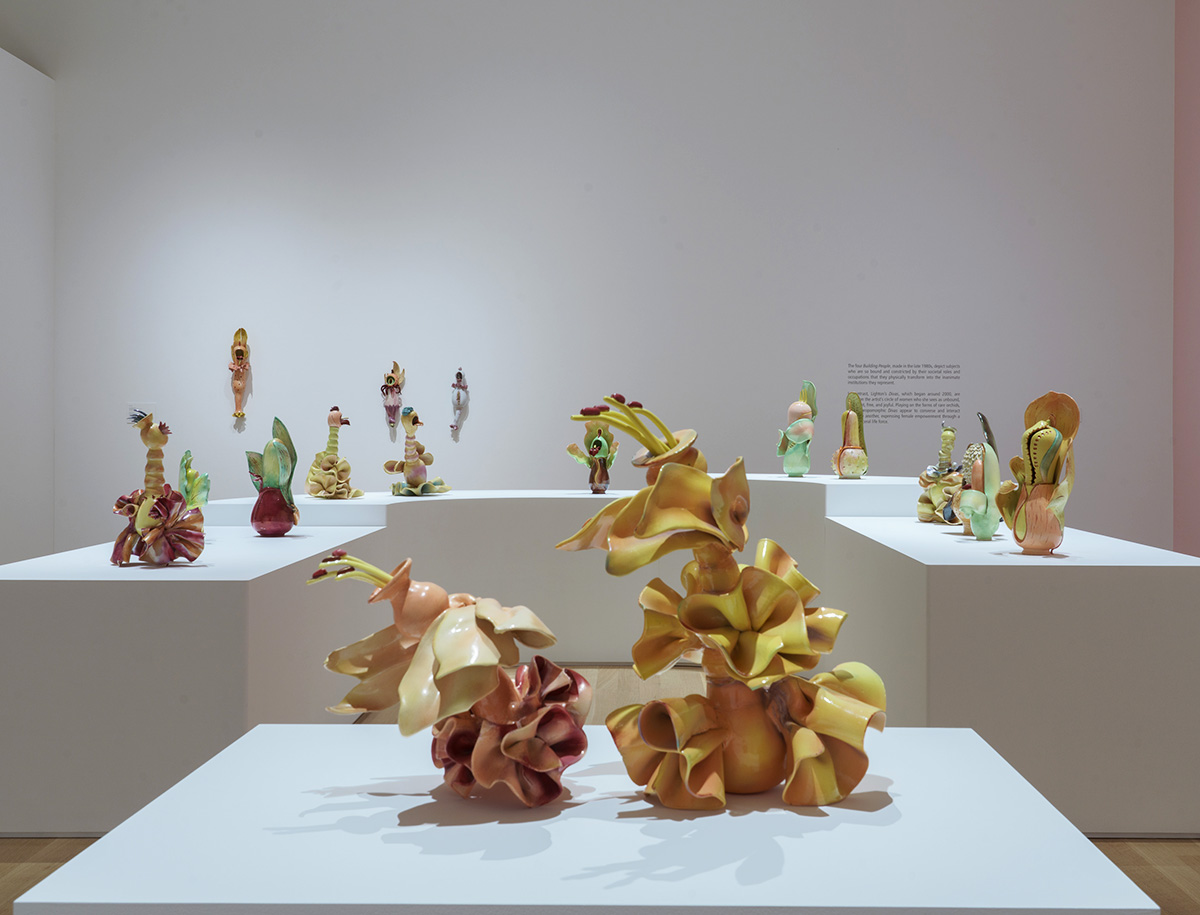
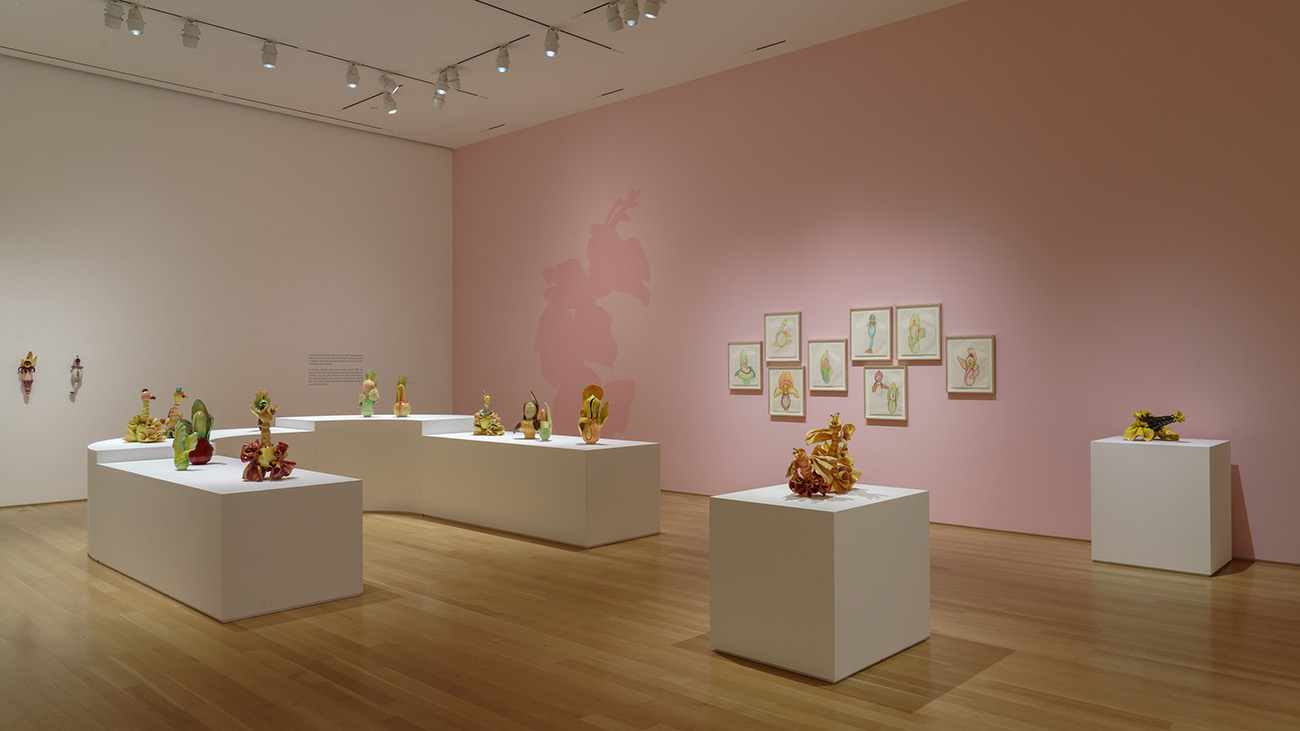
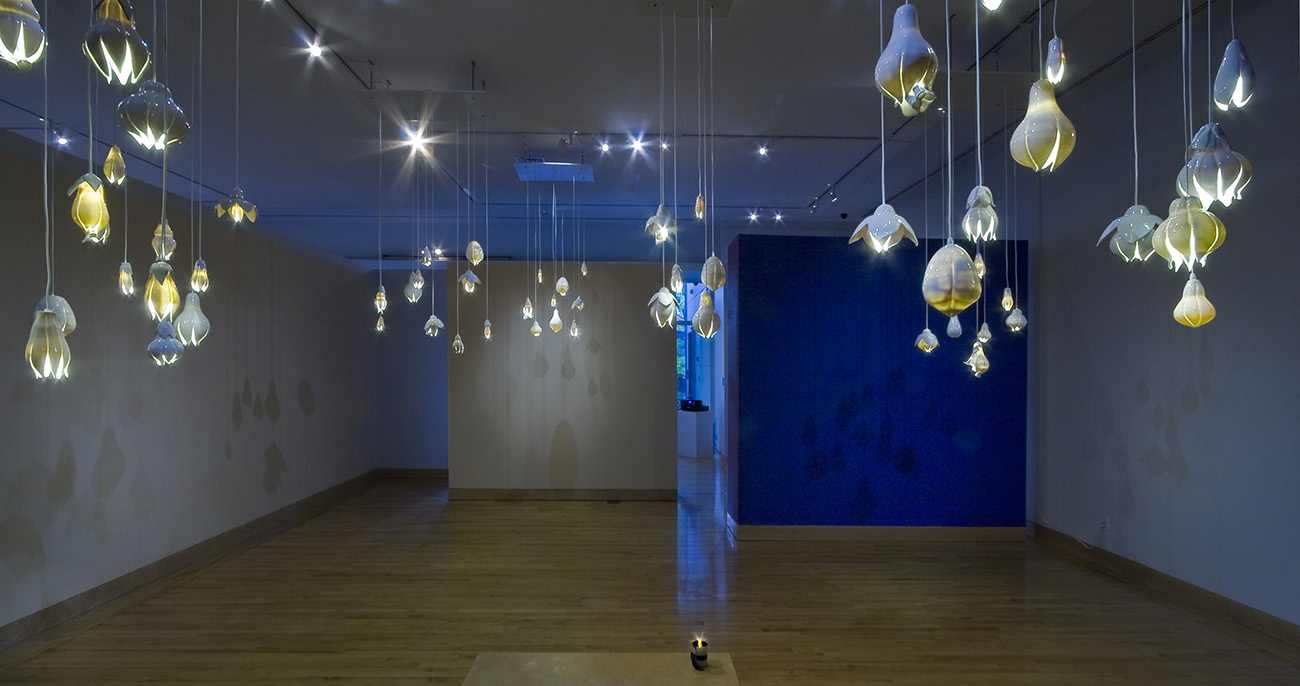
In pieces such as Bulb with Water Lilies (2000), the forms are lush and reproductive (Diva Bebe, 2000; Diva Laura, 2002; Diva Marilyn, 2000). These are not passive studies; many resemble orchids, a plant that “symbolize[s] thoughtfulness, refinement, fertility, beauty, charm, and love.” This vocabulary becomes a turning point: a language of femininity that Lighton presents as flora shifts into critique, where ornament edges toward armament.
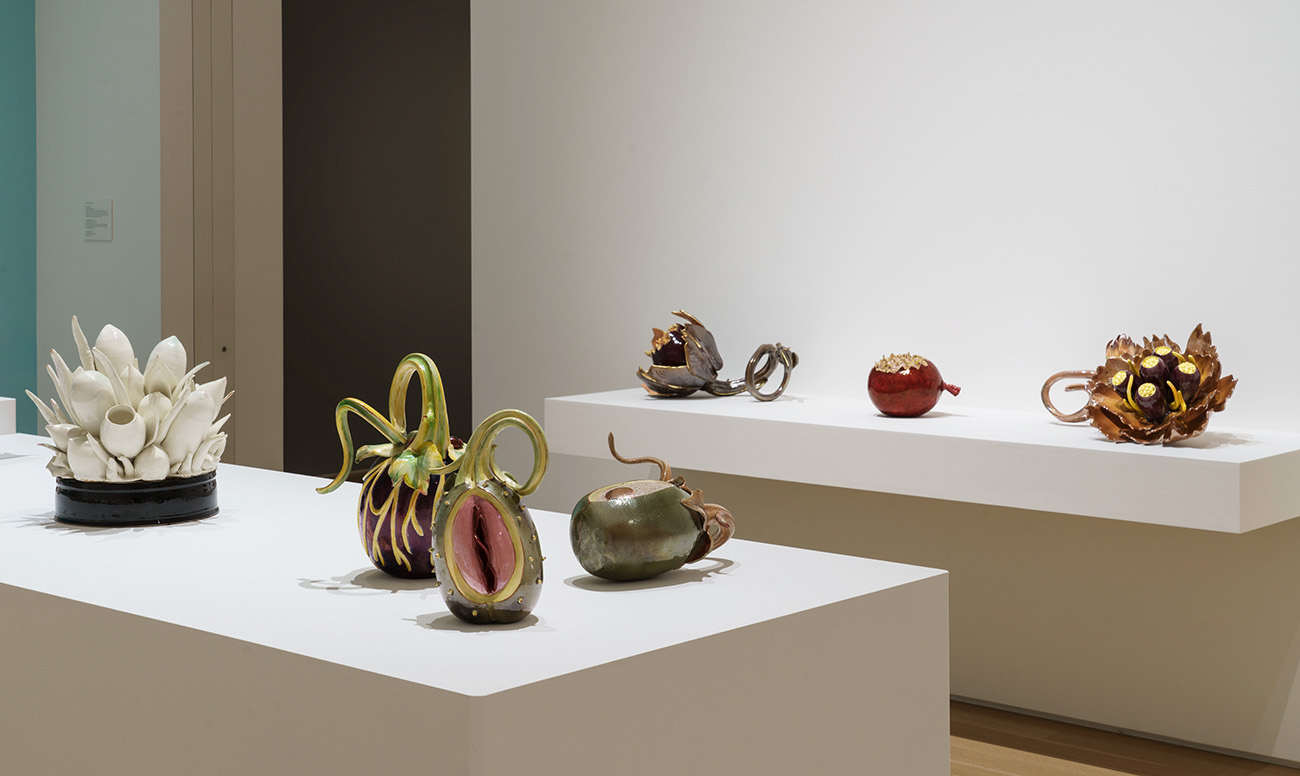
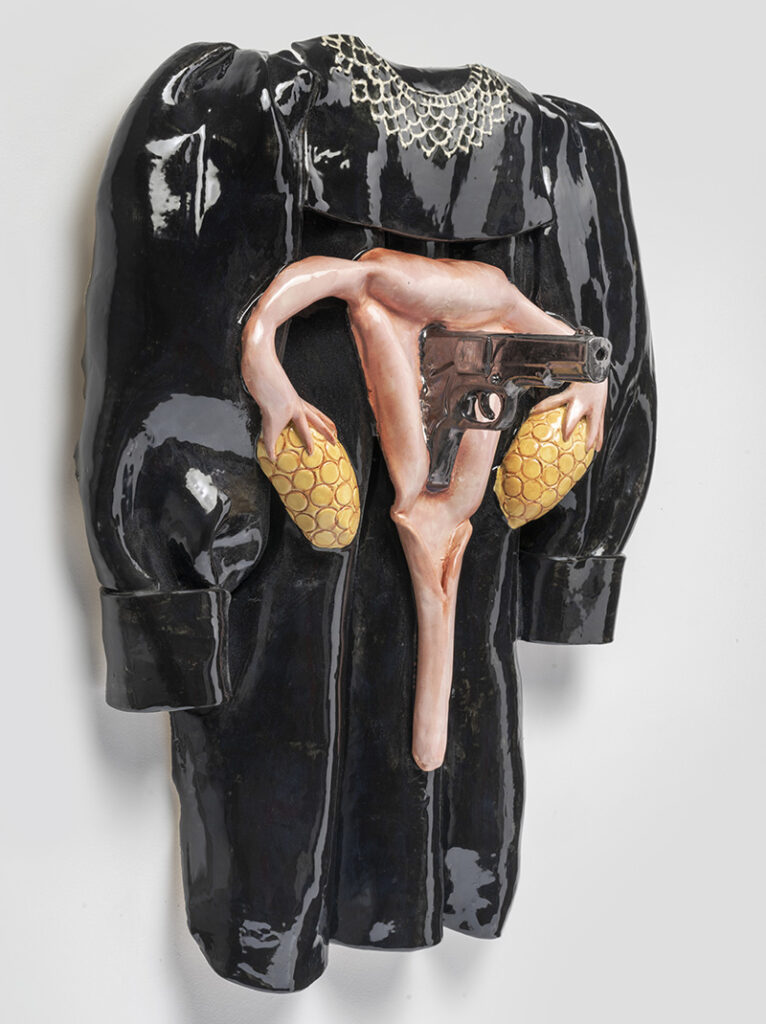
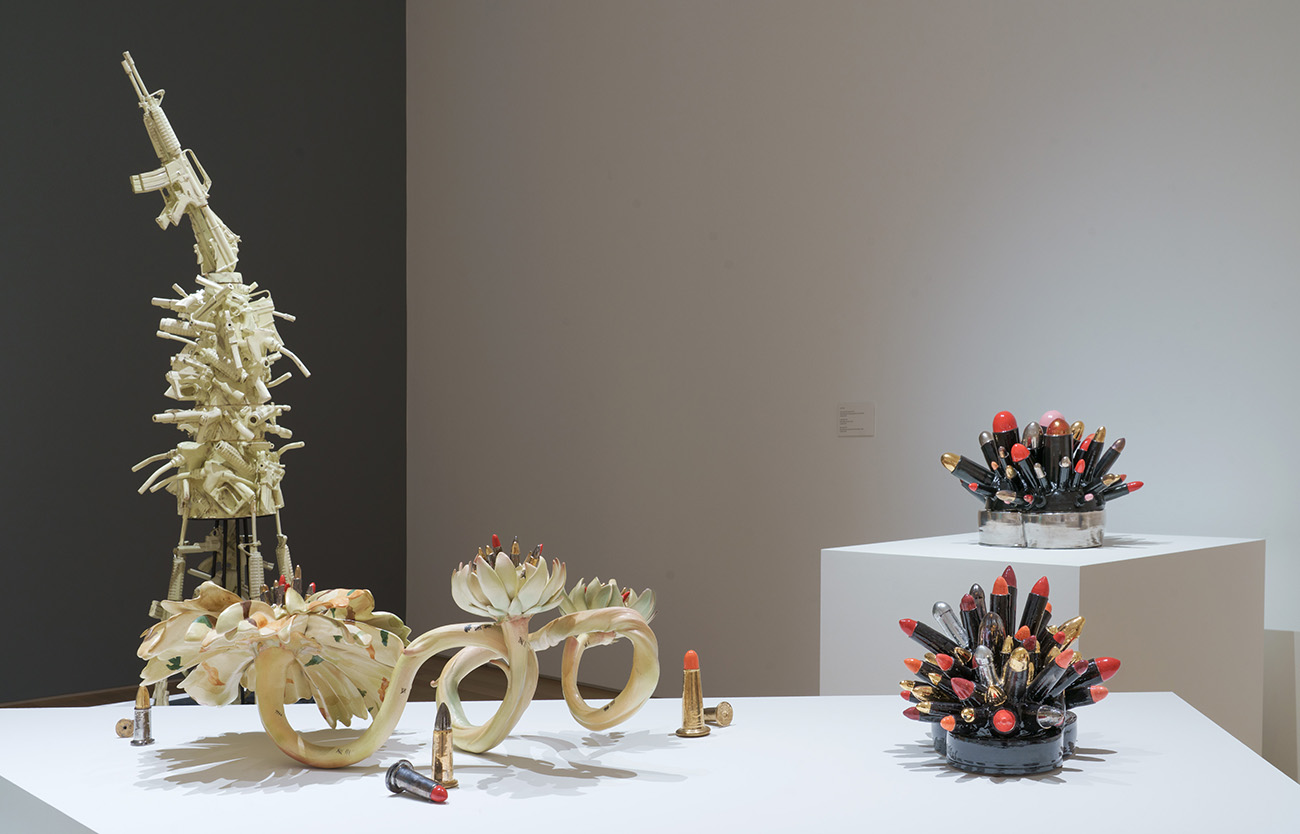
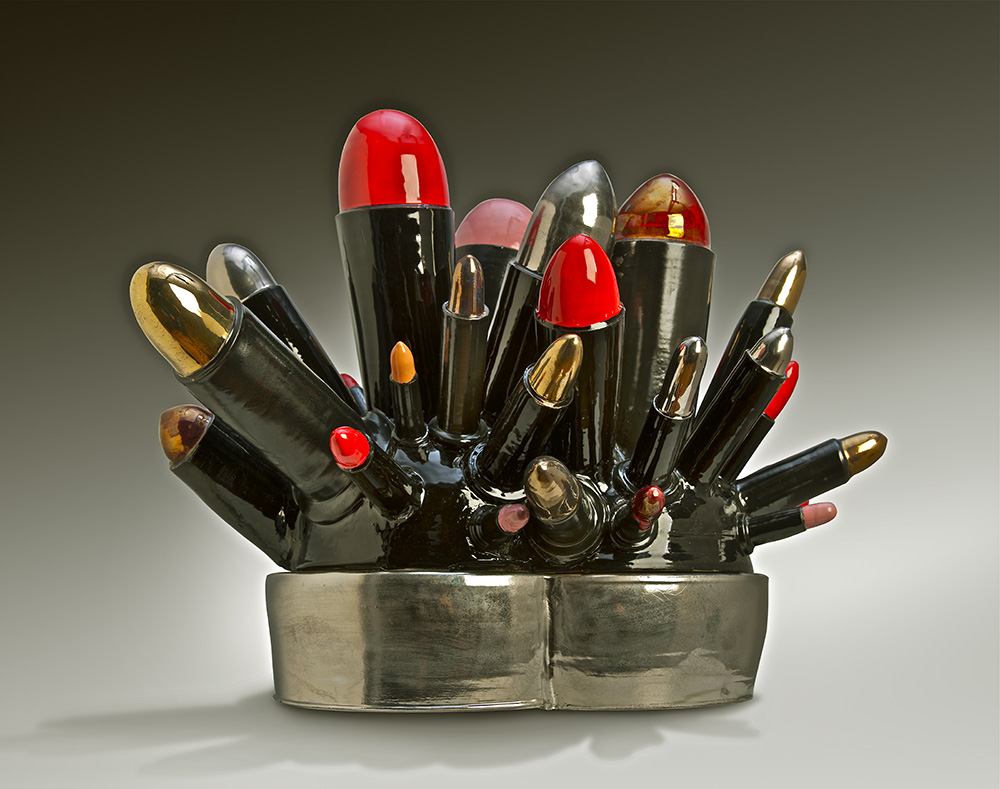
The beauty of the flora transitions into violence in the form of guns. Guns morph into oil derricks; lipstick becomes ammunition (I Don’t Want a Bullet to Kiss Your Heart; Cause and Effect; Bullet Belt; Love and War: The Ammunition).
In one striking work, a uterus hovers above a black gown with a lace-like neckpiece resembling that of a United States Supreme Court justice, a gun protruding from its center. An homage to the late Justice Ruth Bader Ginsburg (Supreme Justice, 2023), Lighton explains, “The piece is about outlawing abortion. I put Ruth’s neckpiece on because she was the sane one that we remember standing up for women’s rights.”
Lighton acknowledges binaries—male/female, nature/industry, beauty/violence—but refuses to remain confined within them. Rather than simply invert hierarchies, she dismantles them, exposing their instability, as debates around gender, labor, and bodily autonomy continue to intensify from the conditions in which her works first emerged.
Ultimately, Love & War positions Lighton’s practice as both deeply personal and historically attuned. It reflects the traditional expectations placed on women of her generation who came of age in the 1960s—be educated, but not too much; be attractive, marry, reproduce—while documenting her refusal to follow that script in sequence or on command. Her work does not reject these structures outright; it studies them, inhabits them, and then fractures them from within.
Says the artist, “I am truly honored to put on this show. The Nerman was a dream to work with. I found out a lot about myself installing this exhibition. I hope people can read me and my thoughts, and we all come out with a better understanding of women’s rights, men’s issues, and a love of nature.”
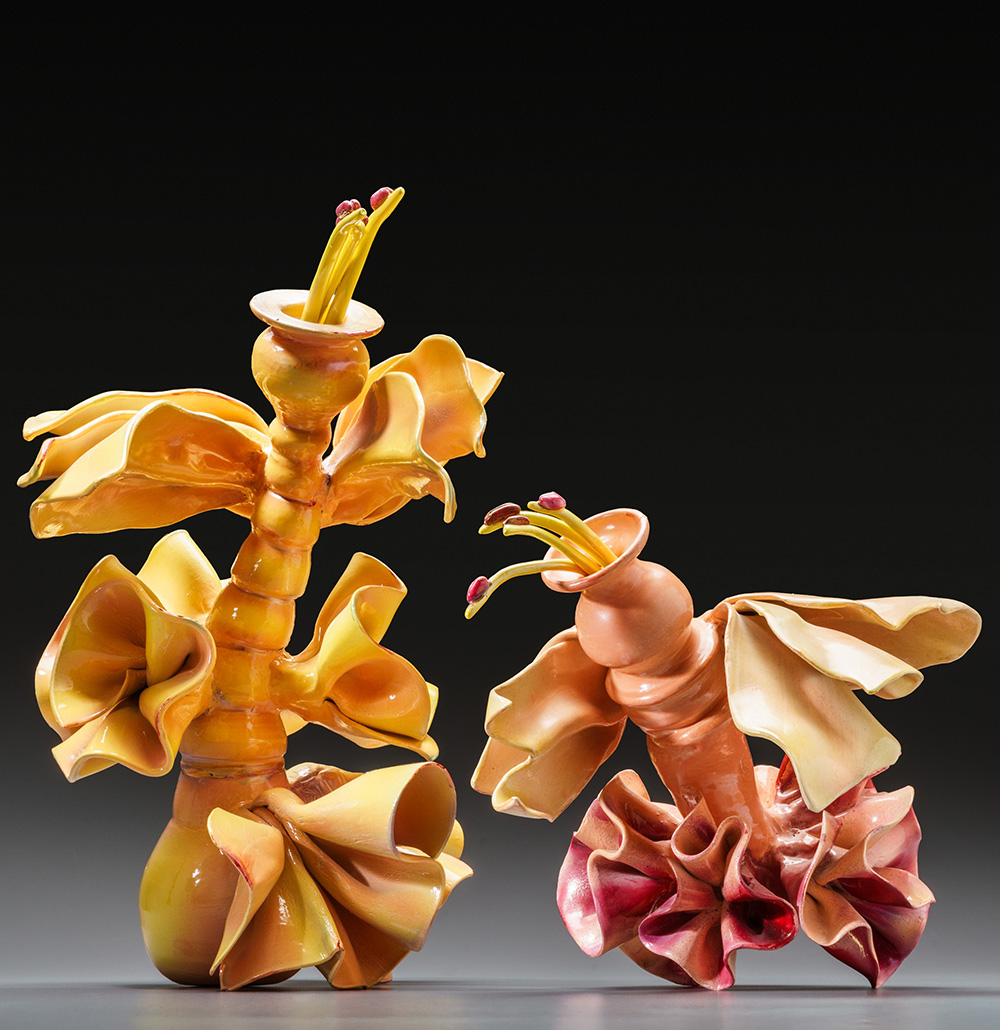
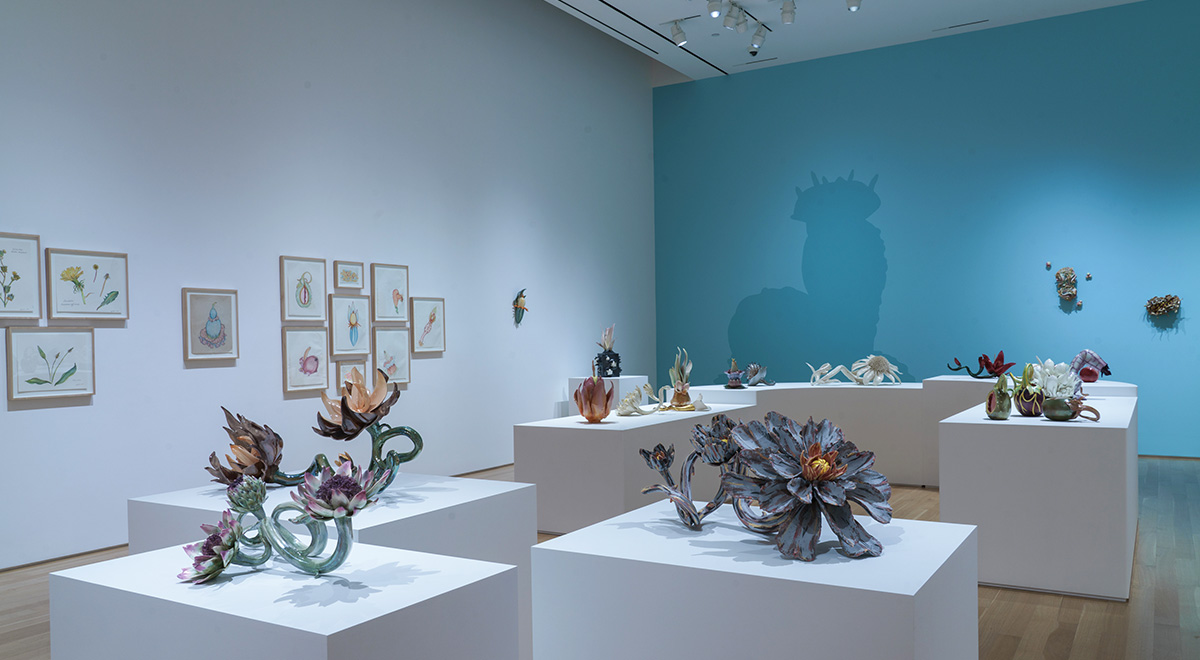
What emerges is a clear proposition. Linda Lighton reveals how the forces that shaped her—postwar optimism, gendered expectations, and consumer culture—remain unresolved, having shifted and intensified. Though the works date to the 1970s, they feel contemporary as they confront the same issues we continue to face today. Love & War: A Fifty-Year Survey 1975–2025 reflects an artist with a strong resolve to push back against the structures around her, her works asking us to do the same.
To learn more about the exhibition, visit Nerman Museum's Website

Blair Schulman is a social practice artist, writer, speaker, and critic based in the Midwest. His current project, Midwest Agendais dedicated to documenting the visual arts throughout the American Midwest.

Since 2002, his writing has appeared in numerous publications, including Art in America, Art Tatler, Ceramics: Art & Perception, Cupcakes in Regalia, Forum, HuffPost, Hyperallergic, Juxtapoz, and Vice. He was also a longtime contributor to the late Review magazine. From 2015 to 2021, Blair served as Managing Editor of InformalityBlog.