
399 N Garey Ave
Pomona, California 91767
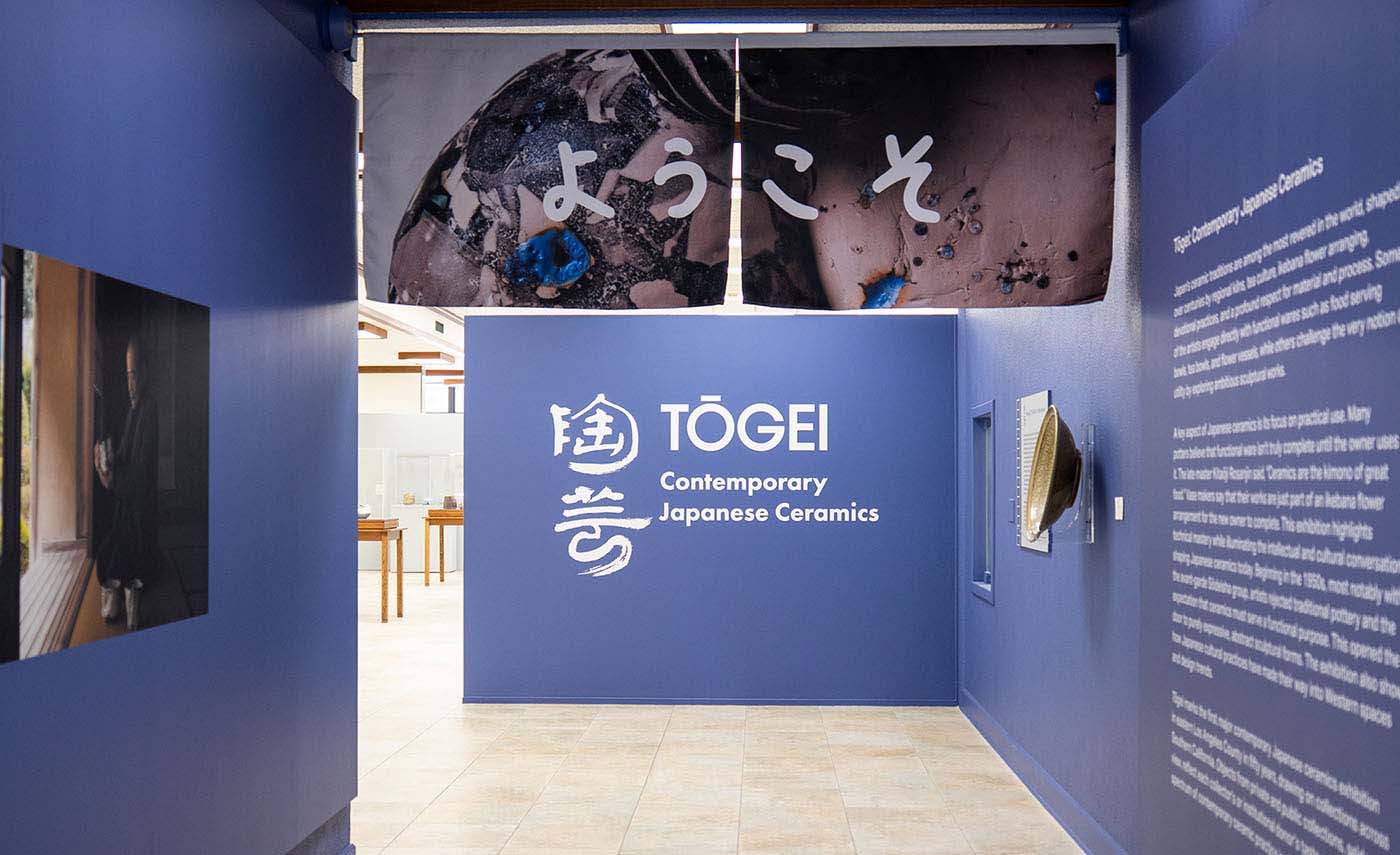
Japan’s ceramic traditions are among the most revered in the world, shaped over centuries by regional and ancient kilns, tea culture, ikebana, devotional practices, and a profound respect for material and process. On view at the American Museum of Ceramic Art (AMOCA), Tōgei: Contemporary Japanese Ceramics highlights technical mastery while illuminating the intellectual and cultural conversations shaping Japanese ceramics today. Tōgei, which is generally translated as “ceramics” or “ceramic arts,” is a fittingly expansive title for the exhibition. While some artists presented in the exhibition engage directly with functional wares, others challenge the very notion of utility by exploring ambitious sculptural works.
On view through May 30, 2027, Tōgei marks the first major contemporary Japanese ceramics exhibition in eastern Los Angeles County in fifty years.
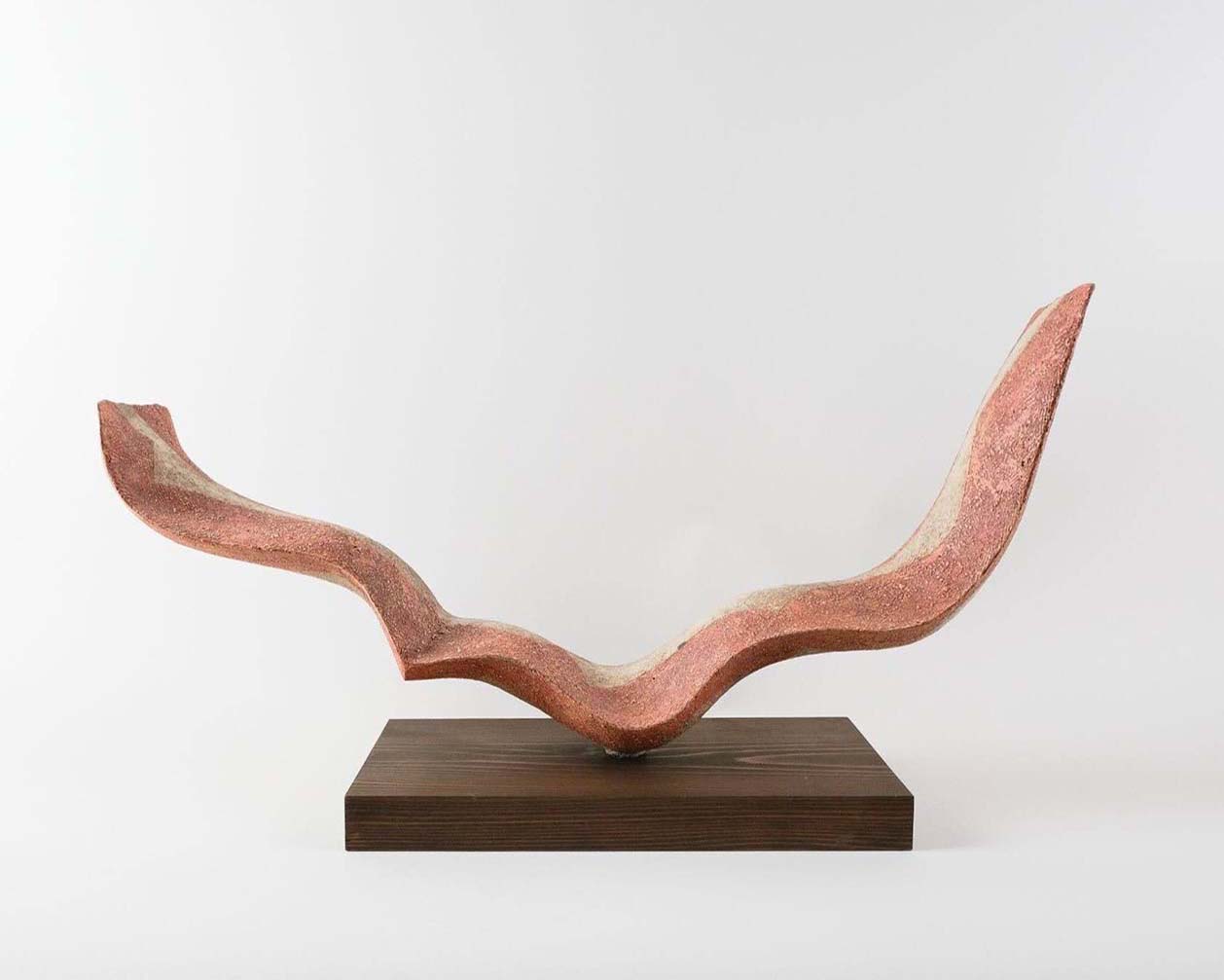
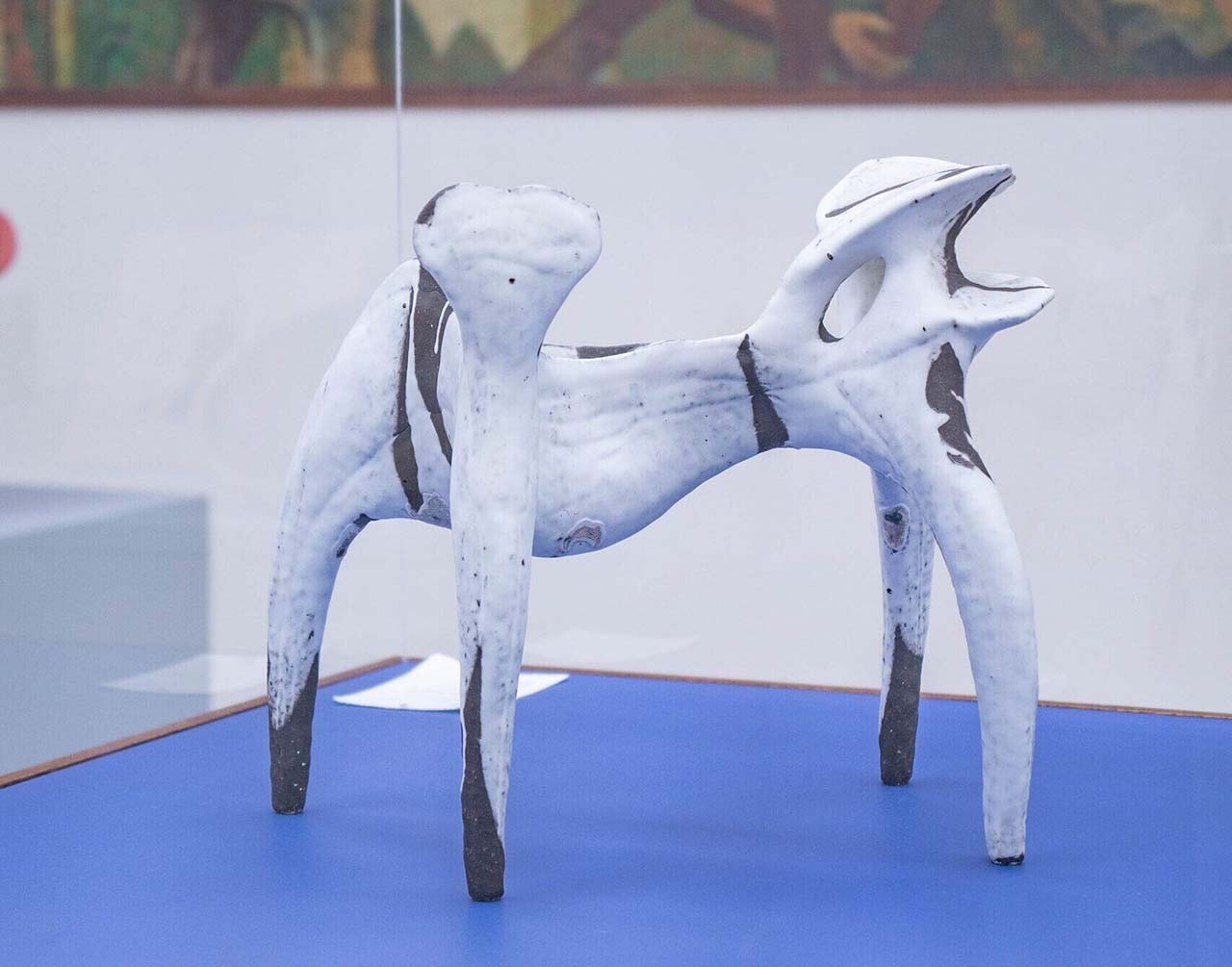
A key aspect of Japanese ceramics is its focus on practical use. Many potters believe that functional ware isn’t truly complete until the owner uses it. Tōgei presents a selection of items organized by use: tea bowls and containers for tea practice; platters, bowls, and cups for food and drink service; vases and wall vessels for flower arrangements; and wares for incense. Adjacent to the utilitarian ware is an area featuring mid-20th-century experimental, avant-garde sculpture, precursors to the contemporary sculptures on view in the show.
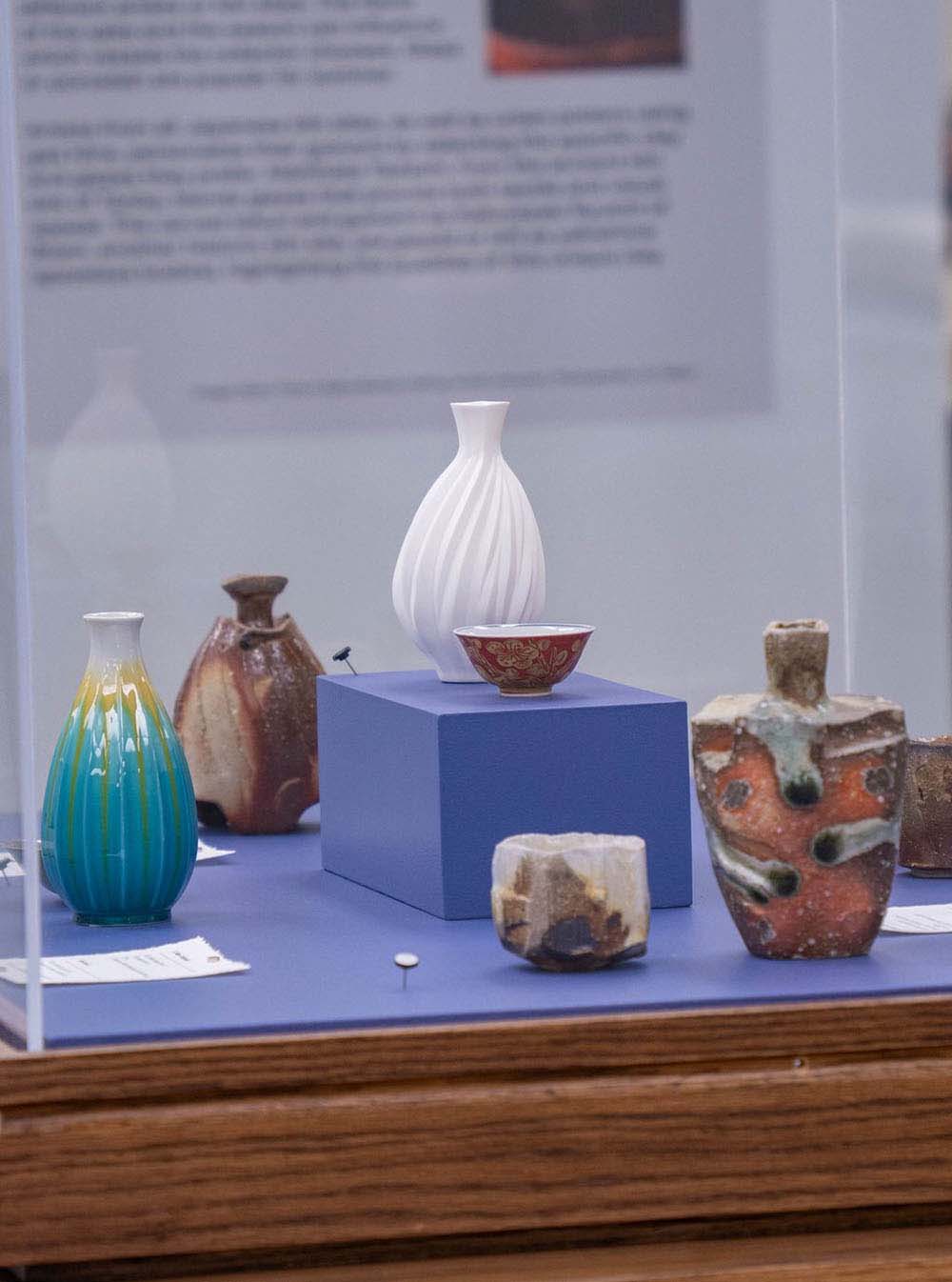
Curated by Hollis Goodall, the exhibition features one hundred and six works presented categorically by function and a section devoted to ceramics as pure sculpture. Goodall explains,
“Drawing on collections across Southern California, this exhibition presents a snapshot of modern Japanese ceramics. Objects from private and public collections, seldom on view, reflect each collector's or institutional donor's taste, presenting a broad spectrum of contemporary ceramic practice in Japan and providing viewers with an introduction to the vast field of contemporary Japanese ceramic production. Visitors will see how the artists are expanding the possibilities of the ceramic medium through inventive formal strategies, careful attention to functional ergonomics, and sculptural explorations.”
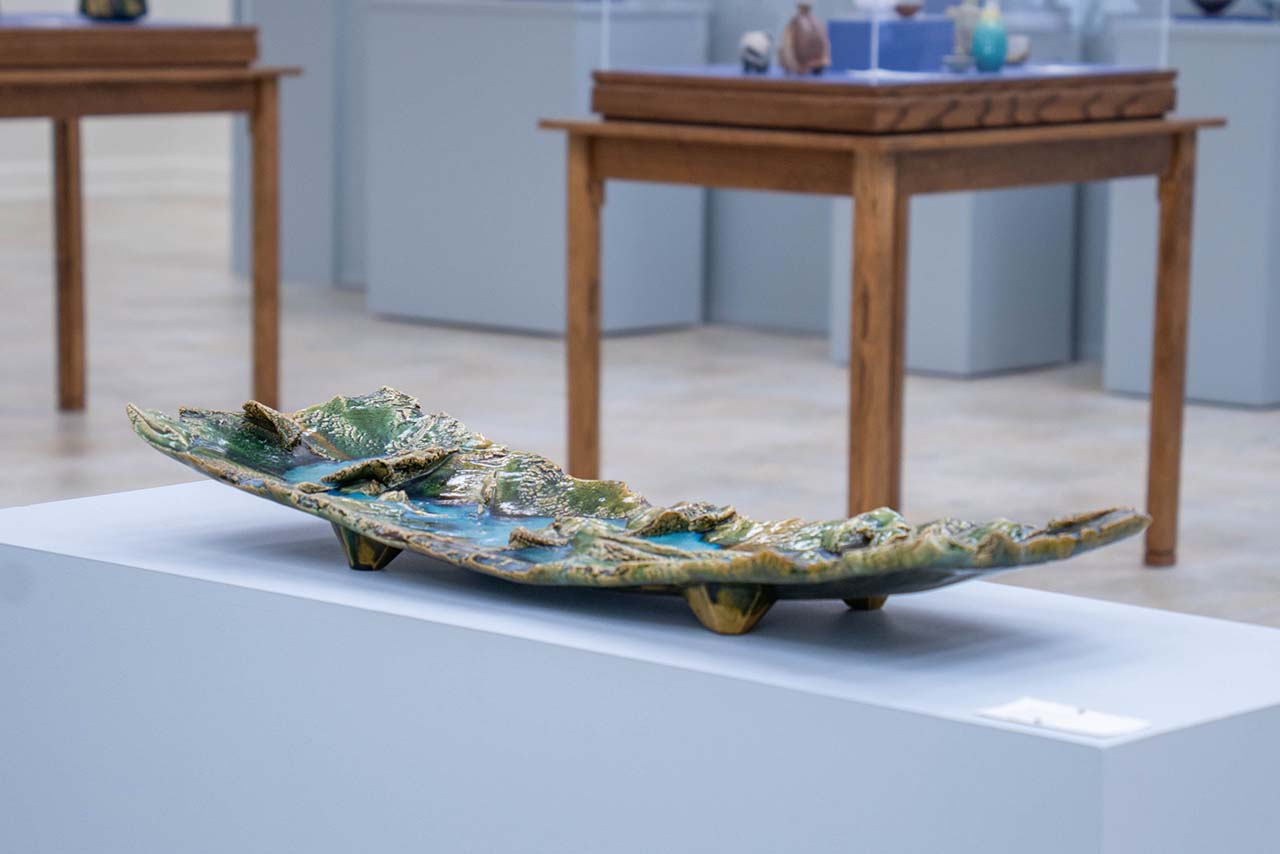
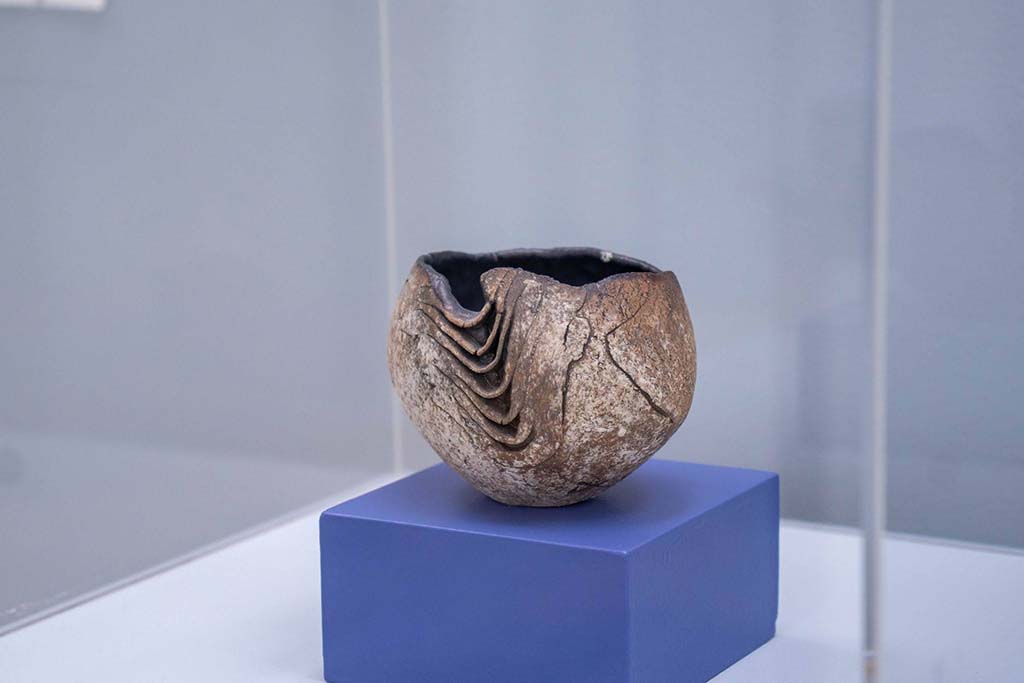
A particularly rich area in the exhibition’s functional ware section showcases vase forms and other flower vessels. Ikebana (living flowers), the Japanese art of flower arranging, emphasizes principles such as minimalism, line, asymmetry, and negative space to create balanced, harmonious designs. In ikebana, a dynamic composition is formed by branch and stem lines that guide the viewer's eye straight upward, at a diagonal, or along a curve. Arrangements are seasonal and reflect the natural growth patterns of flowers and may include symbolism, for instance, with high, medium, and low zones representing heaven, earth, and humanity.
Flower artists from the mid-twentieth century onward sought to create time-bound works of fine art—living sculptures composed of floral and natural elements, with some including non-living, industrial elements in their arrangements. Several ikebana schools, from the historical Ikenobo to the new and determinedly avant-garde Sōgetsu schools, collaborated with potters to push the boundaries of floral art, and ceramists provided stimulus by creating startling new vessel forms.
Geometric and personally expressive, or evocative of natural settings where plants flourish (moss-covered rocks, the face of a cliff, or a streambed), these vessels illuminate the synergy of nature, clay, functionality, and fleeting beauty.
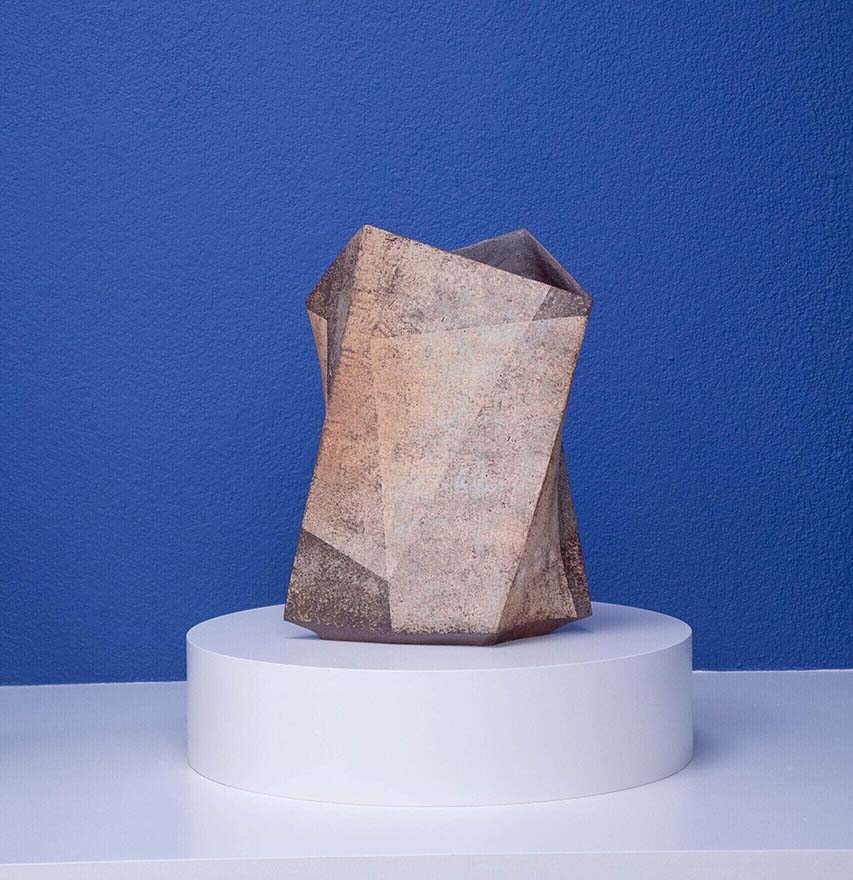
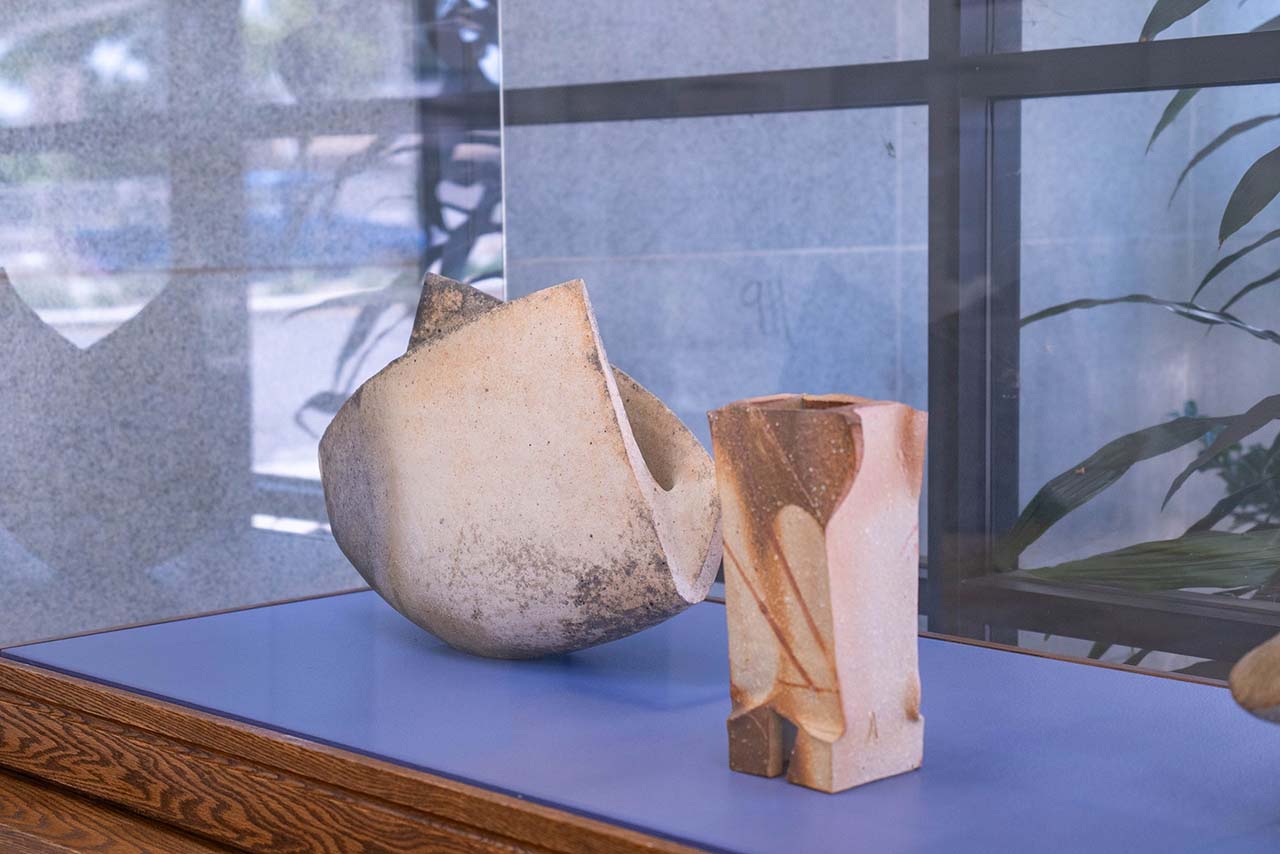
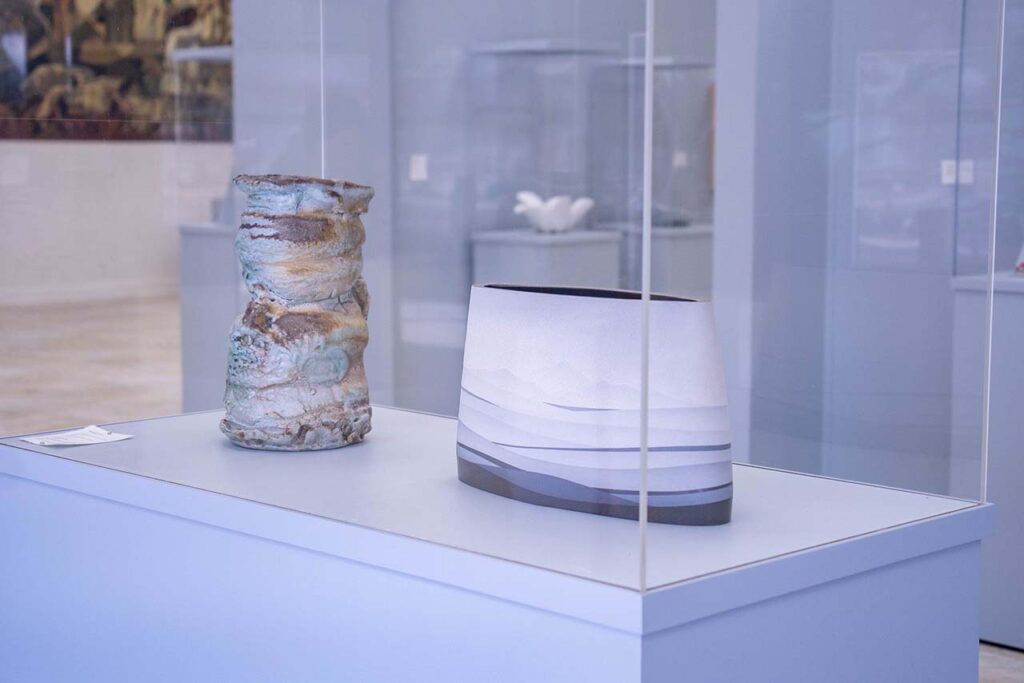
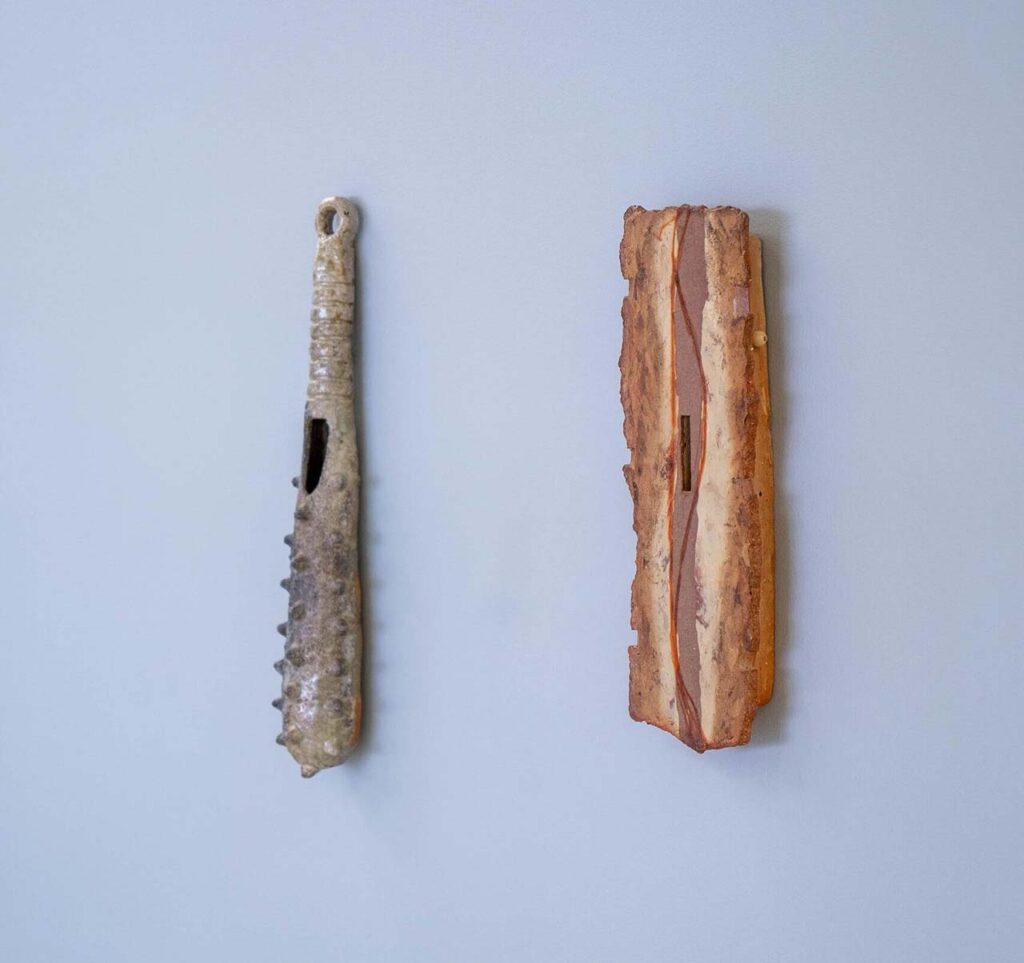
Pieces created by Takahashi Rakusai IV, Wakimoto Hiroyuki, or Mihara Ken may appear sculptural, but their shape and surface are always intended to complement plant life.
The array of flower vessels in Tōgei spans virtually every clay and glaze type and technique practiced today.
Although many contemporary artists included in this exhibition cross over between making non-functional and functional objects, the idea of creating a work that is complete only when used does not extend to sculpture. Beginning in the 1950s, most notably with the avant-garde Sōdeisha (crawling through the mud) group, artists began rejecting traditional pottery and the expectation that all ceramics must serve a functional purpose.
The term Sōdeisha popularized to categorically describe their sculptures is objet, the French term for “object.” Sōdeisha often apply the title saku, “work,” to resist imposing an image on the viewer and to instead evoke the idea of abstract fine art. Yagi Kazuo, the spokesman for Sōdeisha, created his first abstract clay sculpture in 1954, assembling forms produced on a wheel. Yagi’s later abstract works, such as Work (1959), were slab-built or hand-built.
One unifying factor in the Sōdeisha artists’ approach is their aim to visually and tactilely explicate personal and intellectual concepts through clay works for display as fine art. Artists push boundaries, sometimes taking traditionally functional forms as a leaping-off point to create fascinating conceptual sculptures.
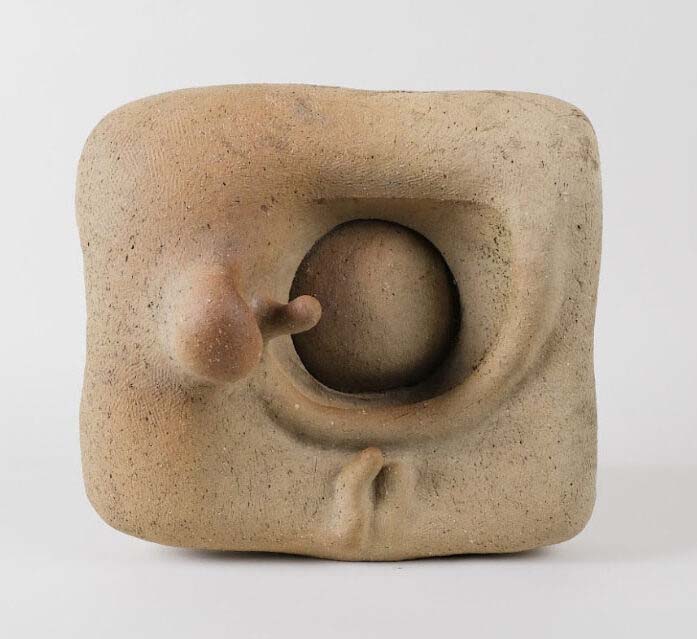
Boxes for storing household objects have been central to the historic Japanese lifestyle, in which rooms are multi-use and transform nightly from sitting rooms to sleeping quarters. Lacquer boxes were part of the bride’s trousseau for feudal lords and were treasured and passed down through generations. Boxes called tebako could hold anything, but some were specifically designed to contain cosmetics and hair-dressing materials, books, writing utensils, and food.
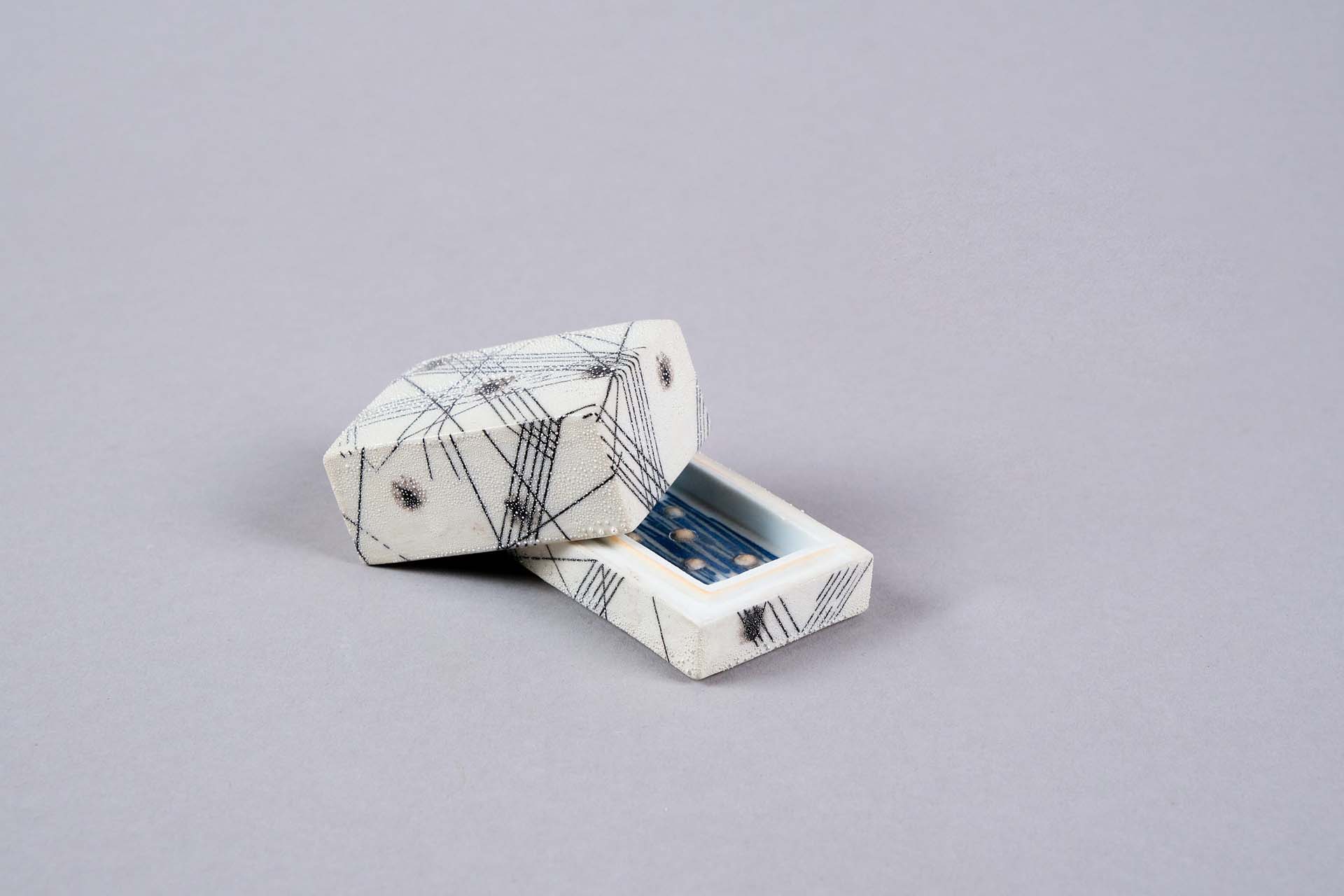
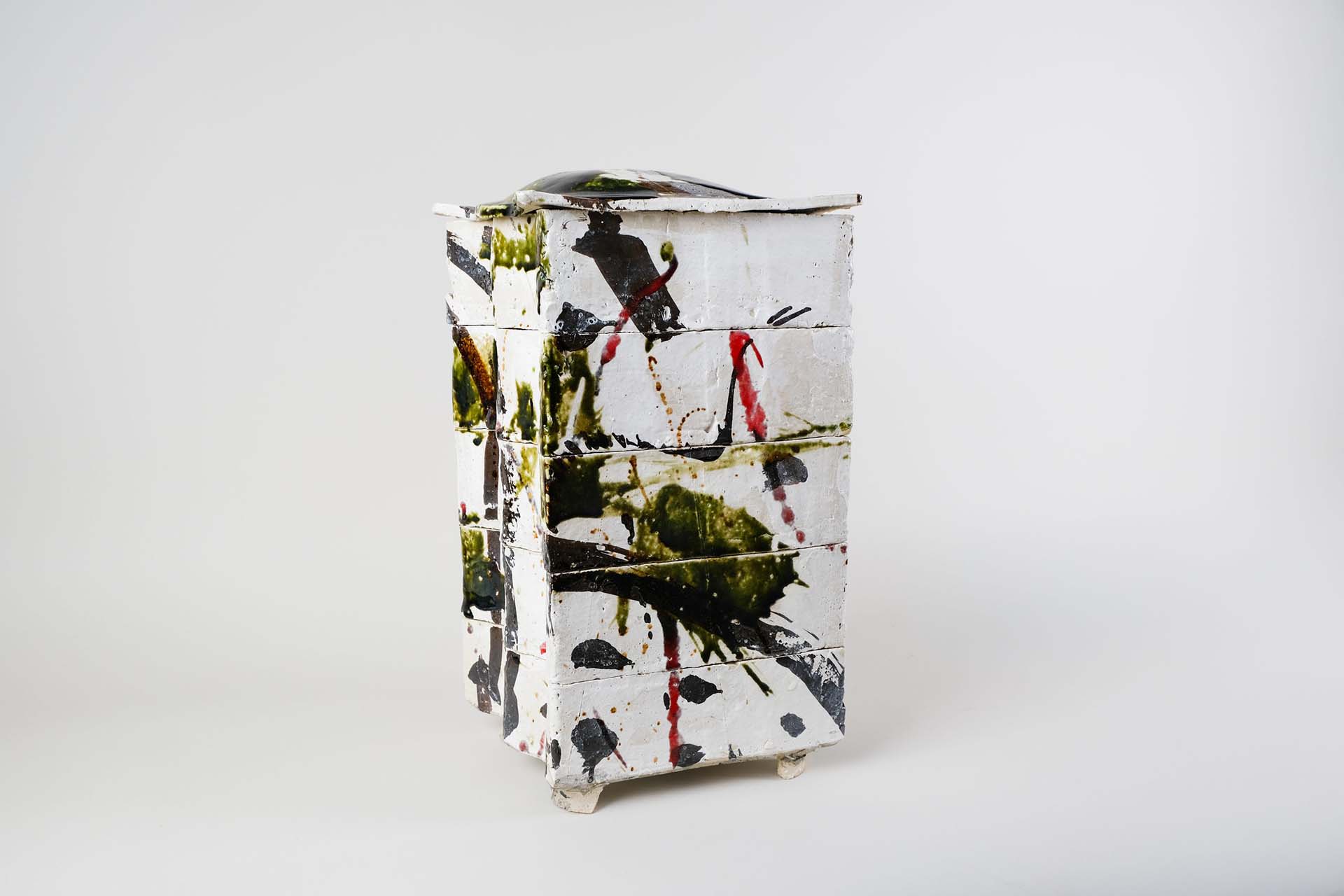
In Tōgei, boxes for holding incense, as well as non-functional boxes like Mori Tadashi’s Five-Layered Box are on display. Mori, who studied in Japan, Italy, and Thailand, alters the traditional type in this stacked box set by curing two opposing sides. He then uses the same three-color approach originally developed for ceramic glazes in Tang-dynasty China, treating the entire surface as the medium for a dynamic abstract painting.
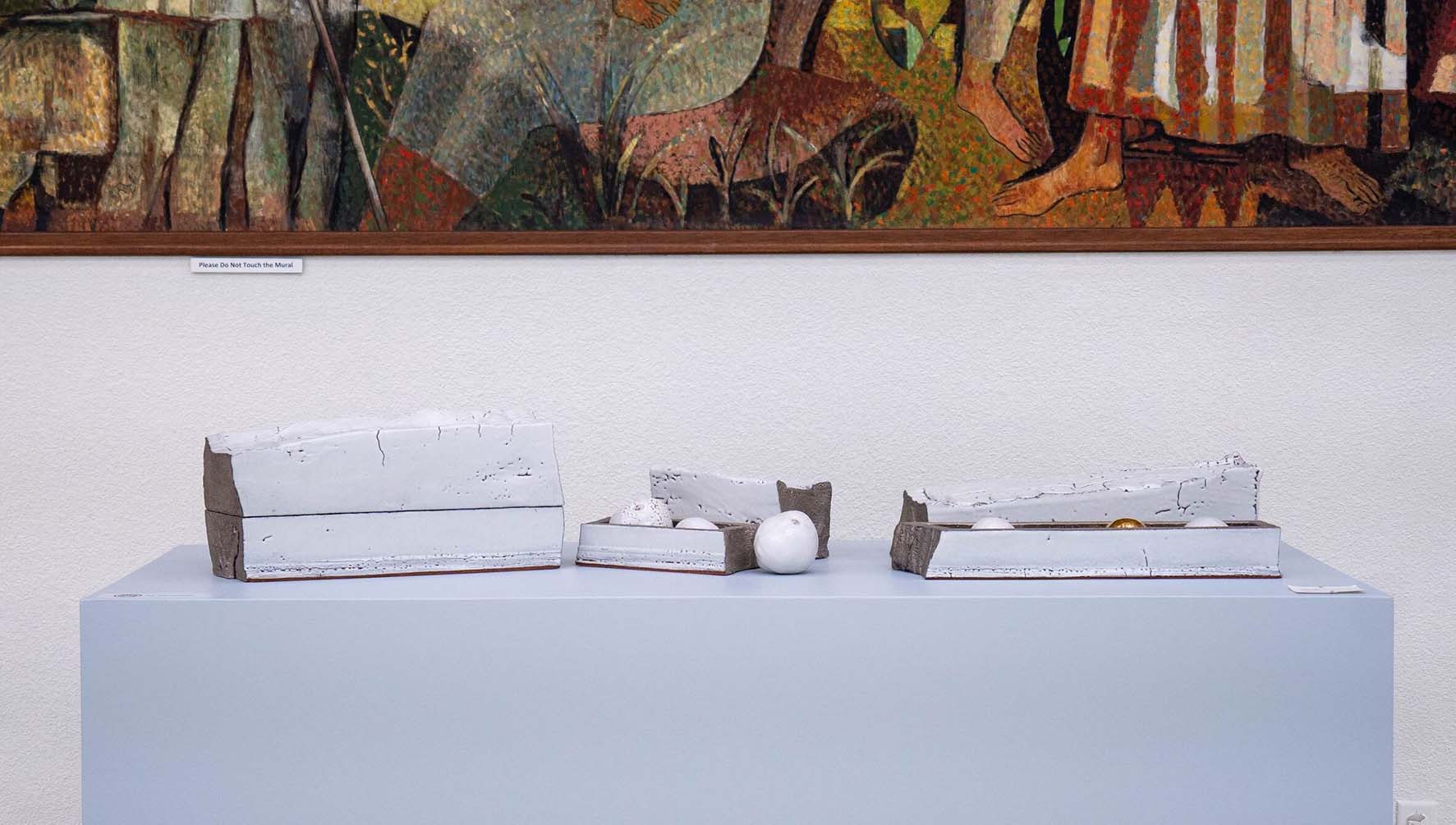
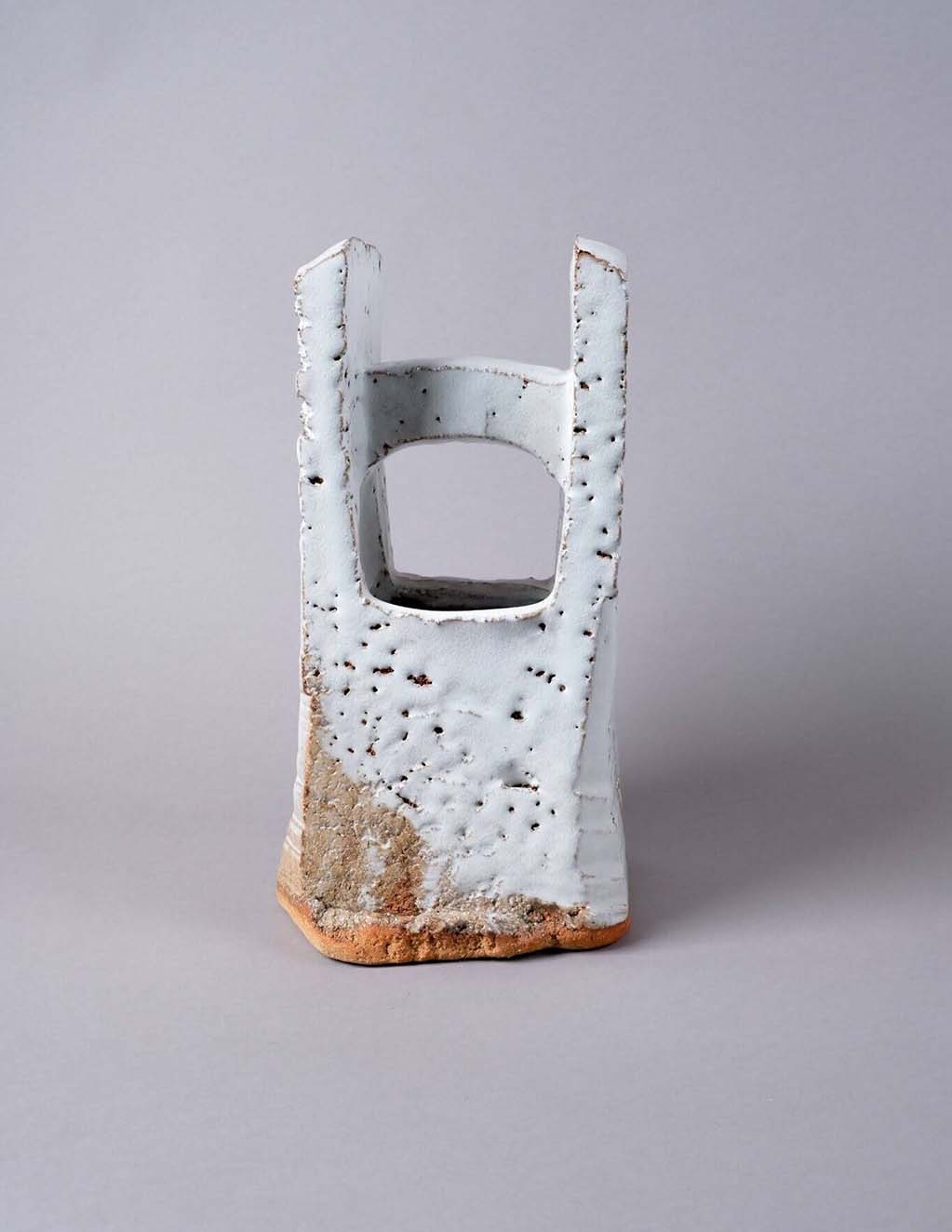
Miwa Kyūsetsu XIII comes from a line of artists tracing back to Korean potters brought to Japan in the early seventeenth century. His grandfather, Kyūwa, began producing traditional Hagi white glaze in a reduced-oxygen kiln, yielding a snow-like white. Kyūsetsu XIII completed his university training in sculpture, then returned to the family business after studying fine art. When he made this set of boxes, Kyūsetsu XIII (then named Kazuhiko) used a Japanese sword to carve his clay forms, making them abrupt and hard-edged, then covered them with the unctuous Hagi glaze. The contrast between hard and soft, and the white glaze over the reddish Hagi clay, like snow on cherry bark, makes his work irresistible.
Kyūsetsu XIII’s Flower Crown: Multi-Part Sculpted Boxes is representative of contemporary artists’ taking a traditional form as a basis for their revolutionary treatment of a utilitarian object, transforming it into an artwork intended solely for viewing. Works like Suzuki Gorō’s Chair, with its Oribe glazes, or Mishima Kimiyo’s ceramic and iron Work-Tags, similarly create enduring artistic pieces inspired by everyday objects.
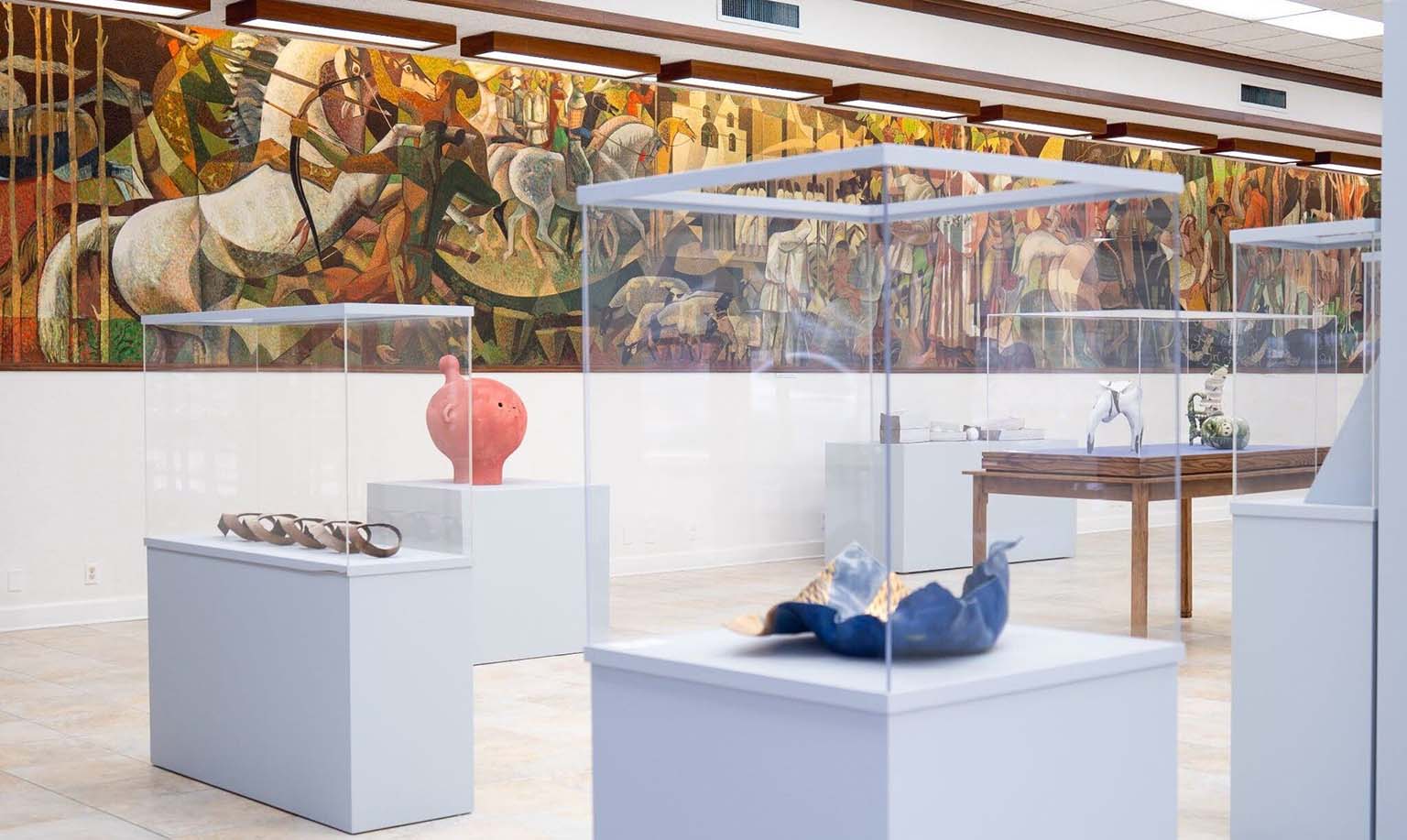
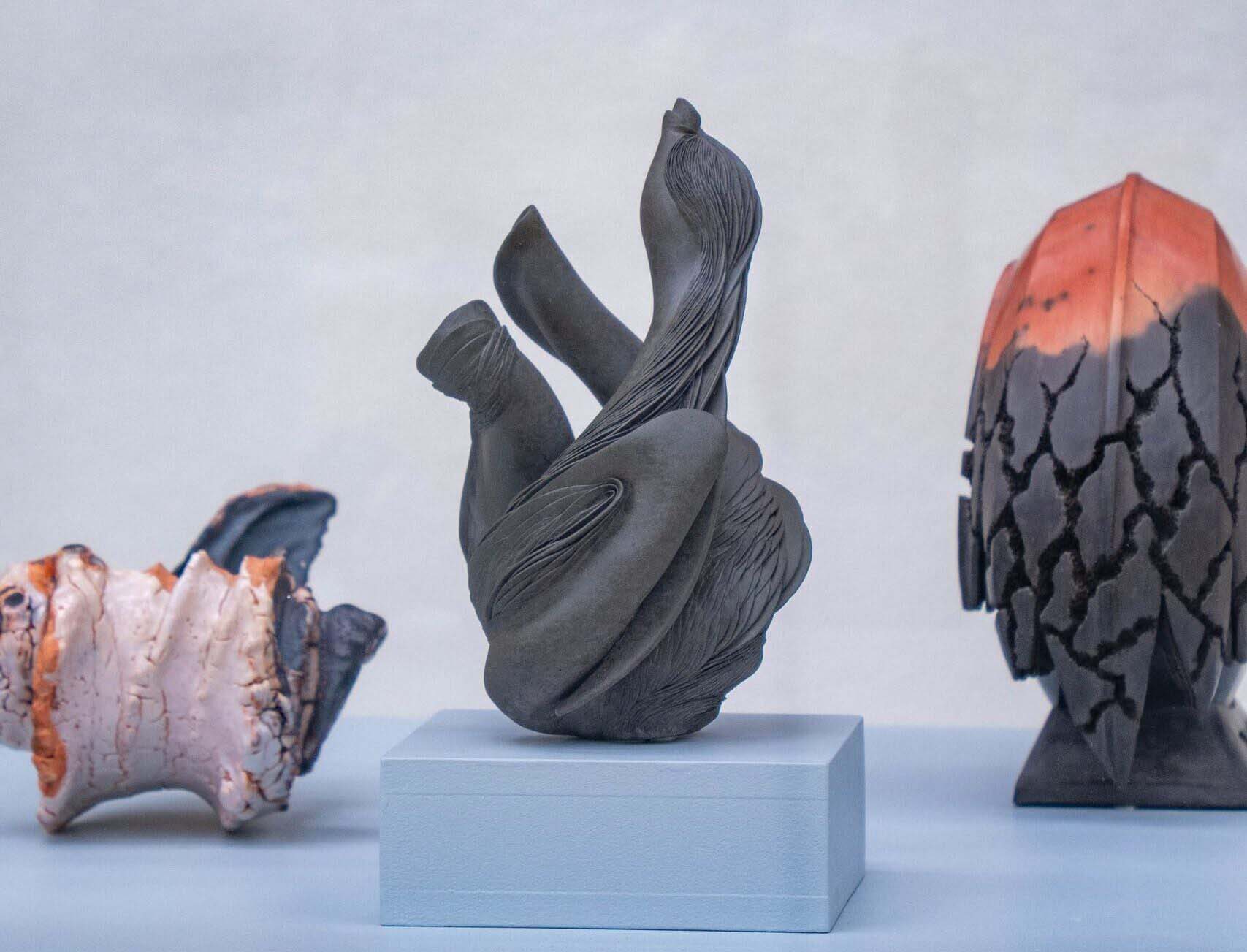
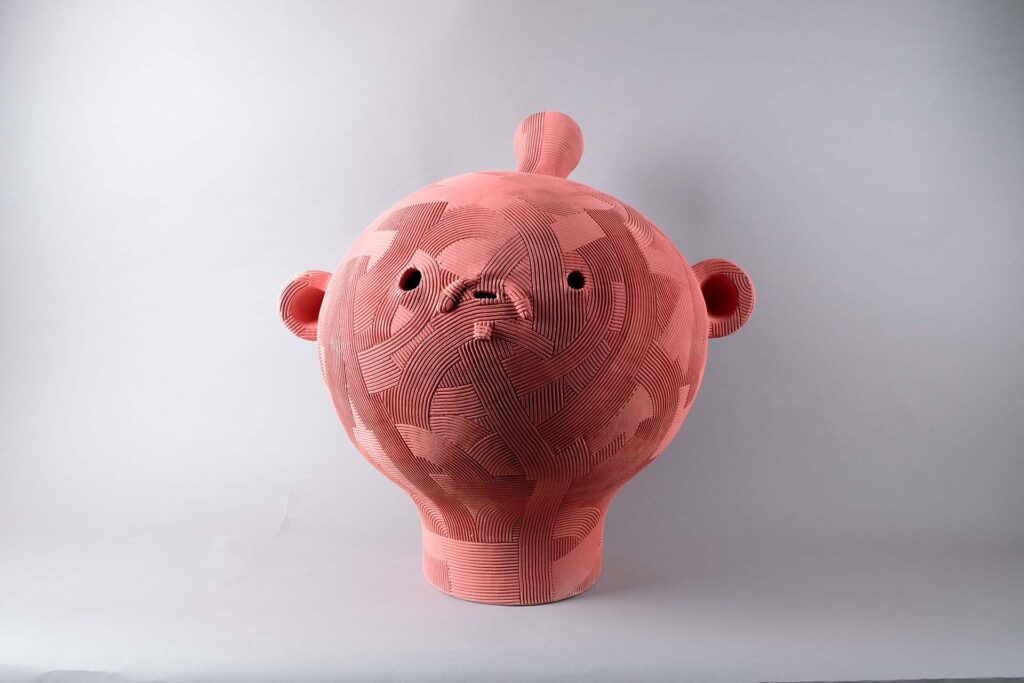
Numerous purely expressive, abstract sculptural forms are presented in Tōgei, including work by Yasunaga Masaomi, who forms his works from glass and glaze, which are poured into a gravel-lined pit and fired. Other works, such as Iwamura En’s Neo-Jomon-Tonosama Head or Izumita Yukiya’s Obi Number 13, further explore texture, size, and perspective.
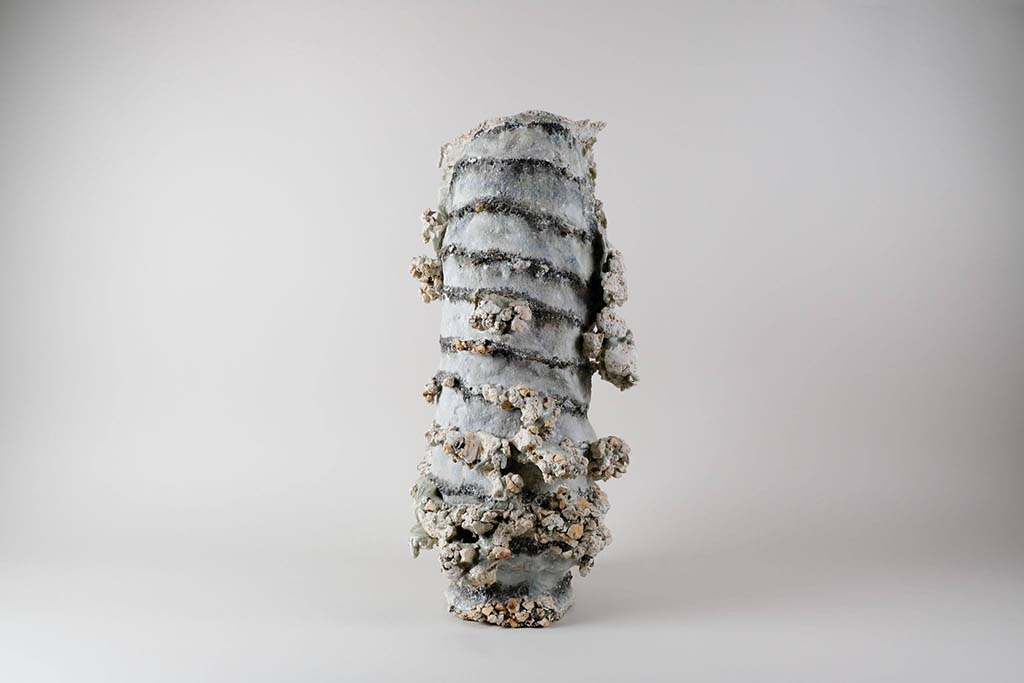
Tōgei traces a modernist renaissance, including contributions from Japanese women artists who have more recently gained opportunities to train at art universities, and highlights Southern California lenders and their interests. The exhibition shows how Japanese cultural practices have entered Western spaces and design trends, and offers a rare chance to see the evolution of Japanese ceramics from the 1940s to today. Tōgei is accompanied by a catalog featuring full-color photographs and new contextual essays.
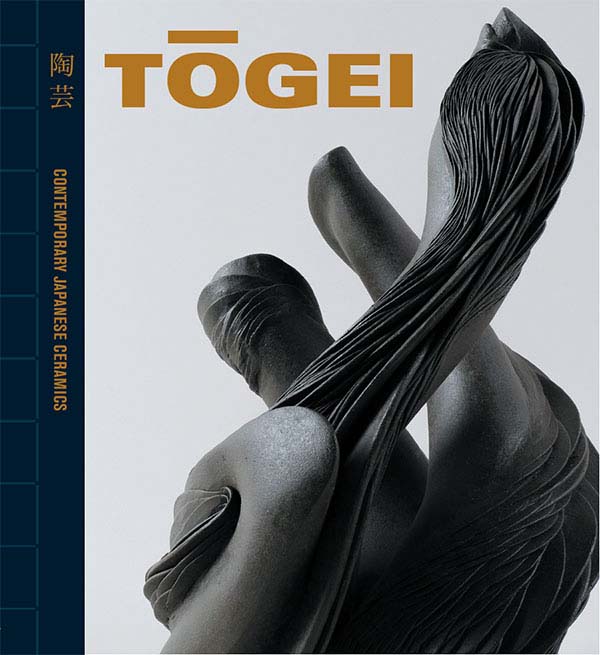
To learn more about Tōgei, visit AMOCA's website. If you can't see the show in person, their accompanying book is available online:
AMOCA offers in-house field trips, MudMobile visits, teen programs, college/adult tours, and family events to provide opportunities for all to experience the wonders of clay. In-person and virtual programming includes opening receptions, artist talks, exhibition tours, and monthly pay-what-you-can First Fridays. Our Ceramics Studio offers classes and workshops, studio rentals, firing services, and an artist-in-residence program.