Cover Photo: Uriel Caspi | HEAD | Geneva | Photo Courtesy: Raphaëlle Mueller
Drawn to the depth of color and the iridescence of Middle Eastern lusterware, I began tracing its journey from the Middle East across the Mediterranean and eventually around the world. In my first feature for MoCA/NY, From Alchemy to Art: A Brief History of Luster, I explored the history of this remarkable technique and the contemporary artists who are breathing new life into it. As a Middle Eastern artist with a strong foundation in glazing and firing techniques, I found that researching this reflective metallic glaze was a natural next step in my practice. The chemistry behind the process, the interplay of materials, and the breathtaking, almost otherworldly transformation during firing drew me deeper into the science and possibilities of this centuries-old technique.

Alongside my research into lusterware, I have been exploring and reviving ancient ceramic traditions from the Mediterranean, particularly Pot ’n Rope (also known as jarre à la corde), a traditional rope and clay technique for building large ceramic vessels. Both techniques have become defining elements of my sculptural practice and a central focus of my workshops and masterclasses. I am deeply drawn to them for their ability to connect material, process, and cultural heritage, and I am committed to preserving, developing, and sharing these techniques through my own work and teaching.

In this feature, I will share more about my personal journey with luster, including technical insights as well as the challenges and discoveries that continue to inform my artistic approach.
My experiments with luster began a decade ago, in collaboration with my friend and fellow ceramic artist Shamai Sam Gibsh (Israel, b. 1954), an internationally recognized specialist in terra sigillata and alternative firing techniques. In the 1990s, Gibsh studied and worked with Alan Caiger-Smith (1930–2020), a renowned British ceramicist, assisting him and learning his iconic tin-glaze pigment luster technique. Drawing on his experience, we set out to investigate whether classic Arabian pigment luster (metal-containing compounds brushed over a previously glazed surface) could be achieved under the practical conditions of a contemporary pottery studio, using an electric Skutt kiln, a raku kiln, and commercially available materials.
Aware of the hazards of traditional luster processes, particularly their use of lead and the toxic fumes they can release during firing, we sought to develop lead-free alternatives. We experimented with glazes based on alkaline and calcium-boron frits, combined with copper, cobalt, bismuth, and silver to produce red, blue-green, and gold lusters. The works were first fired in an electric kiln to cone 04 (approximately 1,060°C / 1,940°F). They were then decorated with a paste made from red clay, silver, and copper, before undergoing a second, post-reduction firing in a raku kiln at approximately 650°C / 1,200°F. Once the firing was complete, we wiped off the clay paste to reveal luminous metallic surfaces, their colors shifting according to the particular combination of metals used.
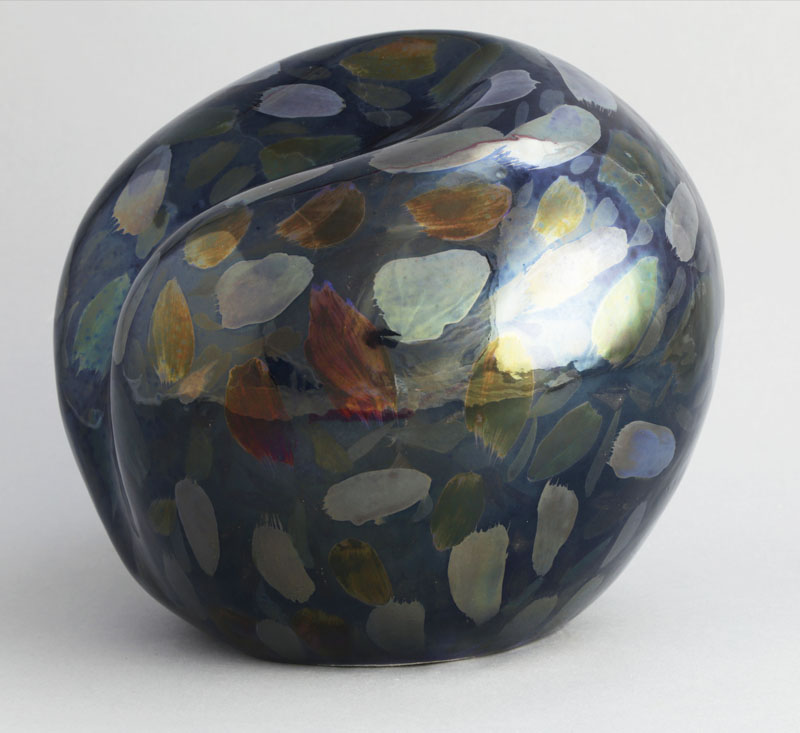
Arabian pigment luster is the traditional ceramic luster technique associated with the development of decorative lusterware in the Islamic world. Historically, a thin pigment mixture containing metallic and clay compounds was painted onto the glazed surface and fired again, typically in a reducing atmosphere. The reduction firing alters the metal compounds and forms extremely fine metallic particles on the glaze surface. Depending on the materials and firing conditions, this technique produces surfaces ranging from golden, coppery, reddish, or silvery tones to more complex iridescent effects.
50% Clay: The pigment is traditionally prepared as a fine clay-based paste. The clay provides a carrier for the metallic compounds and allows the material to be painted onto the glazed surface. Possible clay components include kaolin, red clay, and other fine refractory or plastic clays.
50% Metals: A number of metal compounds can contribute to luster, including copper (oxide, carbonate, nitrate), silver nitrate, tin oxide, and iron oxide. The exact color and reflectivity depend strongly on the metal, its concentration, the application thickness, the glaze beneath, and the firing atmosphere.
The pigment can be diluted with various liquids to achieve the desired viscosity, flow, and brushability for application. Thinners include alcohol, vinegar, glycerin, and distilled water.
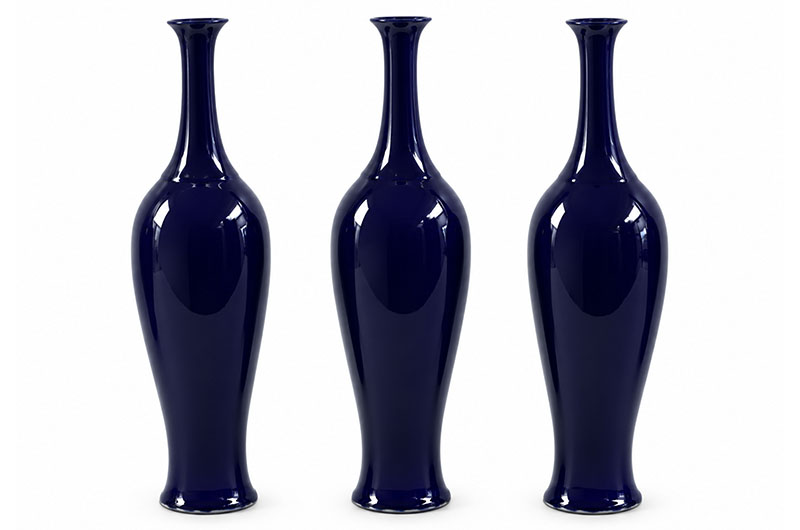
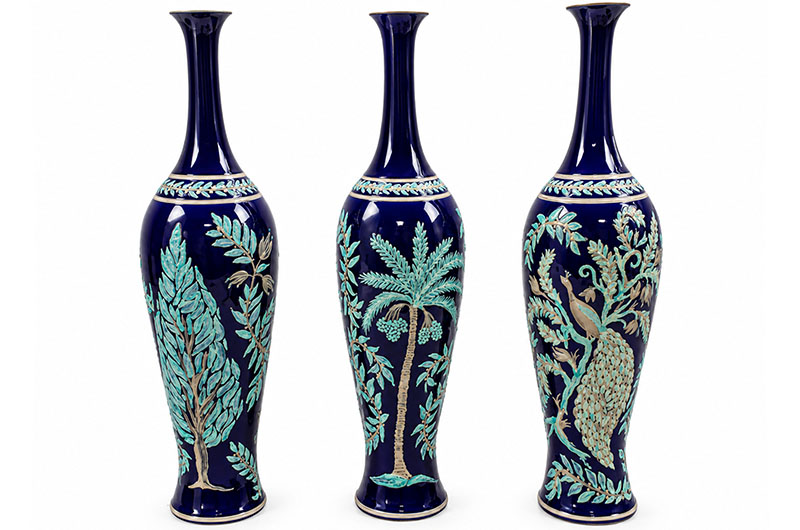
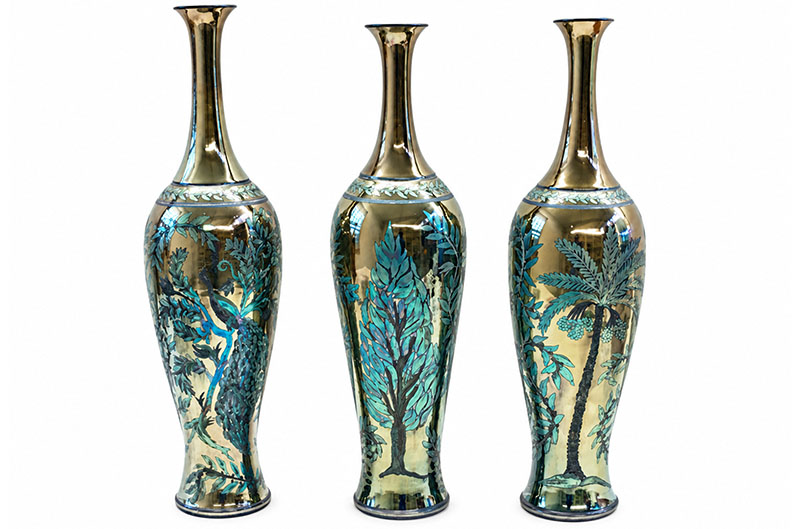
During my master’s studies at Alfred University in 2019, I began focusing on in-glaze lusters: alkaline glaze compositions incorporating metals such as silver, cobalt, copper, and bismuth, which can produce highly reflective, iridescent surfaces under specific reduction-firing conditions. In reduction firing, the kiln atmosphere contains less available oxygen, altering the chemical state of the metallic compounds in the glaze and influencing the resulting colors and surface effects. Depending on the glaze composition and firing conditions, these effects can develop at temperatures of approximately 650–750°C (1,200–1,380°F). Working with the university’s state-of-the-art gas kilns, I experimented with luster glazes under different firing atmospheres. The results were often unpredictable, yet compelling. The Dada artist and lusterware pioneer Beatrice Wood (USA, 1893–1998) titled her autobiography I Shock Myself, a sentiment that frequently resonated with my own studio experience.
Each kiln opening brought a moment of surprise, as subtle variations in atmosphere or temperature could produce unexpected effects.
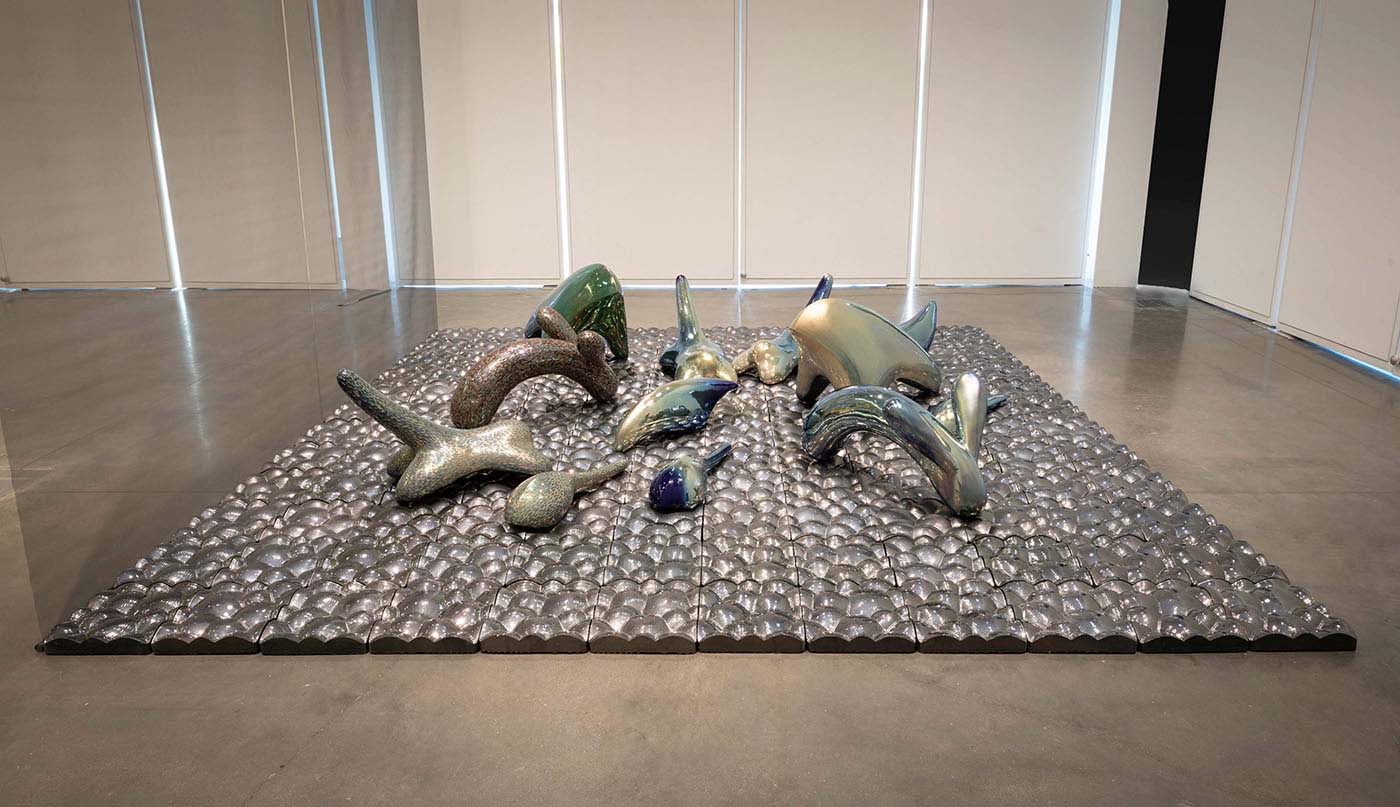
My thesis exhibition brought together three large-scale installations combining reflective floor tiles with anthropomorphic sculptures finished in blue, green, and gold lusters. Inspired by the iridescent colors found in nature, from insects’ exoskeletons to the inner surfaces of seashells (mother-of-pearl), I sought to harness luster’s otherworldly appearance to create futuristic animal forms. By transforming domestic objects and imagined species into ceramic sculptures, I began developing a visual language that evoked speculative environments and visionary alternative habitats.
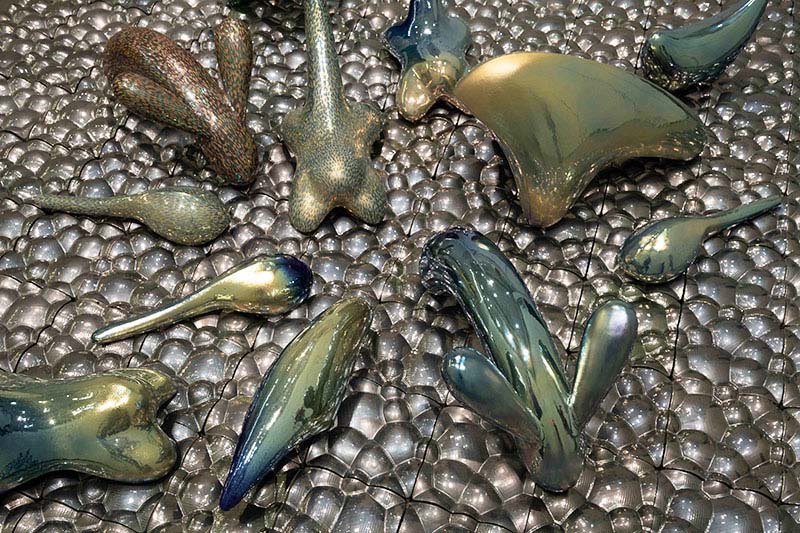
Rather than being painted onto the surface as a traditional pigment, the metallic components are incorporated into a glaze or frit-based composition. The firing determines how the metal compounds interact with the glaze and migrate near the surface. The result can be a reflective, metallic, or iridescent finish.
Glaze Base: 80%: Frit / flux: Alkaline, sodium-based frit, Calcium-boron frit, or Gerstley Borate, Lithium carbonate. 20%: Silica / clay: Silica, Kaolin, Ball clay, alumina. The amount of metal-containing material may be up to approximately 5%, including Cobalt (cobalt oxide, cobalt carbonate, cobalt sulfate), Copper (copper oxide, copper carbonate, copper sulfate, copper nitrate), Iron (red / black / yellow iron oxide, crocus martis, burnt umber), Tin (tin oxide), Silver (silver oxide, silver nitrate), and Bismuth (bismuth oxide, bismuth nitrate)
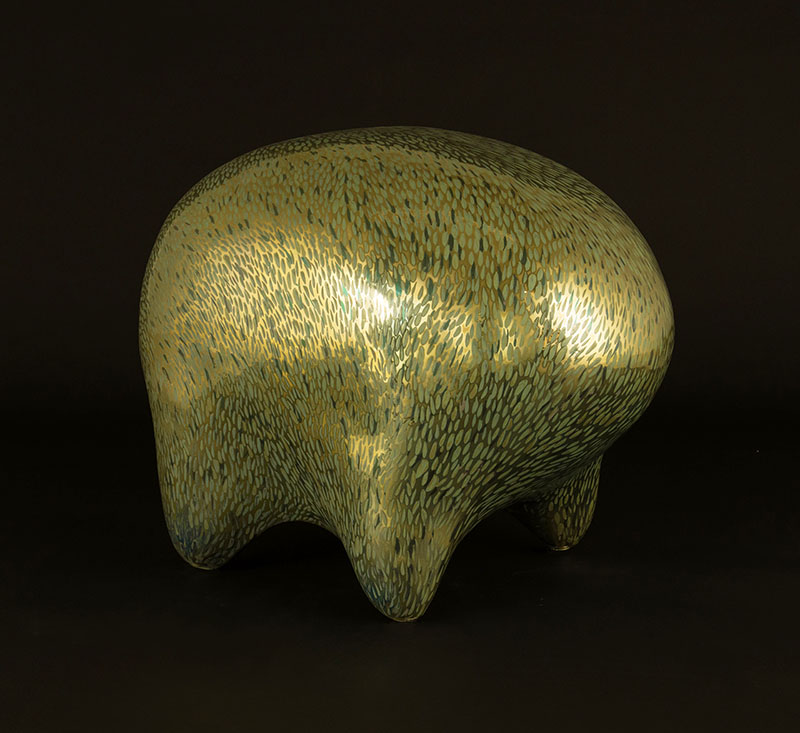
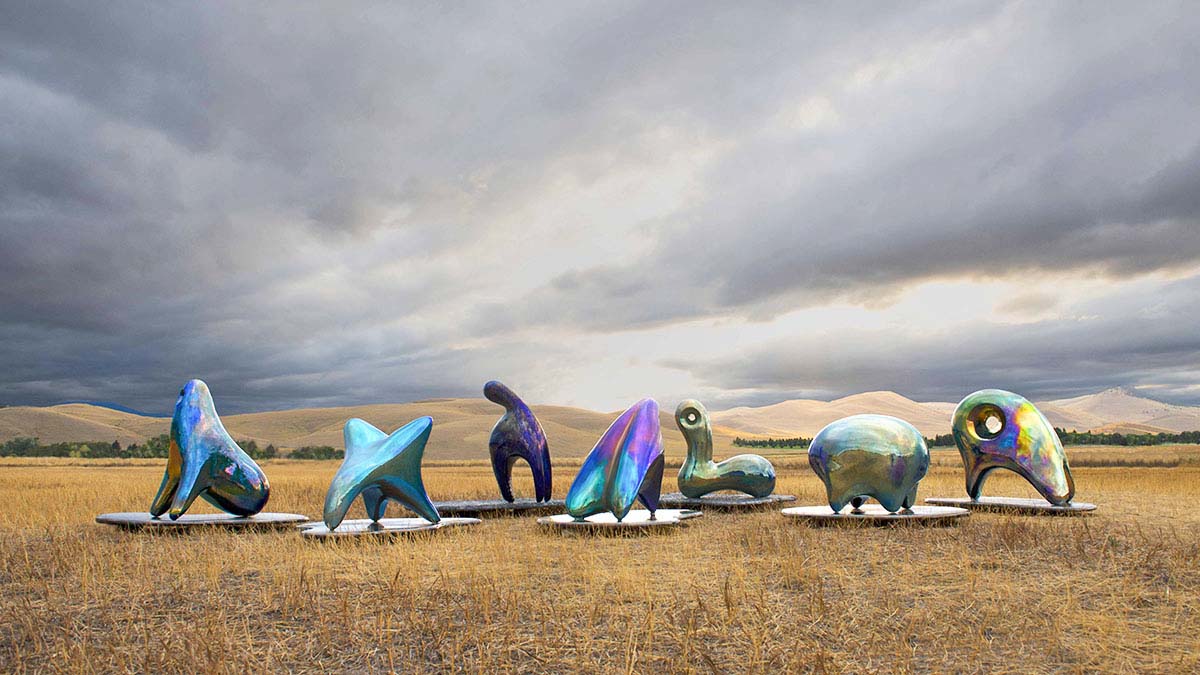
During the pandemic, I became a long-term resident at the Archie Bray Foundation in Helena, Montana, where I was finally able to explore luster on a monumental scale. Spending long hours in the studio, I carved large-scale sculptures of speculative species while reflecting on the natural environment beyond its walls, turning to the wildlife and expansive landscapes of Big Sky Country for inspiration. The scale of these works presented new technical challenges. To achieve a consistent, even, and smooth coating, I sprayed the luster glaze onto the sculptures rather than dipping or brushing it on, then fired them in Bray’s large car kiln. Reduction was a crucial stage of the process, determining the final color and surface effect. Each sculpture therefore required an additional firing in a smaller gas kiln, where the atmosphere could be more precisely controlled. I became particularly interested in the chromatic variation produced by a single glaze: subtle changes in the atmosphere could generate dramatically different colors and finishes.
The resulting "Neo-Habitat" works marked a turning point in my luster practice. Installed outdoors on the grounds of the Archie Bray, overlooking the Helena Valley, the sculptures and their reflective surfaces entered into a direct dialogue with the landscape and the sky, seemingly returning to their natural habitat.
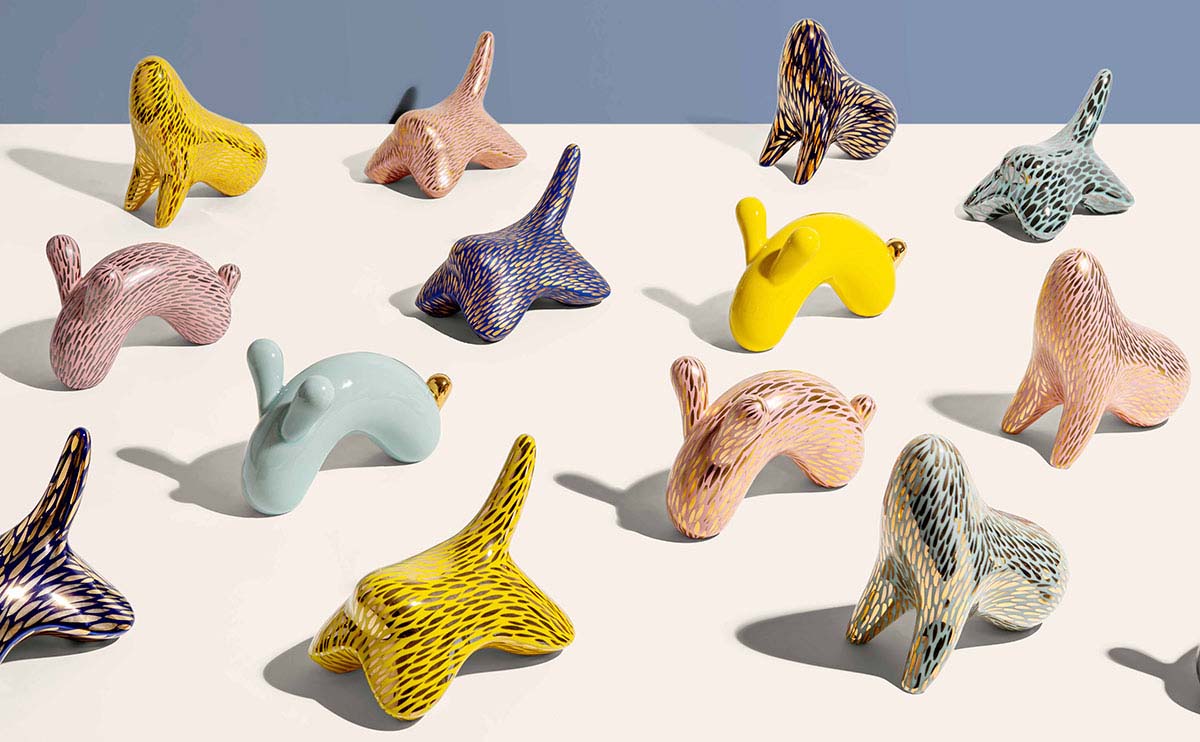
I later moved to Taiwan, where I had the opportunity to collaborate with Tai-Hwa Yao, a leading porcelain manufacturer in Taipei. During my residency at the factory, I designed a limited edition of 300 semi-abstract porcelain animal sculptures, decorated with gold and platinum overglaze lusters and fired in an electric kiln at approximately 800°C (1,470°F). Working within a porcelain factory introduced me to a different scale and precision of ceramic production and expanded my understanding of how luster is achieved beyond the individual studio and within an industrial context. The experience also introduced me to physical vapor deposition (PVD), an advanced coating technology used to create thin metallic films on surfaces, including ceramics. In a vacuum chamber, a metal or metal-containing material is vaporized. The resulting particles travel through the chamber and condense on the prepared object, forming a thin, adherent coating. PVD can produce smooth, highly reflective metallic finishes in gold, silver, platinum-like, and other tones. Unlike traditional ceramic luster, which develops through a secondary firing, PVD deposits a metallic coating onto the surface through a controlled physical process.
Overglaze luster is the most commercially accessible form of ceramic luster today and is widely used on porcelain and other already-glazed ceramics. Commercial luster products are generally supplied as ready-to-use liquids containing a small quantity of a metal compound dispersed in an organic medium. The material is brushed onto a previously fired glaze and then fired at a relatively low temperature in an electric kiln.
Because the layer is extremely thin, the application is usually done with a soft brush. The surface beneath the luster remains important because the final appearance is influenced by the color, gloss, and texture of the underlying glaze. Overglaze lusters are particularly common on porcelain, fine earthenware, tiles, and decorative ceramic objects.
Commercial lusters can contain compounds of precious metals, such as gold chloride and platinum chloride, while others may use silver or copper. Depending on the formulation, materials such as bismuth, lithium, and lead can help the luster adhere and form the final metallic surface. The metallic compound is carried in an organic liquid medium, which may contain resins, oils, and solvents. Overglaze lusters are normally fired at a relatively low temperature, often around 750–800°C / 1,380–1,470°F. The exact firing temperature depends on the manufacturer’s formulation. The organic medium creates a locally reducing environment during decomposition and combustion, which can influence the final metallic surface.
Since relocating to the Netherlands in 2023, I have been fortunate to work with and research luster techniques across Europe. Recently, I’ve been exploring the imagined genetics of the posthuman body, where nature and technology become increasingly indistinguishable. The idea of the posthuman emerges from postmodern and contemporary thought, particularly through the writings of thinkers such as Michel Foucault (French, 1926–1984), who questioned the idea of a fixed and universal human subject, and Donna Haraway (American, b. 1944), whose concept of the cyborg proposed hybrid identities that blur the boundaries between human, machine, animal, and nature.
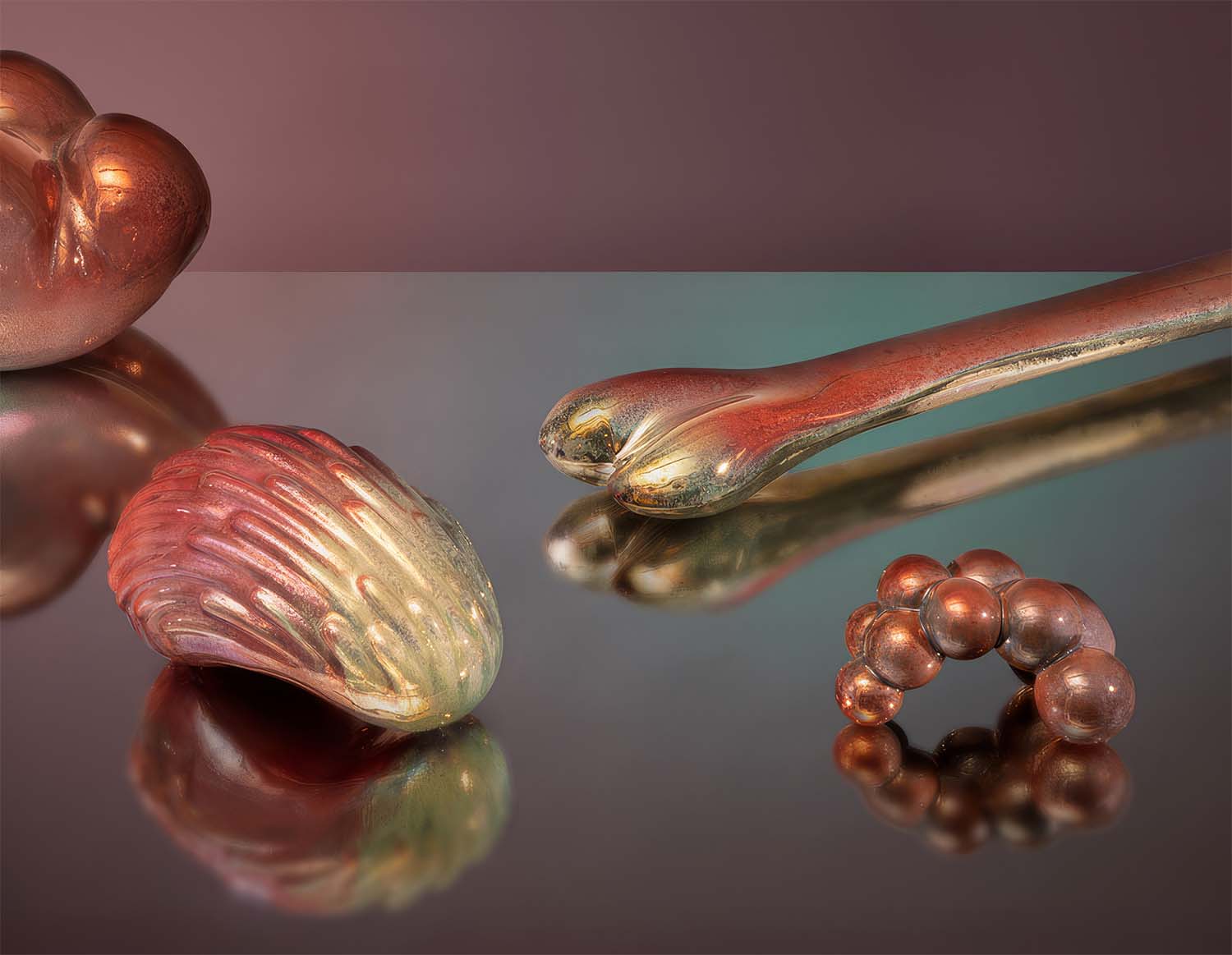
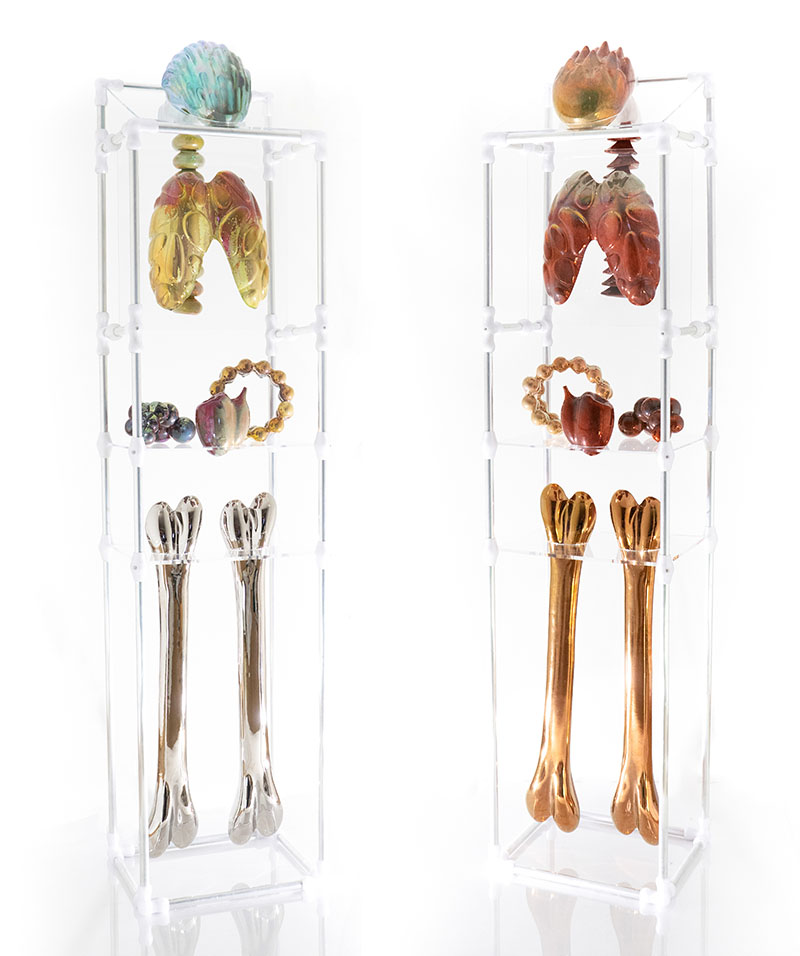
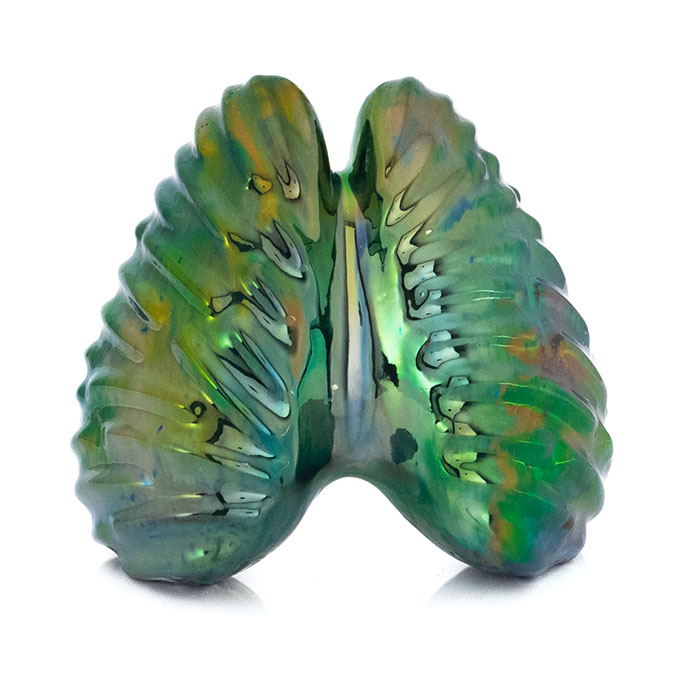
During a visiting artist residency at CERCCO, Geneva University of Art and Design in Switzerland, I further developed these ideas through a new luster installation, Corpus Archetypus. Resembling biological organs and anatomical structures, the sculptures were coated with an in-glaze luster formulated from precious and metallic elements. Viewers were invited to reflect on and confront their own bodies through fragments of an imagined inner anatomy. The work was later exhibited at Collect Art Fair in London and at Ceramic Brussels 2026.
Over the past two years, I have focused on developing a more intimate approach to luster at a smaller scale. Initially prompted by the rising cost of silver and the energy demands of gas firing in Europe, this shift led me to reconsider the material and technical economy of my practice. I began experimenting with commercially available, lead-free, low-temperature glazes as bases for luster, firing them once in a small, well-sealed electric kiln.
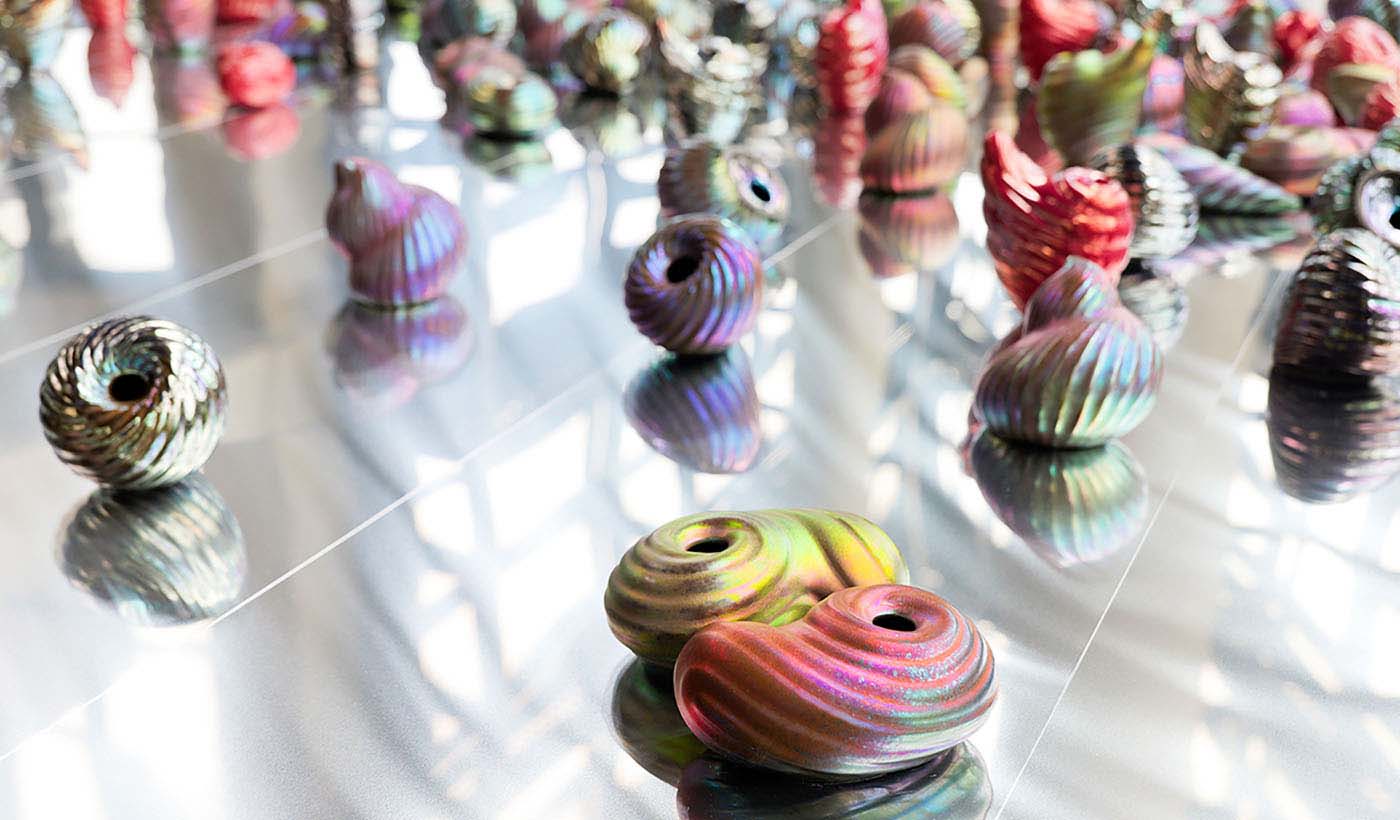
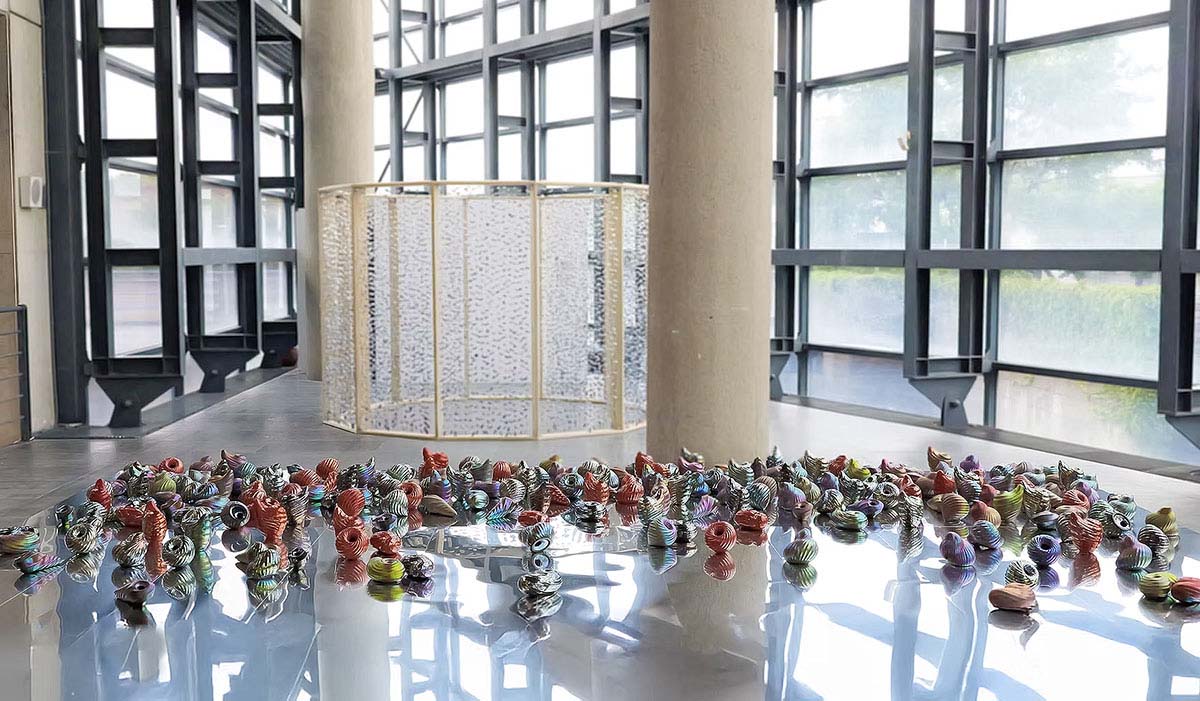
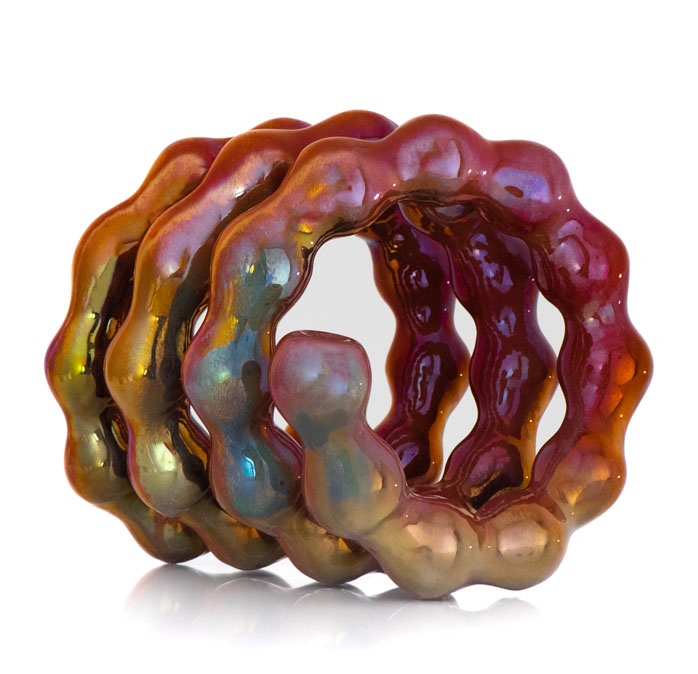
For my solo exhibition in 2025, Shell-ter, at the Yingge Ceramics Museum, I produced hundreds of small porcelain shell forms. Working repeatedly with the same firing method allowed me to achieve a wide range of colors and iridescence, while the gallery’s natural daylight continually transformed the reflective surface of the work, revealing new colors and reflections. The installation never appeared exactly the same twice. Last summer, at the Northern Clay Center in Minneapolis, I presented sculptures in which organ-like forms merge with seashells, creating hybrid bodies that blur the line between uncanny anatomy and familiar forms of nature. Having lived across different languages and cultures without a fixed sense of home, I came to see the shell as a metaphor for protection, belonging, and the desire to create a place of my own: my shelter.
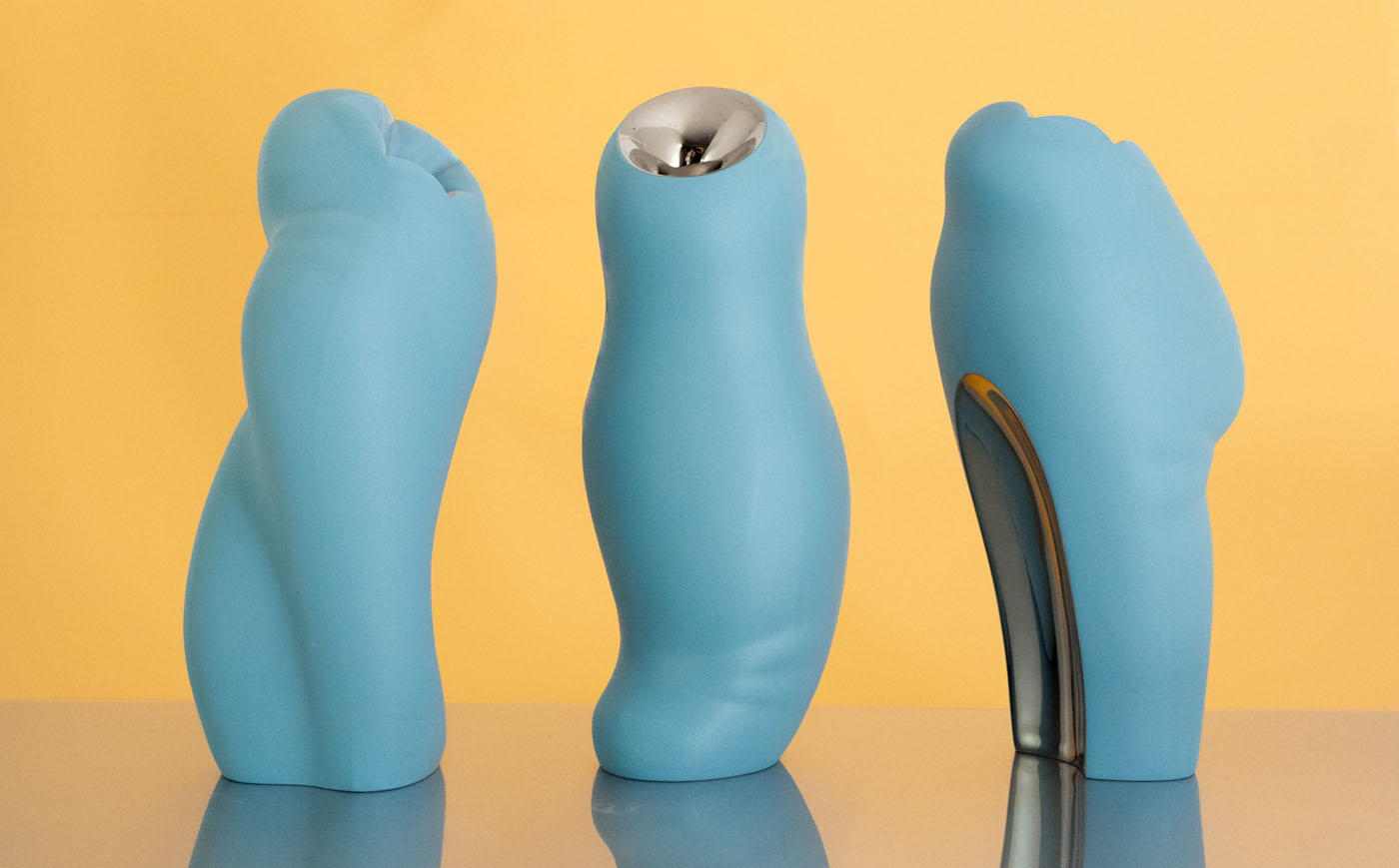
I currently divide my time between the Netherlands and Germany, where I work at Offenbach University of Art and Design. The Ceramic Art Lab (CAL), supervised by Merja Herzog Hellsten, is housed within the historic Höchster Porzellan-Manufaktur (est. 1746) in Frankfurt. Last year, I was privileged to produce a limited series of porcelain figurines at the factory, titled ANTHROPOIDS, exploring posthuman anatomy and hybrid identities between human and vessel.
Looking ahead, I intend to further develop luster as a material and a concept for imagining speculative futures in relation to humanity, posthumanism, and cyborg theory. Through immersive ceramic installations, I seek to build environments in which the boundaries between human-nature and technology-artifice become increasingly fluid. I am particularly interested in the transformative nature of luster: its reflectivity and inherent unpredictability, which enable surfaces to oscillate between the appearance of biological surfaces, technological components, and otherworldly matter. In this sense, luster becomes a means of questioning how technological and biological identities might intersect, and what might emerge when it becomes difficult to distinguish nature from technology. The surfaces can appear simultaneously ancient and futuristic, familiar and alien, suggesting objects that might belong to an imagined civilization yet to come.
This is what continues to draw me to luster: its refusal to settle into a fixed identity. Its appearance shifts with light, atmosphere, temperature, and the presence of the viewer, remaining perpetually in a state of flux.
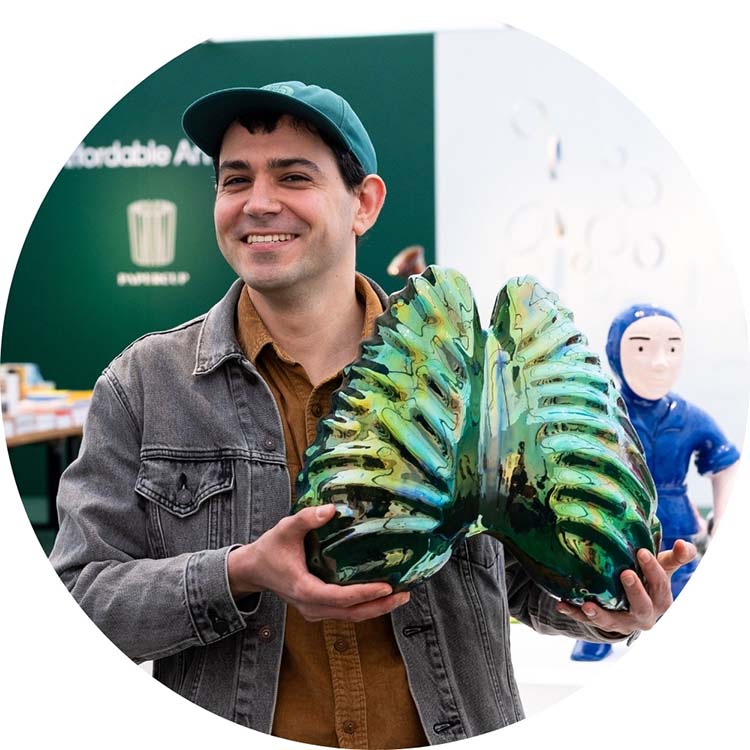
Uriel Caspi (b. 1994) has worked internationally as an artist-in-residence and academic fellow. He earned a BFA in Ceramics from the Bezalel Academy of Arts and Design, Jerusalem (2018), and an MFA from Alfred University, New York (2021). He has exhibited in museums, galleries, art fairs, and venues across the world: the Armory Show with Yossi Milo Gallery, NYC; Sculpture Space, New York; Faenza International Ceramics Museum, Italy; Collect Art Fair, London; Salon C-14, Paris; Ceramic Brussels, Belgium; Westerwald Ceramics Museum, Germany; Musée de Carouge, Geneva; Eretz Israel Museum, Tel Aviv; Yingge Ceramics Museum, Taipei; Gyeonggi Museum, Seoul; and Musée Tomo, Tokyo.

Caspi has worked as a resident artist at the Archie Bray Foundation (Montana), EKWC (Netherlands), CERCCO, Geneva University of Art and Design (Switzerland), Höchster Porzellan Manufaktur (Germany), Northern Clay Center (Minnesota), and others. His honors include the Hecht Award for Emerging Artist (2019), the Artis Grant (2023), the McKnight Fellowship (2024), the Alfred University Alumni Award (2026), and the Naomi Anolic Early Career Artist Award (2026). Born in Haifa, Israel, Caspi is currently based in Tilburg, the Netherlands, and works at Offenbach University of Art and Design in Frankfurt am Main, Germany