Plastic has become an ever-present part of daily life. From takeout containers and grocery bags to soda bottles, it is now the default material through which we consume. According to the United Nations Environment Programme, humans produce more than 400 million tons of plastic annually, with more plastic waste entering the ocean than is recycled. How might the environmental consequences of plastic prompt us to reconnect with one of humanity’s oldest materials: clay?
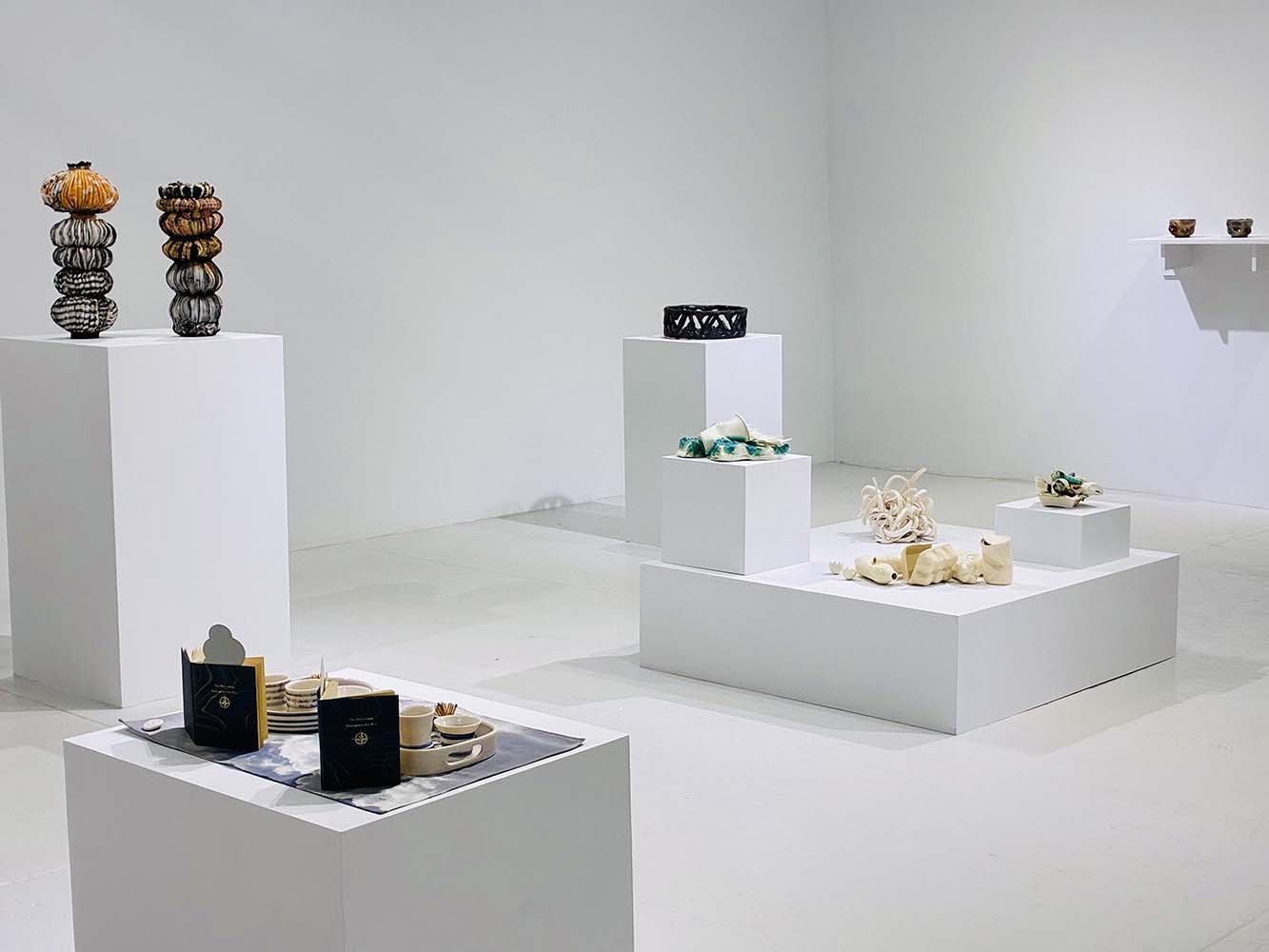
This question sits at the center of Rethinking Plastic: Returning to Clay, presented at Sculpture Space NYC, located in Long Island City, Queens, by members of the International Academy of Ceramics (IAC). Bringing together invited and juried artists, the exhibition asked them to respond, "literally, figuratively, metaphorically, and politically," to the idea of clay replacing plastic in "functional, sculptural, and installation formats," imagining an alternative future in which ceramics reclaim many of the roles plastic has assumed over the past century. From direct, practical alternatives to plastic use, to works that question habits of convenience and confront the environmental consequences, the twenty-seven artists explore what a future centered on ceramics might look like.
Founded in 1952, the International Academy of Ceramics, based in Geneva, Switzerland, with members from around the globe, fosters international collaboration among ceramics professionals. For this exhibition, the IAC adopts a hybrid format, combining physical works installed in the gallery with additional submissions presented digitally. The approach broadens participation while acknowledging the environmental costs of packaging and shipping fragile and heavy ceramics across borders.
Walking up to Sculpture Space NYC, visitors are met by an industrial pocket of Long Island City, though the interior itself is clean, airy, and inviting. With track lighting and white walls, the gallery occupies only the front portion of the building, while the remainder of this 8,500 sq. ft. space with 22'-high ceilings is devoted to working ceramic studios, where artists create and fire their work.
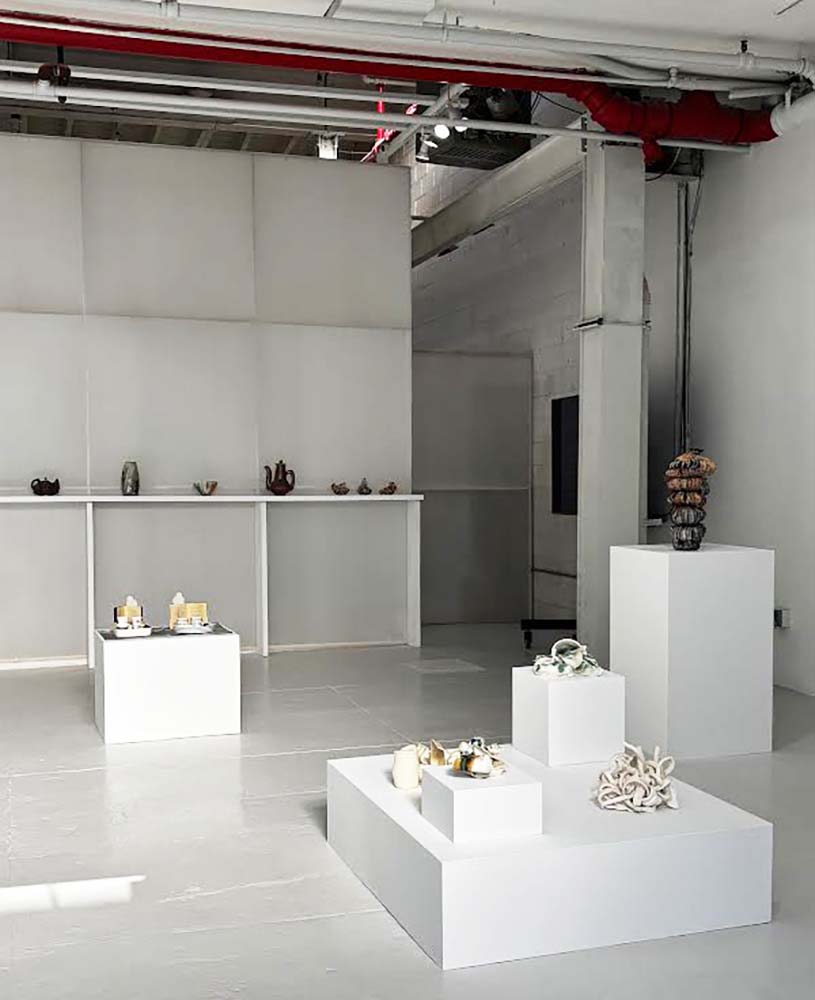
In the dedicated exhibition area, tableware, abstract sculpture, and functional vessels occupy pedestals, floating shelves, and plinths throughout the gallery, making clear there is no singular vision for ceramics as an alternative to plastic.
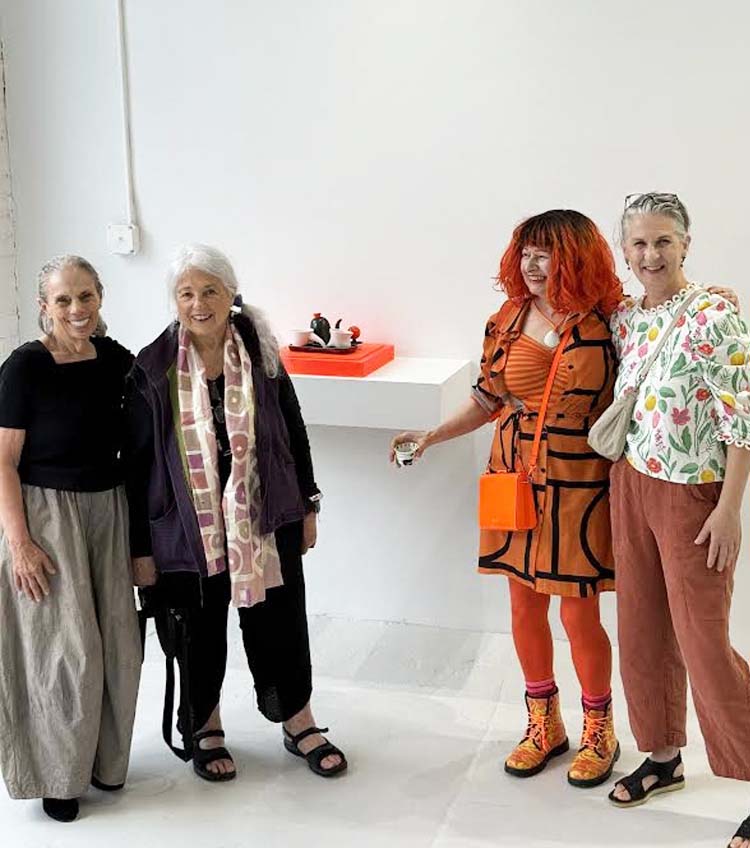
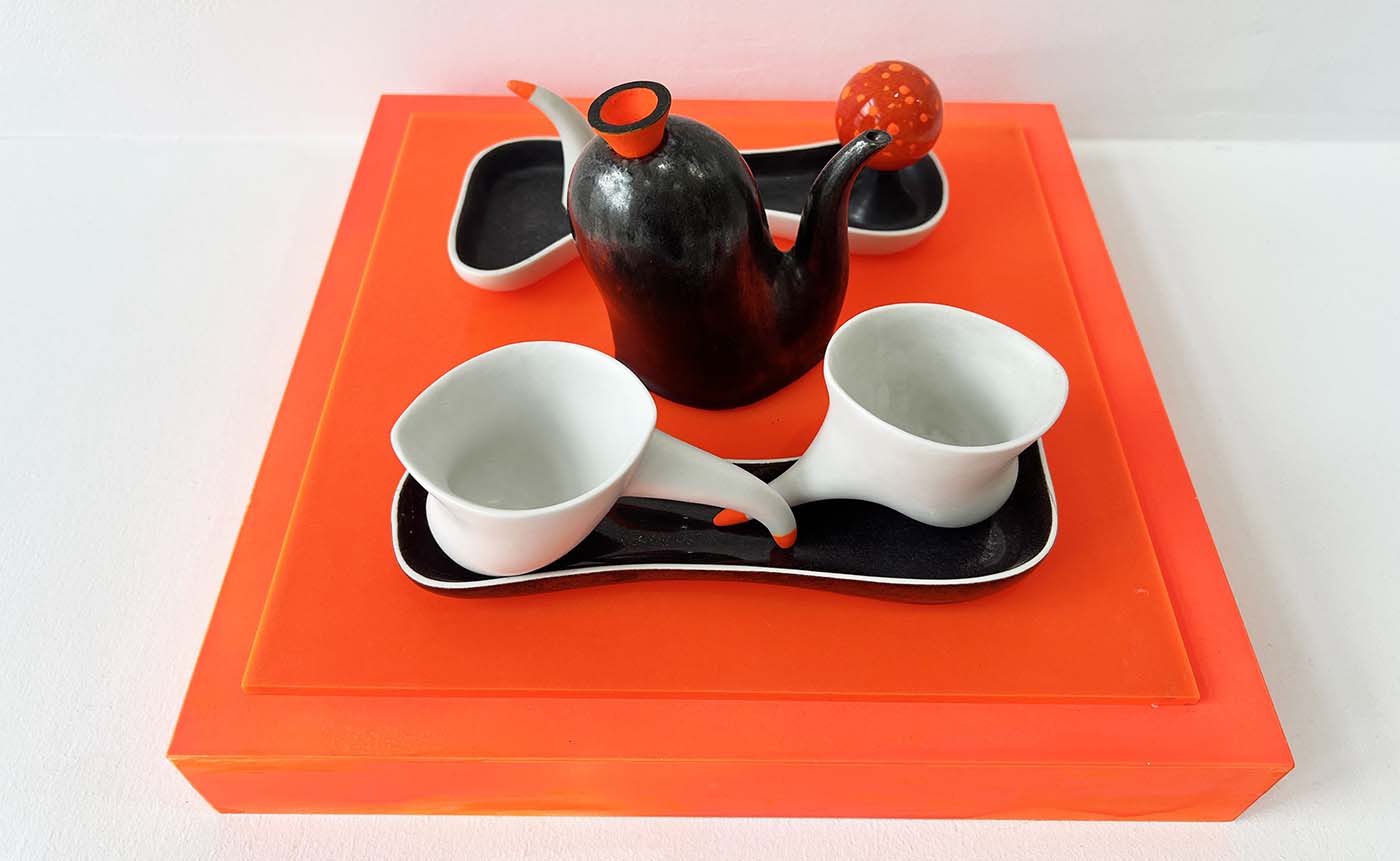
Sylvia Nagy's Porcelain Set For U immediately stands out and presents one of the exhibition's strongest arguments: that sustainability begins with daily rituals. Inspired by pebbles shaped by the ocean, her slip-cast tea set transforms the ordinary ritual of drinking from one of convenience into one of care. Rather than encouraging disposability, the handmade vessels invite slower, more deliberate moments of use and sharing. Every aspect of the work and its presentation reinforces this philosophy, from the ergonomic, organic forms and vivid orange accents to the painted riser, itself upcycled from an old canvas. During the opening, she wore an all-orange outfit, carried a ceramic sake cup as a necklace, and enthusiastically discussed Green Living, sustainability, and why her tea cups are intentionally made in pairs so they can always be shared.
Ivan Albreht, raised in Belgrade, former Yugoslavia, made Cup with Yellow Rim and Gold Ornaments (Upcycled Series), a piece that looks antique, and it is! Beginning with a thrifted ceramic cup, Albreht applies screenprinted overglaze decals of flies through a low-fire process, transforming an existing object instead of producing an entirely new vessel.

“In reference to the theme of the show, I believe that I am going a step further in terms of environmental footprint by reducing the energy used in the process to the minimum possible when it comes to firing ceramics. Not only that these objects retain their function, and can be used instead of plastic, [...] but I am also reusing discarded objects, and by doing so avoid using materials which are excavated, which are typically used in ceramics studio production.”
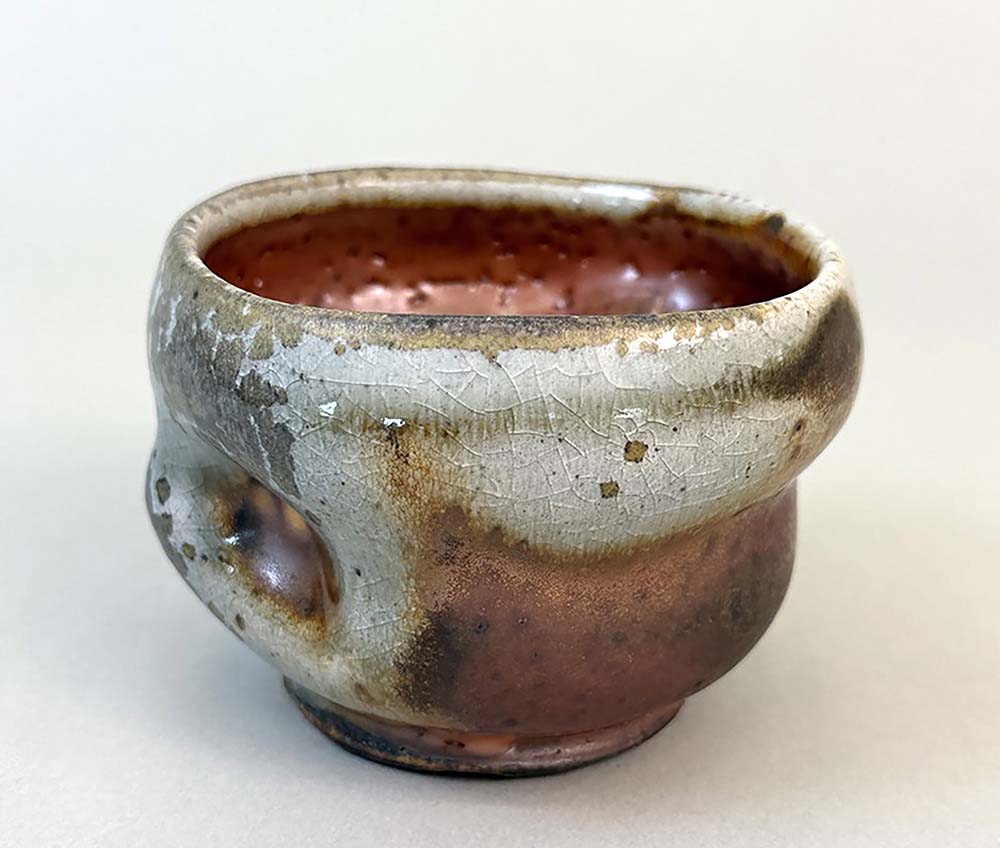
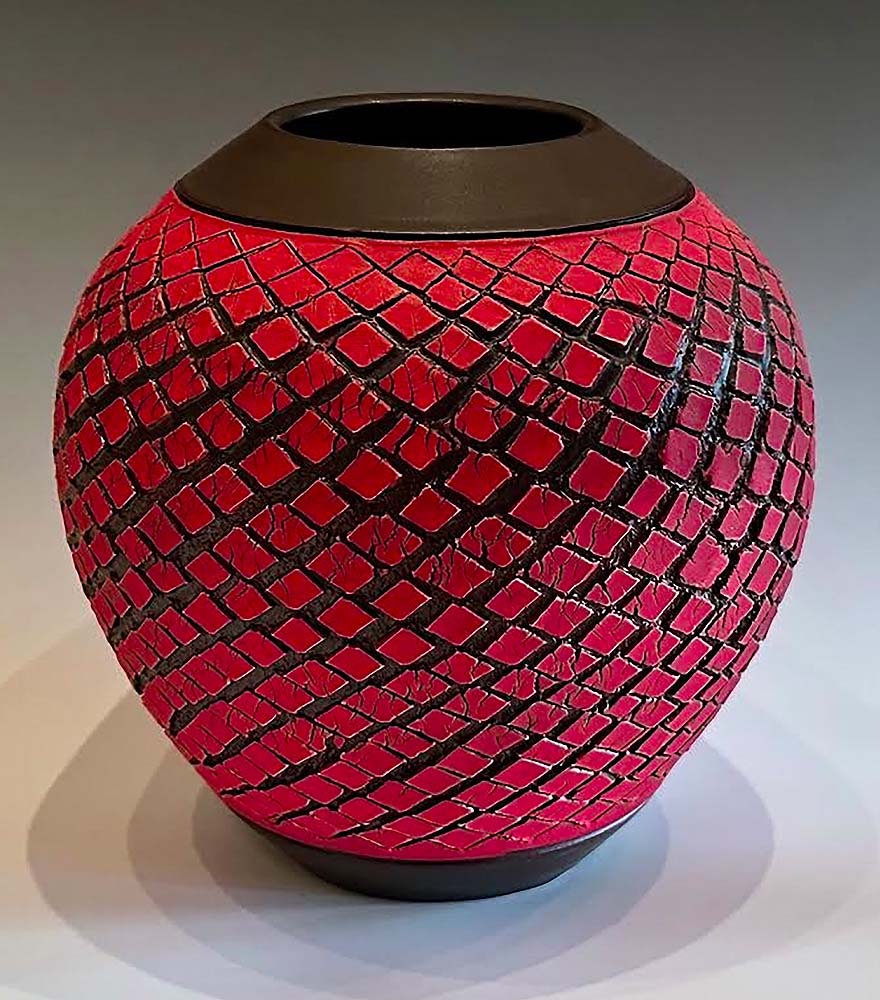
While Albreht demonstrates sustainability through reuse, several invited US-based artists suggest that clay's greatest strength lies not in efficiency alone, but in the tactile experiences that plastic cannot replicate. Chris Gustin exemplifies this approach through his Shino Tea Bowls. The small anagama wood-fired stoneware bowls feature finger indents that naturally guide the hand, foregrounding the intimate relationship between maker, object, and user. Similar sentiments are present in Randy Johnston's wood-fired Coffee Pot and Lee Middleman's wheel-thrown and hand-carved Red Carved Diamond Vase. Collectively, these works suggest that celebrating clay's material qualities through utilitarian vessels is itself a response to the ubiquity of plastic.

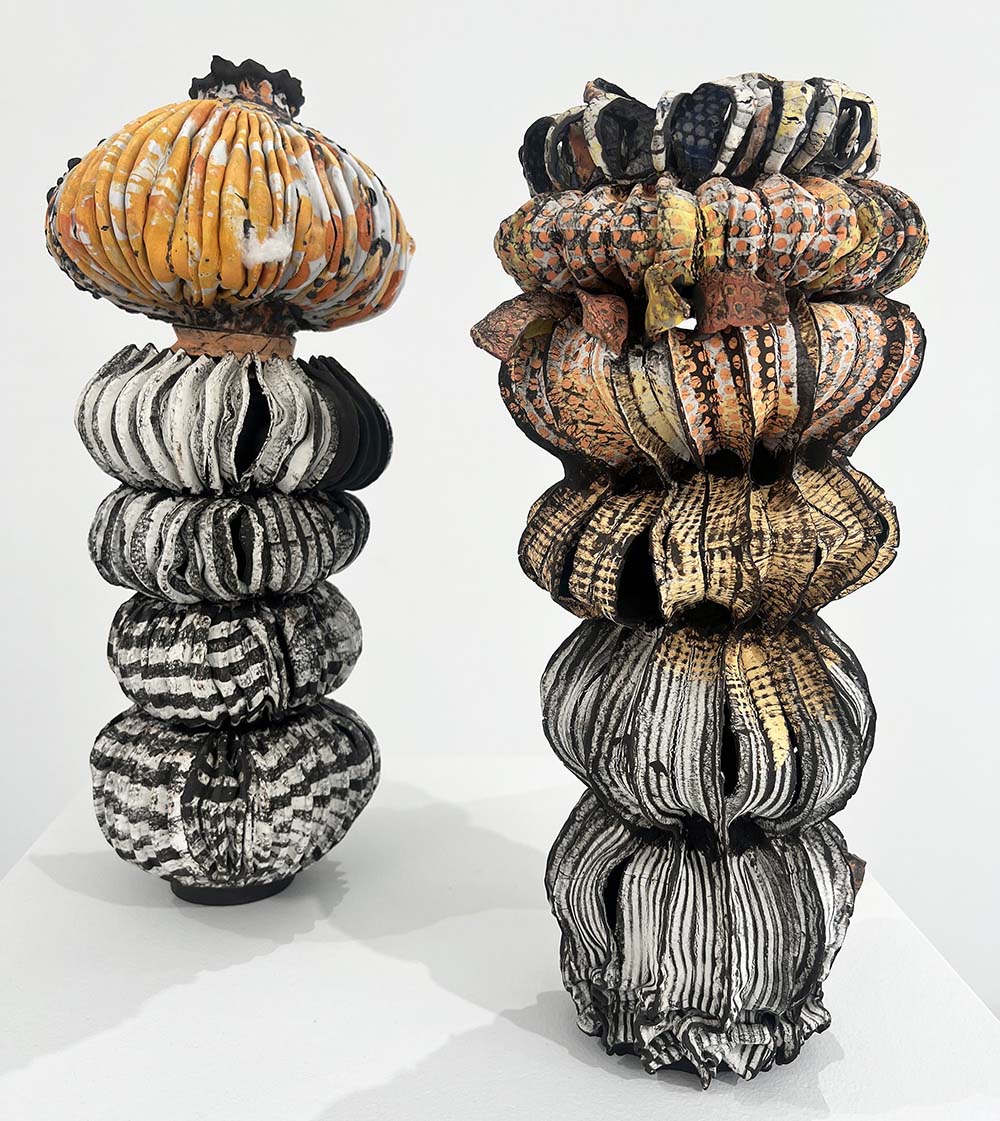
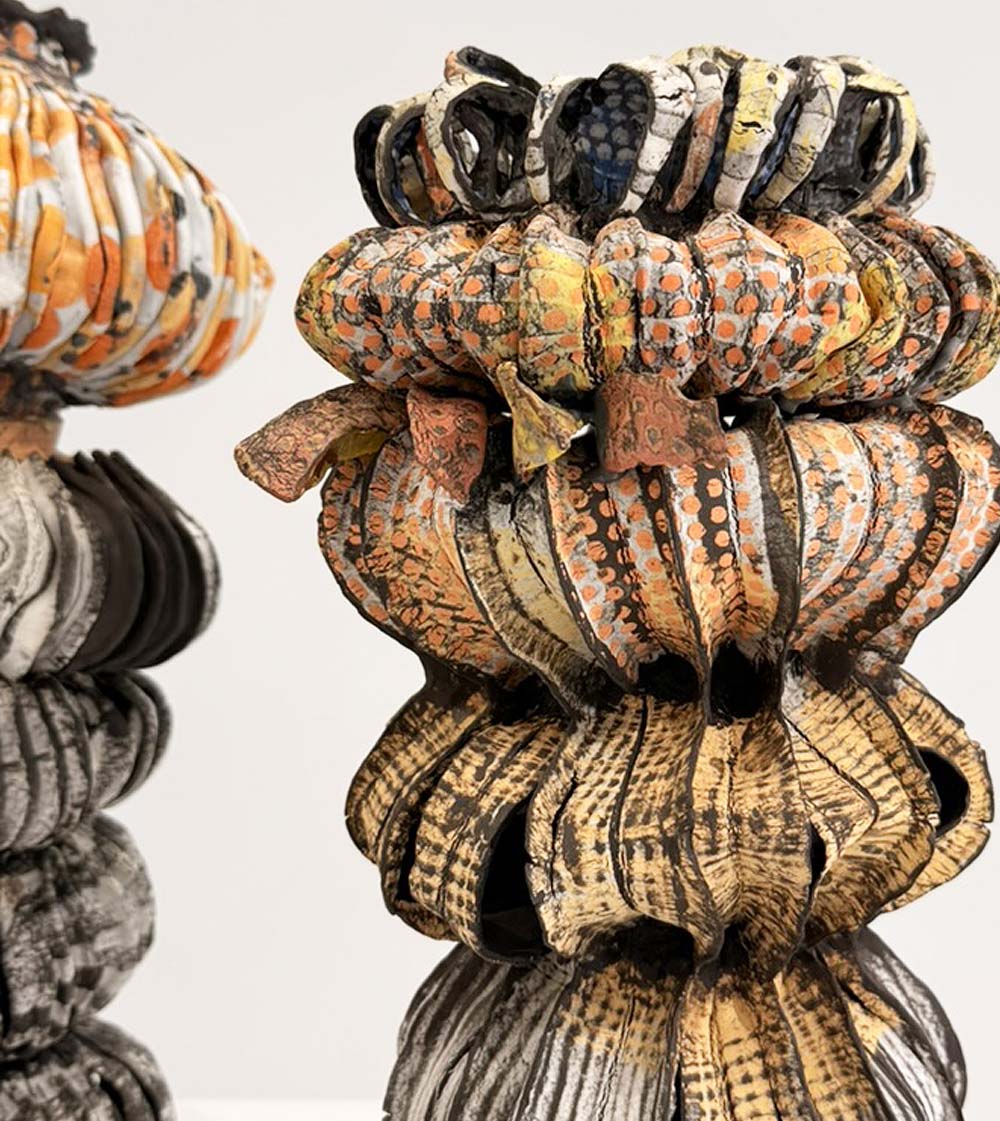
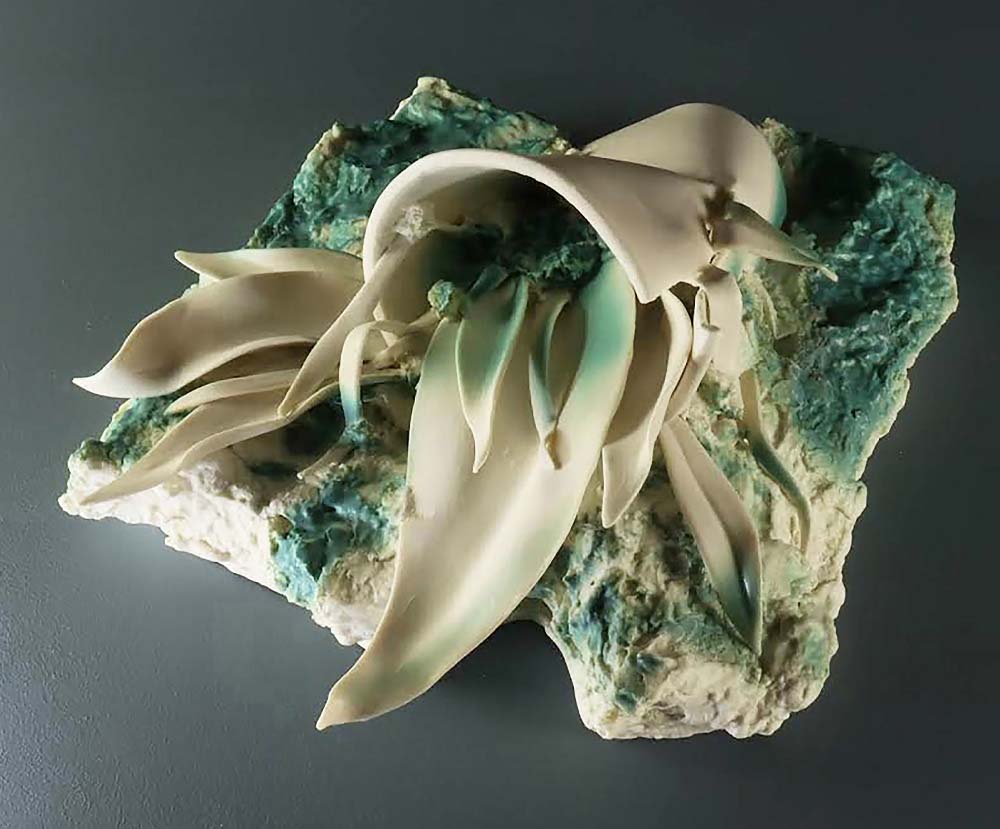
If the exhibition's functional pieces imagine alternatives to plastic, the sculptures shift attention toward the consequences of plastic ubiquity itself. Hungarian-born artist Judit Varga's Totem Flowers responds to the multibillion-dollar artificial flower industry by offering stacked ceramic forms that reference botanical growth without directly imitating it. Rough strips of patterned high-fire semi-porcelain are assembled into sculptures that appear delicate, almost too fragile to touch.
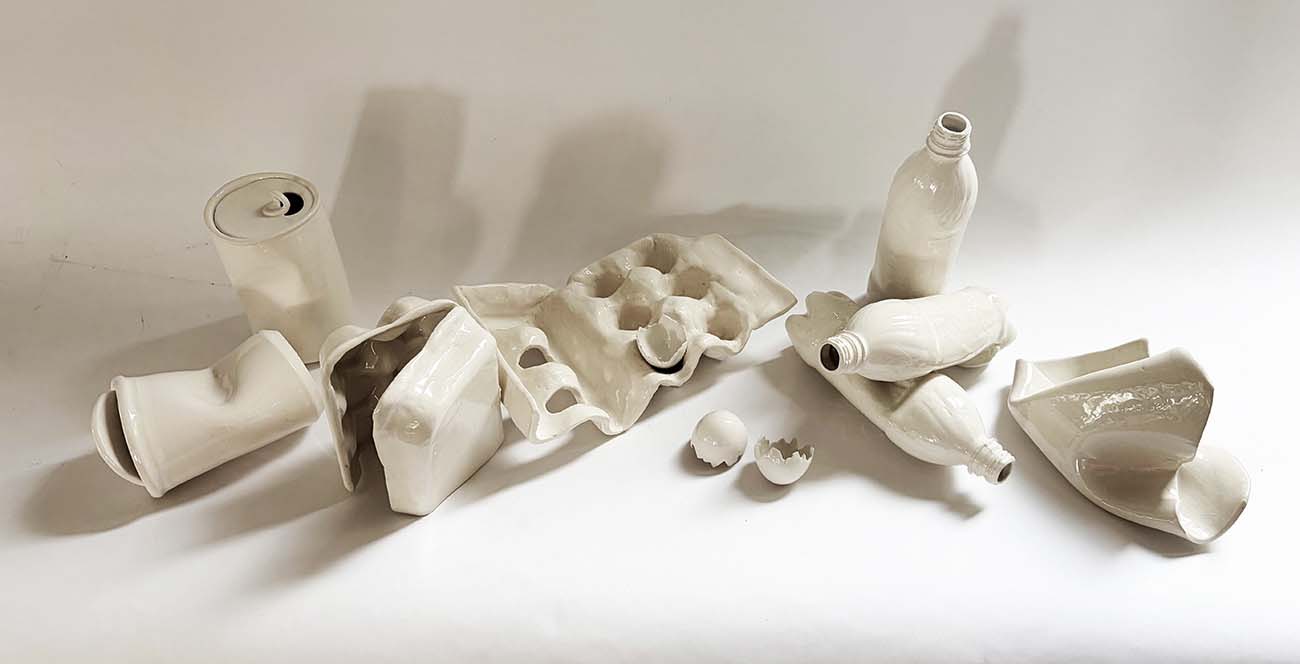
Where Varga critiques manufactured nature, Linda Lighton’s long-running White Trash series (1983-2024) confronts the accumulation of consumer waste itself by creating porcelain replicas of everyday refuse like plastic bottles, aluminum cans, empty bottles, and broken eggshells.
“‘White Trash’ is a reminder of the enduring and vast impact of our waste – an issue that remains more pertinent than ever, even four decades after I started this series.”
- Linda Lighton
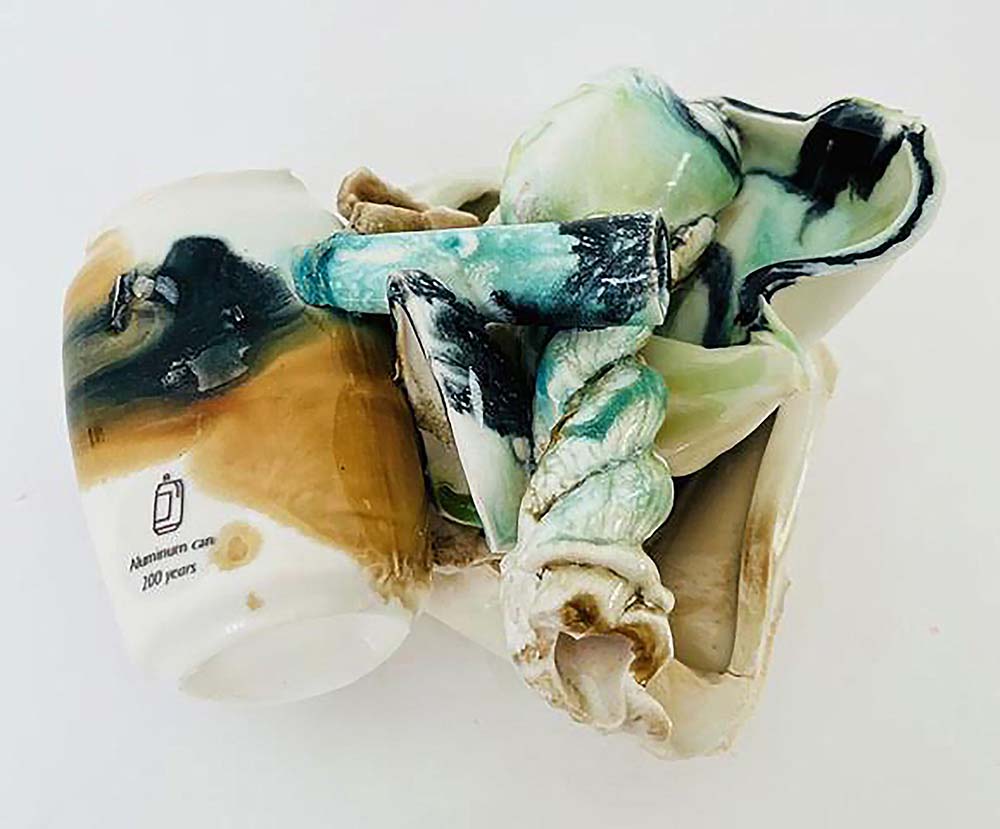
Similarly, using literal representations of waste in her work, Antoinette Badenhorst transforms the shapes of discarded plastic cups into sculpture in The Ocean Sighs, referencing ocean pollution. Rather than depicting the ocean itself, the work foregrounds the debris left behind by human habits of consumption. Nearby, Susan Beiner’s Small Trash Pile continues this conversation through ceramic replicas of discarded waste, created with recycled glaze. One aluminum can bears a label indicating its estimated decomposition time: 200 years.
The exhibition’s concern with environmental impact extends beyond individual artworks to its own methods of presentation. To reduce the environmental costs of transporting fragile ceramics internationally, several artists participated through digital submissions. Because viewing and experiencing ceramics depend so heavily on weight, texture, and scale, something is inevitably lost when they are experienced solely through a screen. Even so, several international submissions stood out. Croatian artist Sandra Ban's NYLON – Clay Bag transforms a plastic shopping bag into a meditation on humanity and nature. Ban uses hand-built ceramic sculpture to mimic the form of a plastic bag, which is filled with soil. By adding a crack to the bottom of the bag and allowing the soil to spill out, Ban alters the function of the object.
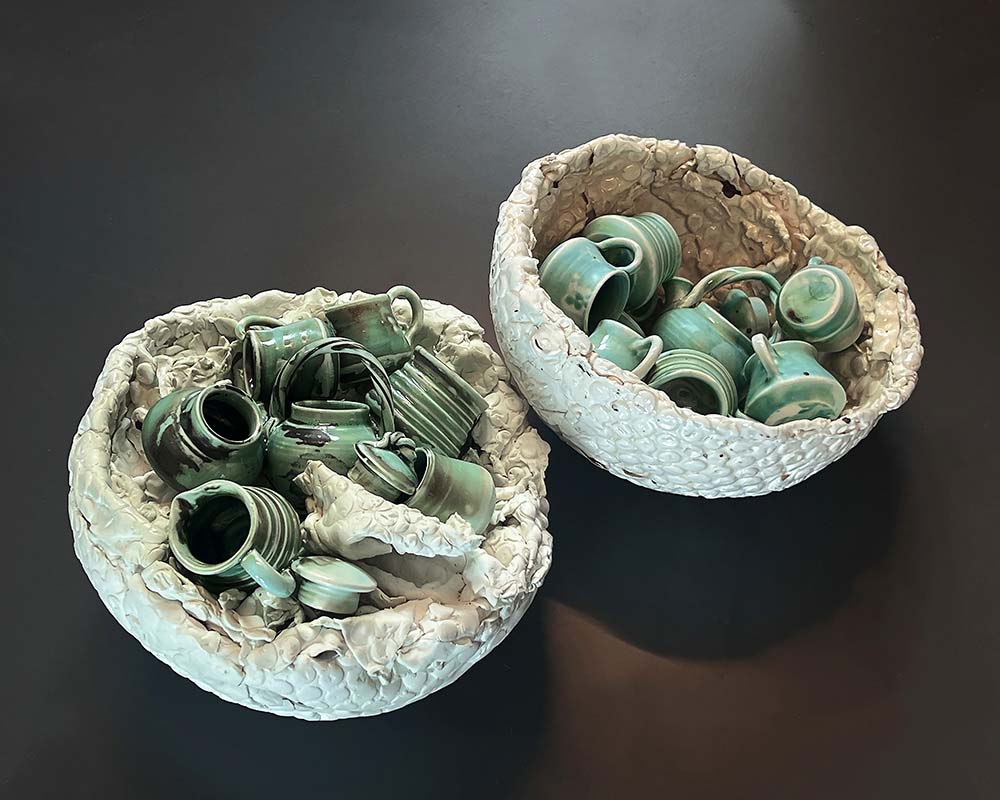
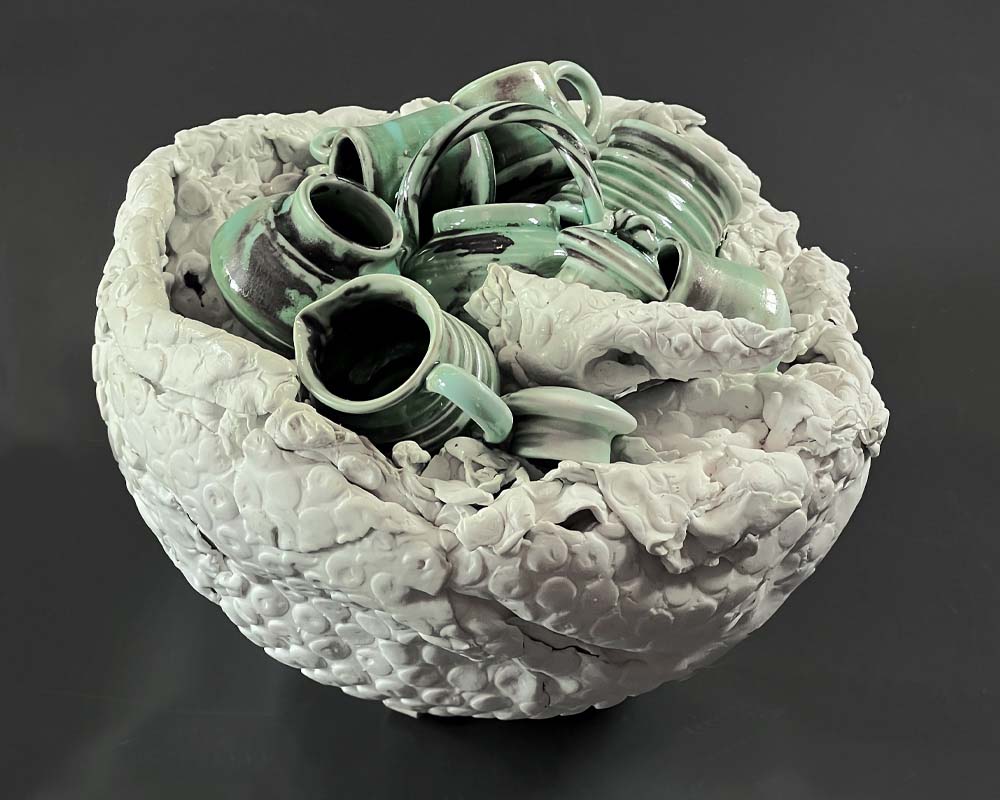
With works submitted virtually from Auroville, India, Adil Writer reflects on the often-overlooked environmental costs of transporting ceramics across the globe. An artist and partner in one of India’s largest handmade functional tableware studios, Writer presents Wrap Me In Bubbles, a work that serves as a visual reminder of the ecological consequences that come with shipping ceramics.
“The porcelain bowls embody a material conversation between the ephemeral and enduring… the porcelain surfaces preserve the distinctive texture of bubble wrap, protective plastic packaging destined for landfills; transformed through ceramic processes into permanent sculptural forms. Within each vessel are miniature tea sets, symbolic offerings that gesture toward clay’s historic and ongoing role in sustaining daily life.”
- Adil Writer
While the exhibition prioritizes diverse artistic responses rather than a single narrative of what a return from plastics to ceramics could mean, that emphasis ultimately feels appropriate for an international organization of members with a wide range of artistic practices. The exhibition’s goal is not to solve the global problem of plastic, but to make ordinary acts of consumption newly visible.
Through ritual, utility, and material presence, Rethinking Plastic: Returning to Clay reminds us that the objects we choose to live with are never neutral. They shape our habits, influence our relationship to the material world, and ultimately affect how we imagine more sustainable futures.

Johnny Macas-Freire is a curator, educator, and artist based in Kapolei, Hawaiʻi. Macas-Freire earned a BA in Art History with a Museum Studies certificate from the University of New Mexico in 2021. In 2022, he founded Manini GALLERY,a pop-up curatorial initiative dedicated to showcasing Hawaiʻi-based contemporary artists through exhibitions and public programs across the Hawaiian islands. His work has been featured in exhibitions such as Artists of Hawaiʻi 2023 and Arts of Pride 2022. He is also a founding member of the contemporary painters’ group Manini Collective,which was recently awarded the Hoʻakea Source artist grant through Puʻuhonua Society and the Andy Warhol Foundation for the Visual Arts to support the group’s inaugural exhibition in 2026, premiering in Hawaiʻi before traveling to New York City.