The Clay Studio

1425 N American St
Philadelphia, PA 19122
Clay as Care: Ceramic Art and Wellness, on view at The Clay Studio in Philadelphia from October 9 to December 31, 2025, is a groundbreaking, multi-faceted project that examines the powerful ways ceramic art can promote individual and communal well-being, healing, rest, and resilience. Co-curated by The Clay Studio’s Jennifer Zwilling and Nicole Pollard, the exhibition was more than two years in the making. Its impetus grew from a shared cultural shift that gained momentum during the pandemic. As Zwilling notes, “We sensed that care was becoming part of the zeitgeist in 2020. As the world navigated the COVID pandemic, themes like empathy, social activism, anti-racism, and ‘rest as a tool of resistance’ rose in prominence, driving a renewed focus on how to care for ourselves and others.”
Clay as Care features work by Adebunmi Gbadebo, Jennifer Ling Datchuk, Ehren Tool, and Maia Chao. The project extends beyond the gallery walls to include scientific research, a publication, and a variety of public programs.
Jennifer Ling Datchuk: Fragility, Resilience, and the Journey of Care
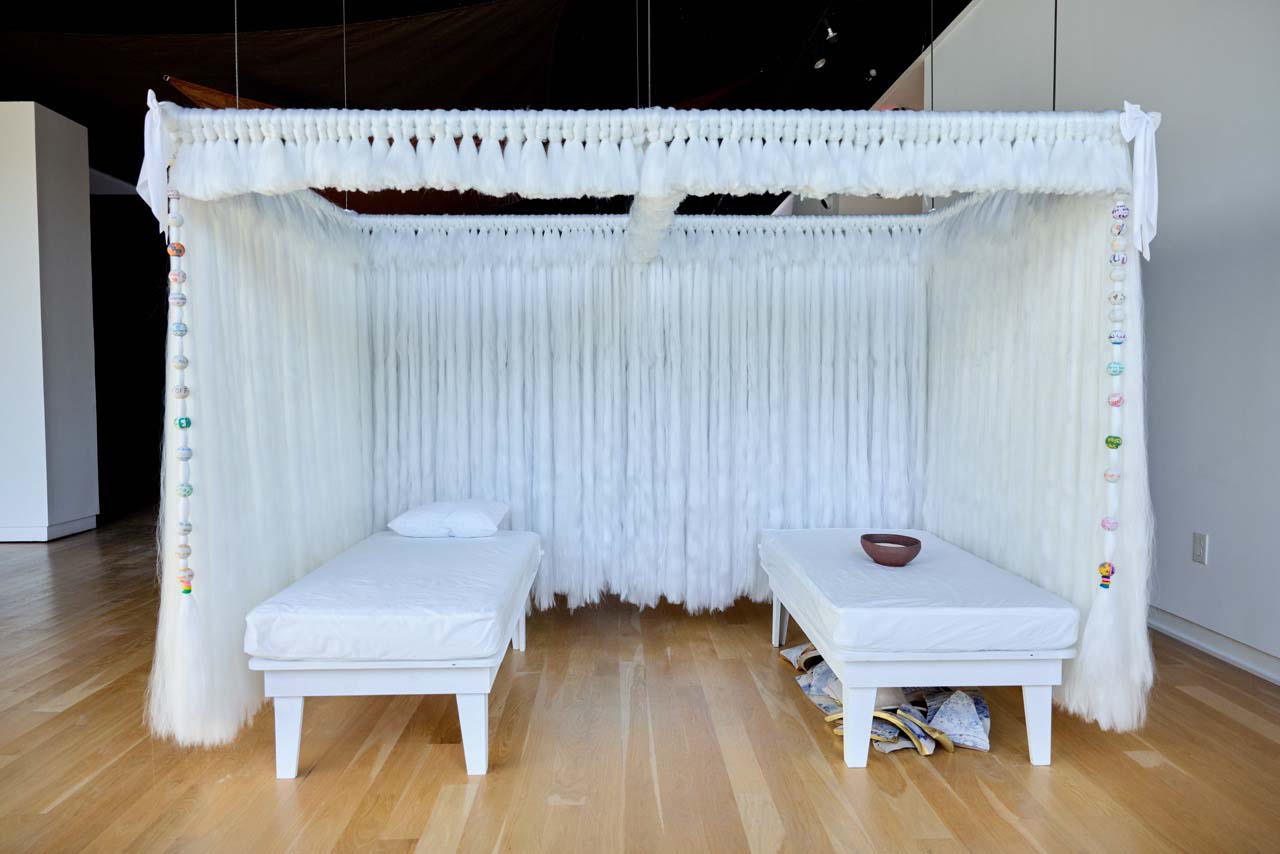
Arizona-based artist Jennifer Ling Datchuk was the first artist invited to participate in the exhibition. Datchuk creates work centered around her “layered identity—as a woman; her Chinese heritage; her role as an ‘American’; and as a third-culture kid.” With Barely Showing, Datchuk creates a sanctuary space layered with meaning, offering a place for contemplation and rest. The phrase evokes early pregnancy but refers more deeply to the invisible pain women often mask when navigating fertility issues. “The title Barely Showing really talks about how we hold grief throughout our day,” Datchuk shares.
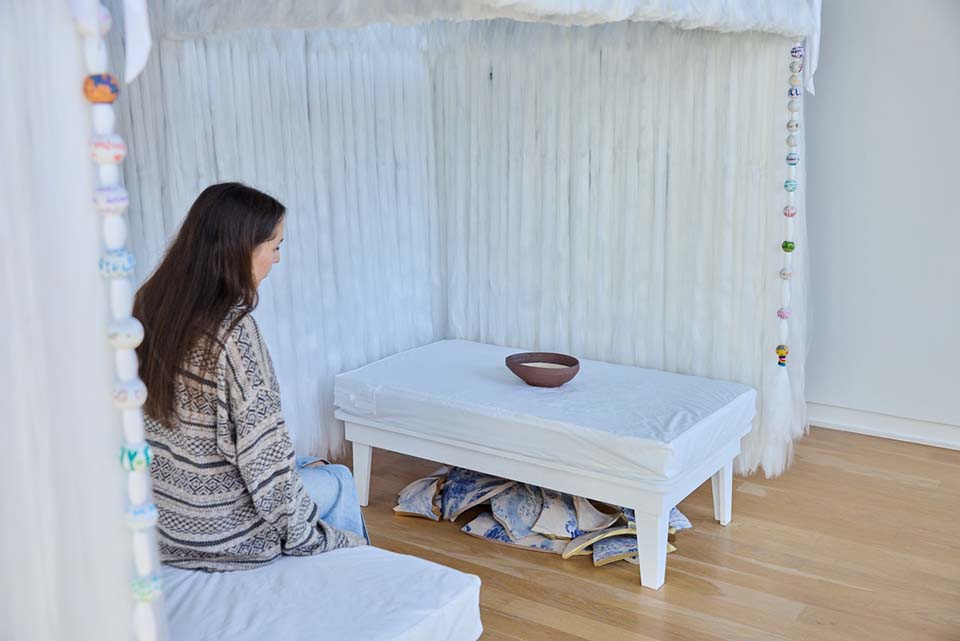
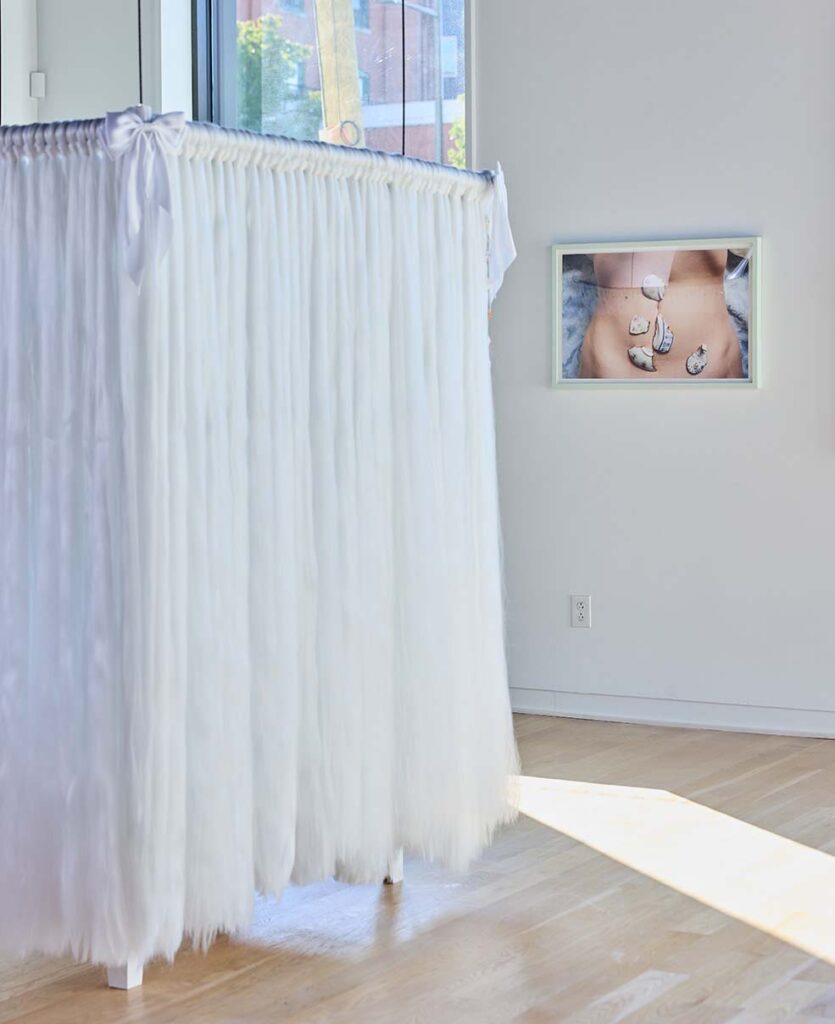
The work stems from her decade-long journey with infertility, IVF (in vitro fertilization), multiple miscarriages, and an endometriosis diagnosis. The installation takes the form of a three-sided shelter with tall “curtains” made of synthetic white hair, and strands of beads with empowering phrases that decorate the opening.
Within the “walls” are two small, crib-sized beds, their mattresses covered in white sheets. An empty mattress invites the viewer to sit or lie down (the artist even took a nap on it during installation). Centered on the other mattress is a sagger—the protective outer vessel used during firing, referred to as “mothers” in Chinese. Piled beneath this bed are misshapen chunks of shattered blue-and-white porcelain salvaged as “rejects” from Jingdezhen, China. The artist views these shards as a reflection of brokenness in our bodies while also finding beauty in the broken. She employs ceramics, particularly porcelain, hair, and textiles to explore themes of fragility, beauty, and identity.
Also on view is the color photograph One Tough Bitch. It shows her naked torso, its visible scars from her fertility journey covered in custom-formed, small, cracked bits of porcelain “jewelry,” visually underscoring that art can make the process of brokenness and healing visible. During the collaboration, she became pregnant, giving birth to a son. Through her work, she hopes that anyone navigating a reproductive healthcare journey will feel open to sharing their experiences of loss and grief in a society that can view the mere mention of miscarriage as inappropriate or shameful.
Adebunmi Gbadebo: Ancestral Earth and Healing
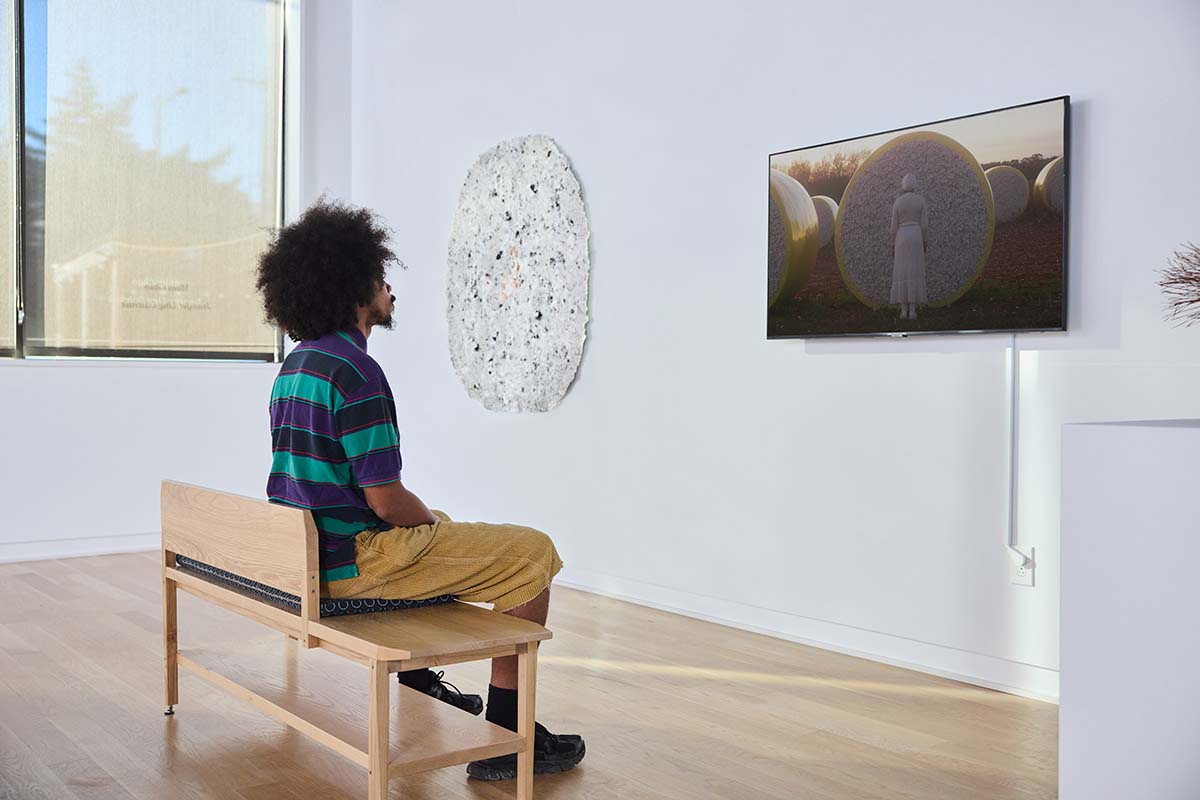
Philadelphia-based artist Adebunmi Gbadebo found her way to clay almost by accident. Although trained in painting, she abandoned the tradition because she felt it represented a weighty foundation in art history she didn’t feel a part of, turning instead to print and papermaking. Gbadebo’s work centers around a deep ancestral connection to the True Blue Plantation along the Waccamaw River in South Carolina. On view is a large circular wallpaper piece titled At the bottom of the Atlantic Ocean, there’s the railroad made of human bones II, a quote from Amiri Baraka’s poem, A Poem for Deep Thinkers. A video, Watch Out for the Ghosts, documents her visit to the former plantation along with the creation process. She combines water from the plantation site, human hair collected from New York City barbershops (sourced from the African diaspora) or sent to her, with indigo and cotton she picked. This act of “making,” and the weaving in of human hair, serves as a physical way to weave her people and their histories into her work.
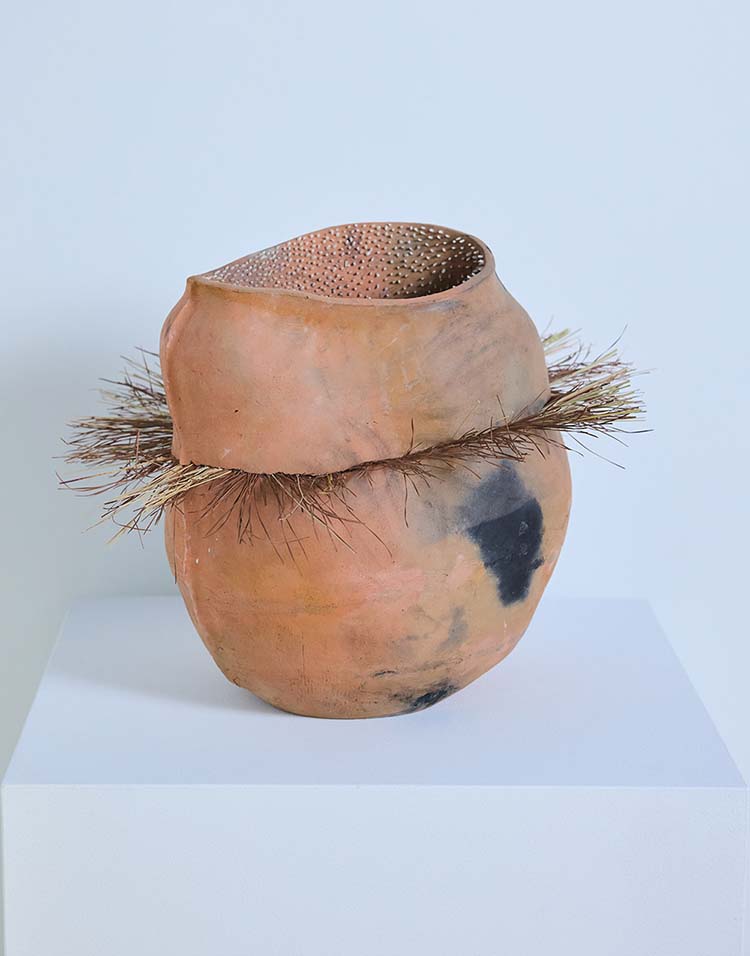
Her open-mouthed vessel, You Came to Her in a Dream, documents her almost accidental turn to making ceramics. During a visit to the True Blue Plantation and the cemetery where her ancestors are buried, she fell in love with the local red clay. She hand-dug the dirt, filling bins for her return to Philadelphia. With Nate Willever’s guidance, she learned how to process the soil for her sculptures, embracing a labor-intensive approach. She makes the vessel using the traditional method of coil building, and after pit firing, she encircles it with a band of dried Carolina Gold Rice, directly connecting it to the unpaid labor of her enslaved ancestors who tended plants on the land.
For Gbadebo, the materials are personal, functioning as a collaboration that is healing for both herself and her ancestors. As Zwilling shared during an exhibition walkthrough, “She talks about using the clay because it contains the DNA of her ancestors, which is from near the cemetery… so, for her, it literally is her ancestors.” That connection leads to a philosophical interpretation when a piece shatters during firing: Gbadebo sees it as simply “an ancestor that didn’t want to cooperate.”
Ehren Tool: Cups of Conversation and Contemplation
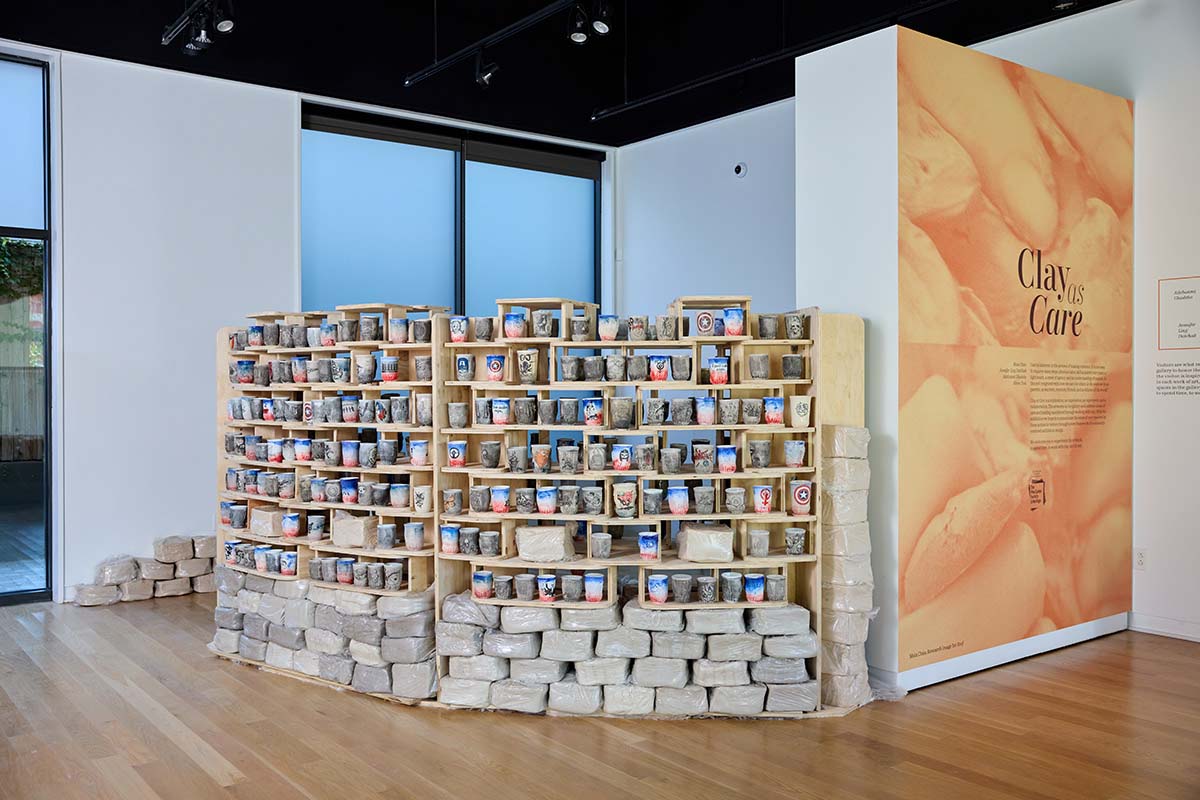
California-based Marine Corps veteran Ehren Tool presents Occupation, a curving wall of plywood shelves filled with stoneware cups, interspersed with bags of clay. The design intentionally evokes a bunker that shelters soldiers in combat. The light gray cups are hand-sized and decorated with decals and stamps molded from military pieces. Washes of blue and red under a clear glaze telegraph the U.S. national colors of red, white, and blue. While many feature layered rows of skulls, along with phrases and designs symbolizing the U.S. armed forces, war, and death, others feature beehives and bees. These seemingly bucolic images serve as a commentary on the military’s role as a major source of pollution, connecting the Pentagon’s carbon footprint to the threats faced by vital pollinators.
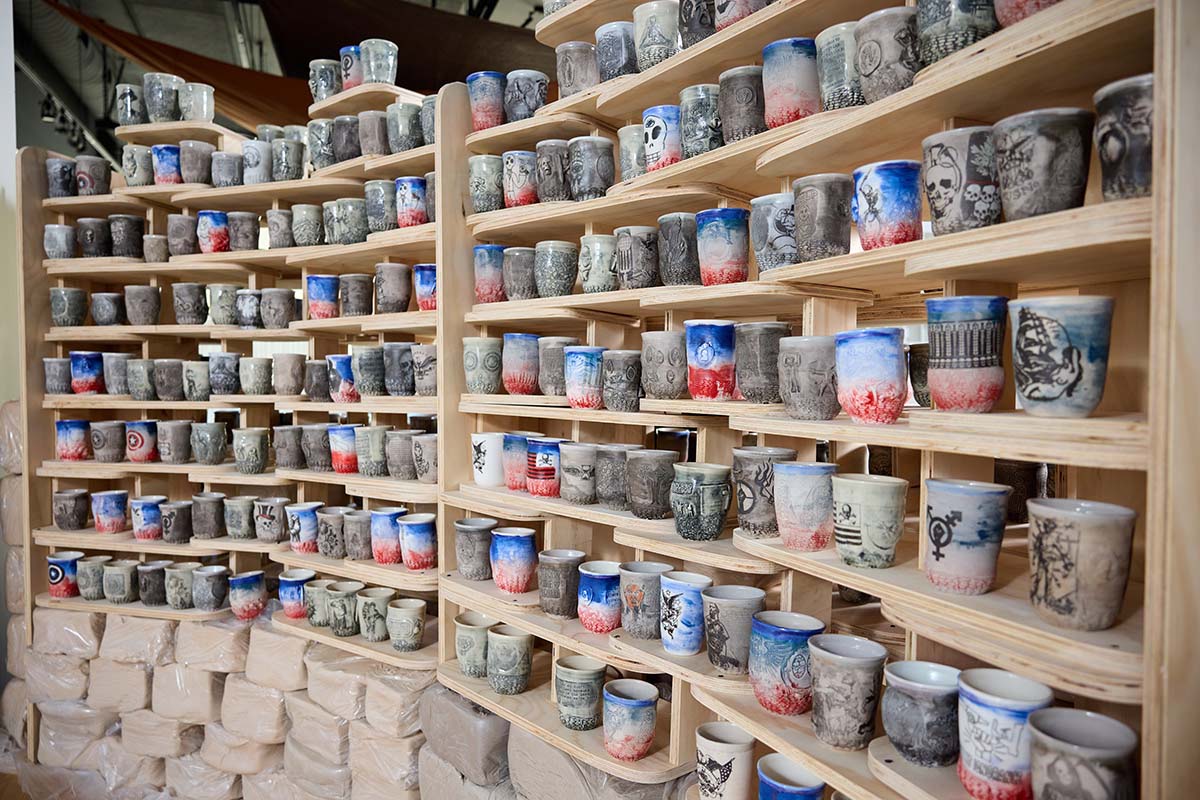
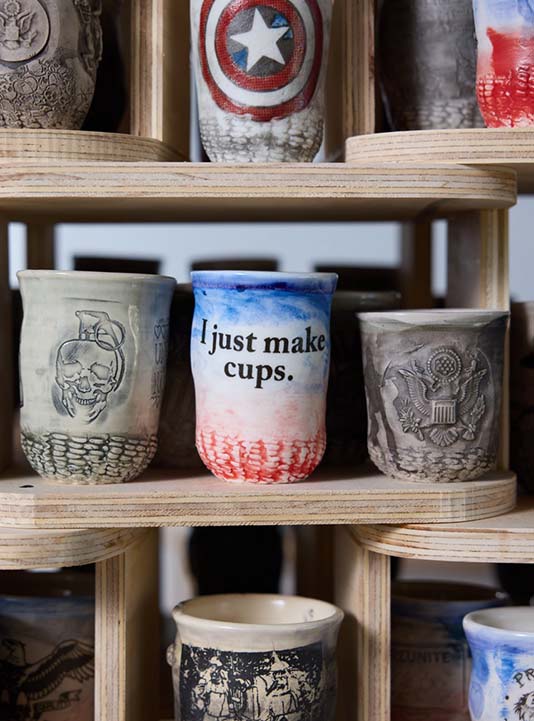
Tool creates his cups with a deeply personal and therapeutic goal. “I came back from my war. My son said, ‘Dad, how come you were bad and now you’re good?’ And I just started crying… To be demonized or idealized for something you did or didn’t do in a context you could never explain, it feels easier just not to talk about it. But that has consequences…”
The cups are free; visitors are invited to choose a cup that speaks to them. The sheer volume created for the display is striking; Tool threw over 600 cups for the exhibition, with the shelves continually restocked as they were taken. In his practice, he has thrown and given away more than 26,000 cups since 2001. They are offered with the hope that conversations will be sparked over a beverage, creating a safe space for people to share their experiences of war and trauma. Tool believes: “If there is anything more than a cup, it’s because it resonates with the person… People are accepting these cups into their lives and sharing their stories over them.”
Maia Chao and a Space Designed for Rest and Engagement
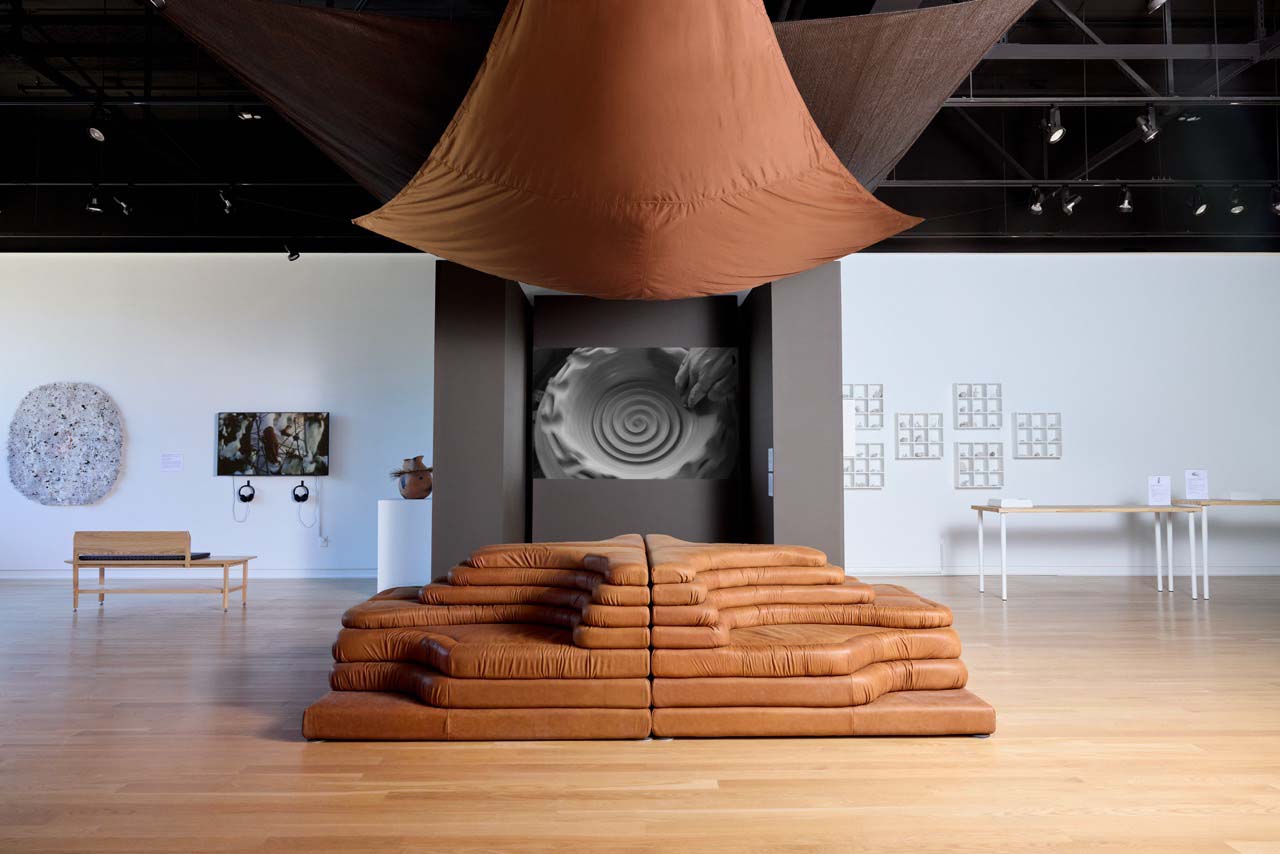
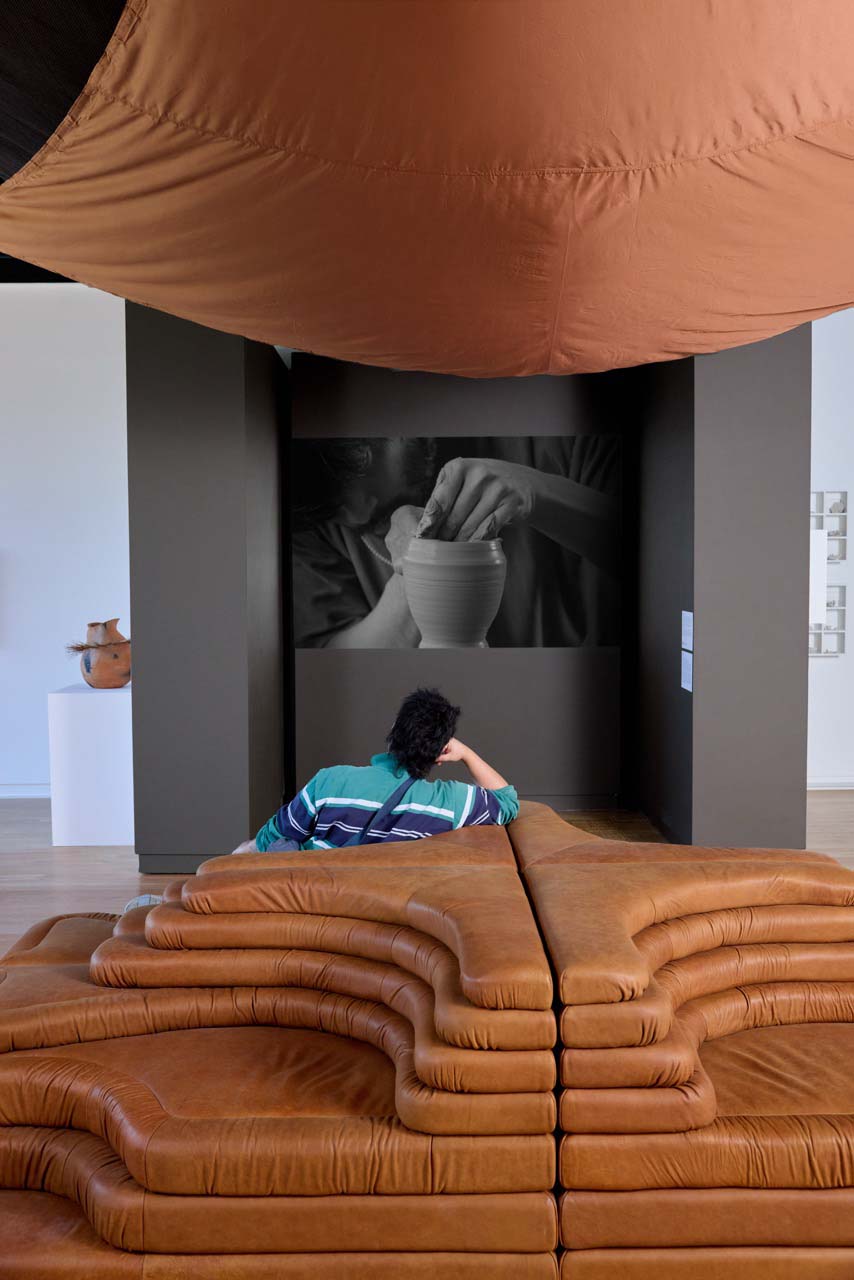
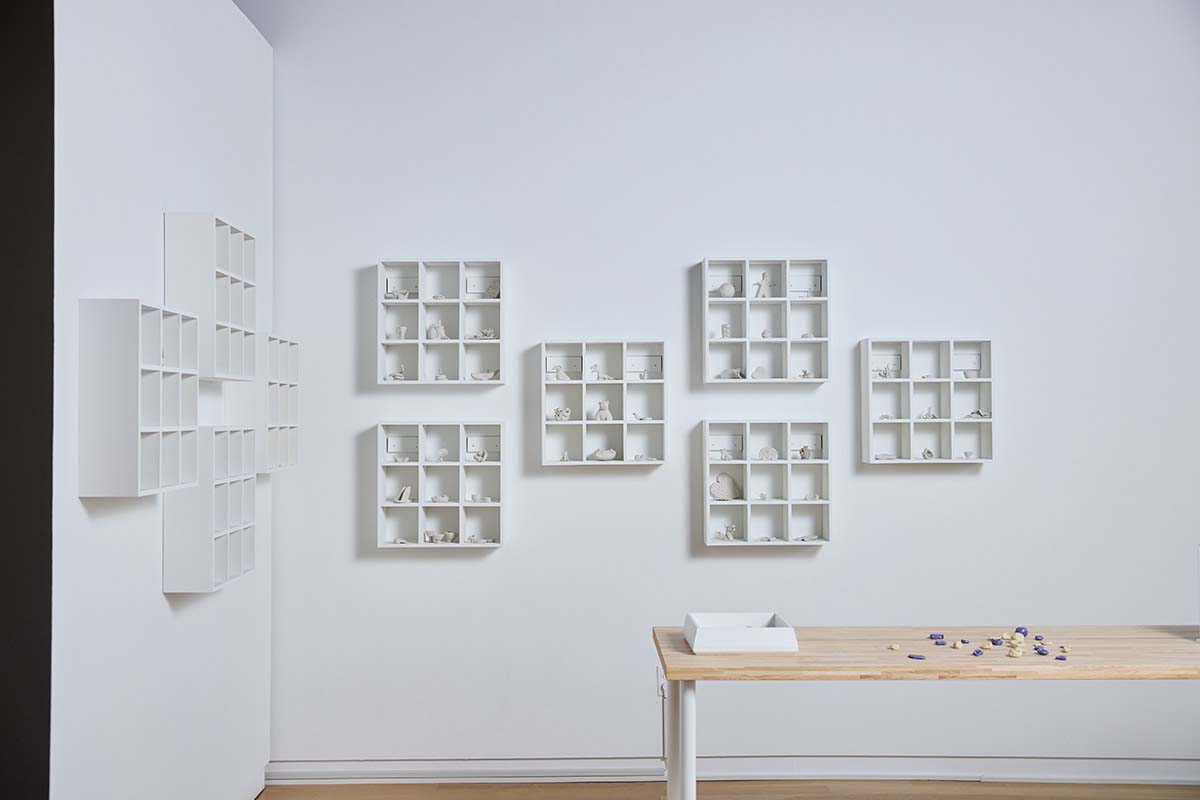
Beyond the art, the exhibition design itself is an act of care for the visitor, placing equal value on the artwork and the viewer. A centrally placed, four-segmented Terrazza sofa with curving backrests anchors the exhibit, offering a space of relaxation. The seating area also serves as a viewing space for the film by Philadelphia-based interdisciplinary artist Maia Chao. Seen on a large monitor, the looped sequence of repeated gestures, hands throwing, incising, and shaping the clay, offers a sense of meditative calm. Chao filmed Justin Paik Reese, Janina Myronova, and a student from the Operation MUD (veterans) class for the video, which is designed to immerse the viewer in the process of creating with clay. Visitors are also invited to engage with the material directly. Long tables provide a hands-on art-making activity where visitors can create their own vision of care and add their piece to shelves, fostering a “visual connection among each individual who passes through the exhibition.”
Clay as Care is documented in a publication. Videos of the symposium and conversations with the artists are available online, continuing to share the project’s ideas long after the exhibition closes, and cementing it as an important exploration of wellness, creative expression, and the healing power of ceramic art.
Watch Clay as Care Symposium, a day-long event recorded on October 25, 2025, featuring talks by participating artists and the project’s many partners.
For more on Clay as Care, visit The Clay Studio’s website.